
A Hipulse U alarm needs evidence before a reset: capture the alarm code, event-log sequence, operating mode, three-phase measurements and battery data while the critical load remains protected. You will be able to separate utility, bypass, battery, load and internal UPS faults, decide what you can check safely, and prepare a service call that reaches a useful diagnosis faster.
Key takeaways
- Do not reset after smoke, burning smell, abnormal noise or unstable output.
- Record the alarm code, time, operating mode, load and recent electrical changes.
- Check battery condition, isolation-transformer status and actual load demand before replacing parts.
- Choose a dealer who tests commissioning, batteries, bypass operation and maintenance procedures.
What to record before resetting a Hipulse U UPS
A control-panel reset can clear a latched alarm without correcting its cause. Protect the critical load first: do not reset during smoke, burning smell, abnormal noise, unstable output or a suspected short circuit.
If the inverter is healthy, keep the load on inverter; use bypass only after confirming it is live, synchronized and within the configured acceptance window.
- Photograph the display, alarm code, status LEDs and mimic diagram. Record the exact Hipulse U model, kVA rating, serial number, event timestamp and recent maintenance or battery work.
- Export or photograph the event history before acknowledging or clearing anything. Note whether the rectifier, inverter, static bypass or maintenance bypass was active when the alarm appeared.
- Measure and record all three input phase-to-phase and phase-to-neutral voltages at the UPS terminals, plus output voltage, frequency, load percentage, battery voltage, charging current and cabinet temperature. Include phase sequence if a bypass or input alarm is present.
- Check whether the input breaker, battery breaker, string fuses and emergency power-off circuit changed state. Do not open covers or disconnect cables while energised.
- Tell the service team what the load was doing: starting motors, switching supplies, servers restarting or operating normally. Shut down noncritical loads if demand or inrush threatens the critical bus, then preserve the log and wait for diagnosis.
A search for “ups systems dealers in ahmedabad hipulse u ups faults” should produce a technician who requests these records, not one who immediately replaces batteries or boards. When comparing ups systems dealers in ahmedabad, ask how they secure the load and capture evidence before any reset.
Translate the alarm into a safe fault check
A fault check starts with the alarm’s operating state, not its final message. Record the event code, timestamp, input and output values, battery voltage, load percentage, temperature, and whether the load was on inverter or bypass before resetting.
| Alarm | What it indicates | Safe check |
|---|---|---|
| Rectifier or input-current fault | Input conversion stopped, or the source is unsuitable | Measure each phase, frequency and waveform; compare generator excursions with UPS limits |
| Inverter fault | DC-bus or inverter control problem, including overcurrent, undervoltage or overtemperature | Use the event sequence: rectifier start, DC-bus rise, inverter enable, then bypass transfer |
| Bypass or load-on-bypass | The load is energised through bypass, not necessarily failed | Check bypass voltage, frequency, phase sequence and synchronisation before transferring back |
| Battery or charger fault | Charging circuit, battery string, fuse, connection or battery condition problem | Measure string voltage and inspect links; do not disconnect a live battery string |
| Temperature alarm | Restricted airflow, failed fan, high room temperature or internal heating | Check intake and exhaust clearance, room temperature and fan operation |
| Overload | Demand exceeds the inverter rating or an inrush event occurred | Read phase loads, remove non-critical loads, and investigate a short circuit before restarting |
| Phase-loss alarm | Missing phase, reversed sequence, imbalance or open neutral | Measure all phase-to-phase and phase-to-neutral voltages at UPS terminals |
A normal source with a persistent alarm, correct phase supply, and a repeatable identical event sequence points toward UPS hardware. Generator-only recurrence points toward source compatibility. Ask online ups dealers in ahmedabad to provide the captured log and measurements before approving a board replacement.
Check batteries, the isolation transformer and real load demand
A battery alarm does not prove that the battery blocks have failed. Check the open-circuit string voltage, polarity, battery breaker and fuse continuity, intercell links, string quantity, and isolator auxiliary contact before approving replacement. Compare the UPS battery-current reading with the measured current; an open string or unequal parallel-string sharing can mimic a weak battery.
The isolation transformer changes the diagnosis. Confirm its nameplate rating, winding arrangement, neutral point, temperature, and connection to the bypass. A transformer adds heat and voltage drop, affects short-circuit current, and can expose a wrongly bonded neutral or inadequate earthing.
If the bypass and inverter use different neutral arrangements, transfer faults can appear only after installation.
Use this site checklist before selecting or resizing the UPS:
- Record steady and peak load in both kW and kVA; poor power factor can exceed the kVA limit while kW remains acceptable.
- Capture inrush from motors, transformers, compressors, printers, and large switched-mode power supplies; average clamp-meter current will miss it.
- Check upstream breaker discrimination, cable sizing, phase sequence, neutral conductors, earthing, and generator compatibility.
- Verify battery-room ventilation, service clearances, floor loading, ambient temperature, and temperature-based derating.
- Record autonomy-test duration, starting and ending DC voltage, battery current, load, temperature, and each string’s age.
Ask three-phase UPS dealers in Ahmedabad for the exact HiPulse U rating, topology, bypass capacity, battery-string design, overload curve, and commissioning method. “Online” alone does not prove equivalent performance.
Commission and maintain the installation before it fails
A commissioning certificate should prove that the installed Hipulse U matches the site, not merely that it powered up. Ask the service team to record the exact model and rating, wiring diagram, battery-string arrangement, bypass rating, and acceptance limits before handing over the load.
1. Verify input and output cable sizes, upstream breaker discrimination, earthing, neutral arrangement, service clearances, floor loading and battery-room ventilation. Measure every phase-to-phase and phase-to-neutral voltage at the UPS terminals, then record phase sequence, voltage imbalance, frequency and generator operation. A feeder-average reading can hide an open neutral or lost phase.
2. Transfer between inverter and bypass under controlled conditions. Confirm bypass phase sequence, phase angle, frequency difference and the configured acceptance window; a live but unsynchronised bypass cannot provide a seamless transfer. Test emergency power-off, overload response, alarms, shutdown logic and the documented escalation route for board faults.
3. During preventive maintenance, inspect terminals for heat damage, fans and filters for blockage, capacitor condition, firmware or event history, battery connections, charger readings and parallel-string current sharing. Record load kW and kVA, power factor, temperature and operating mode.
4. Run an autonomy test only after confirming recharge time and a stable load. Record starting and ending DC voltage, battery current, duration, ambient temperature, output kW/kVA, and the number and age of strings. A failed result can reflect inadequate recharge, unequal sharing or excess test load—not only aged batteries.
Require these records from three-phase UPS traders in Ahmedabad before approving the installation.
Choose a dealer who can troubleshoot, not only supply equipment
Ask for the exact HiPulse U model and kVA rating, not just an “online UPS” quote. Require the topology, wiring arrangement, battery-string design, bypass rating, generator-compatibility limits, ambient derating and short-circuit capability in writing. A three-phase label does not prove two proposals behave alike.
Use these questions when comparing ups systems dealers in Ahmedabad, three phase ups dealers in Ahmedabad, online ups dealers in Ahmedabad and three phase ups traders in Ahmedabad:
- Will you record phase-to-phase and phase-to-neutral voltage, phase sequence, neutral continuity, earthing and upstream breaker discrimination at the UPS terminals?
- What commissioning tests cover rectifier start-up, inverter transfer, bypass transfer, overload, battery autonomy and generator operation?
- Who attends a board-level fault, what escalation path applies, and what event-log data must be preserved before a reset?
- How will you measure kVA, kW, crest factor and peak inrush from motors, transformers, printers or switched-mode power supplies?
| Architecture | Best fit | Confirm before selection |
|---|---|---|
| HiPulse U | Sites needing an isolation transformer and conventional high-power arrangement | Neutral scheme, bypass source, battery strings and floor loading |
| APM2 | Modular installations where capacity growth and transformerless efficiency matter | Module redundancy, fault isolation, battery expansion and generator limits |
| ITA2 | Smaller three-phase critical loads with rack or tower constraints | Output distribution, runtime, bypass rating and service clearances |
Originate Power Solutions should answer these questions with site measurements and a commissioning scope, not a catalogue model.
Reject any quote that omits serialised equipment details, battery autonomy assumptions, temperature limits or named response responsibility.
Related product
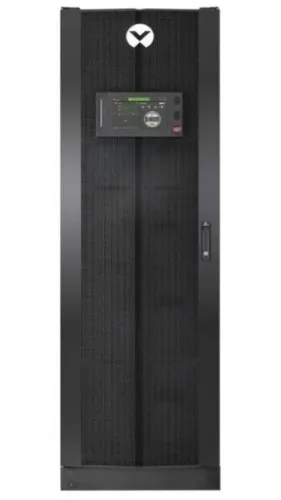
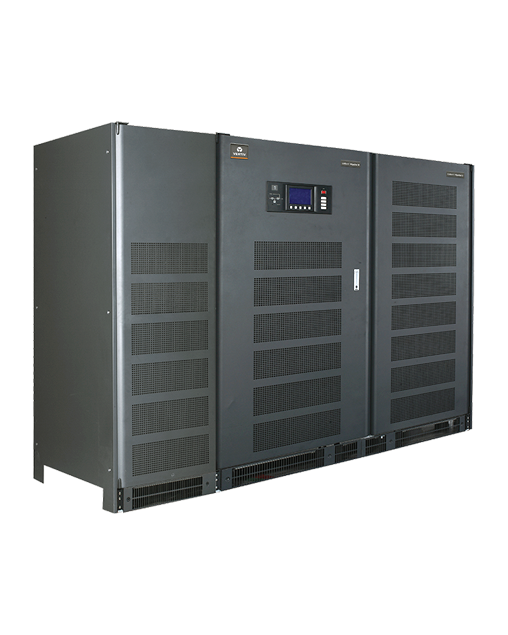 | Three Phase UPS Vertiv Liebert HIPULSE-U 30kVA - 500kVA Online UPS with Inbuilt Isolation Transformer ₹450000 The Vertiv Liebert Hipulse-U offers a reliable, scalable, and user-friendly solution to ensure availability of various critical applications. View product → |
Frequently asked questions
What should you record before resetting a Hipulse U UPS?
Record the exact alarm text or code, time of occurrence, UPS operating mode, load percentage, input and output readings, battery indication, and any recent electrical work or equipment changes.
How do you turn a Hipulse U UPS alarm into a safe fault check?
Protect the critical load first, then compare the alarm with operating readings and visible conditions. Do not reset during smoke, burning smell, abnormal noise, unstable output or a suspected short circuit.
What should you check when investigating Hipulse U UPS faults?
Inspect battery condition, connections and charging status; verify the isolation transformer; and measure real load demand against the UPS capacity and phase balance.
Why does commissioning and maintenance matter for a Hipulse U UPS?
Commissioning confirms correct wiring, battery configuration, bypass operation, protection settings and load transfer. Planned maintenance finds deteriorating batteries, loose connections and abnormal operating conditions before failure.
What should you look for in UPS systems dealers in Ahmedabad?
Choose a dealer that can diagnose alarms, test batteries and bypass operation, verify three-phase loading, document commissioning results and provide maintenance support instead of only supplying equipment.