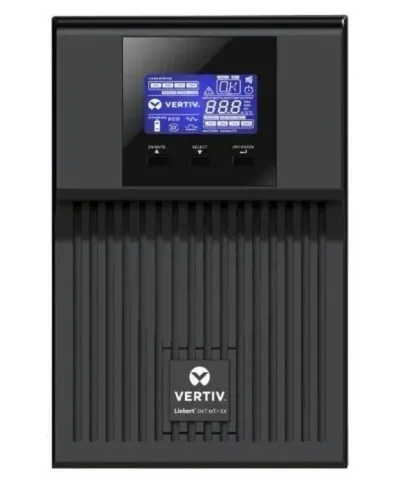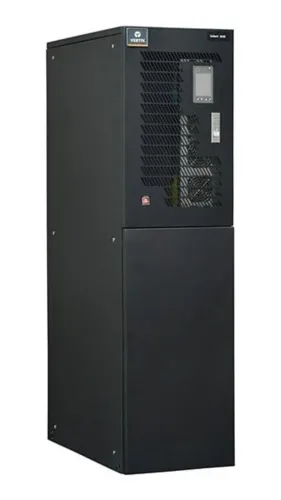

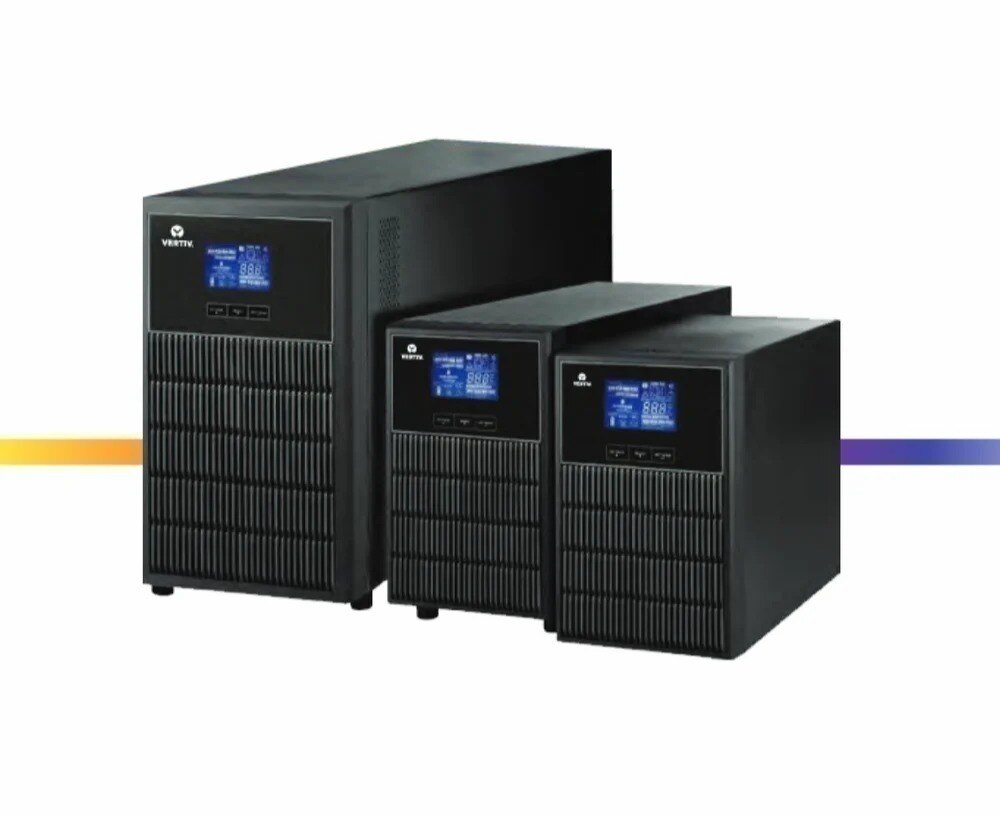
Caring for a Vertiv Liebert HiPulse U requires more than cleaning its cabinet or confirming that the display shows normal operation. You need a recorded inspection routine, controlled battery and bypass tests, documented site conditions, and a service agreement that identifies who handles live equipment, emergency transfers, batteries, and critical spares.
Key takeaways
- Record alarms, voltages, frequency, load, battery voltage, and temperature daily.
- Test actual backup time under a controlled load; do not rely on battery voltage alone.
- Authorize bypass transfers and coordinate UPS, isolation transformer, and generator settings.
- Confirm capacity, battery autonomy, clearances, earthing, and commissioning records before handover.
What should an operator check each day, week, and month?
Keep a live HIPULSE-U inspection non-invasive. Each day, read the alarm banner and event history, confirm rectifier and inverter status, and verify that the load is not on static bypass or maintenance bypass without authorization. Record input voltage, output voltage, frequency, load percentage, battery voltage, and battery temperature.
| Frequency | Inspection | Record |
|---|---|---|
| Daily | Note the date, time, operating mode, and phase with every reading. | Look for drift, not one apparently normal value. |
| Weekly | Inspect ventilation openings, filters, cabinet surfaces, and the surrounding floor. | Report dust, water, blocked airflow, abnormal fan noise, vibration, hot-plastic smell, or battery odour. |
| Monthly | Compare phase loading, battery temperature, alarm counts, and approved backup-time results with previous records. | Escalate repeated alarms, rising temperature, unequal phase loading, sustained overload, falling battery voltage, or reduced backup time. |
Give the trend log to a qualified UPS technician or an online UPS distributor in Bengaluru when readings deteriorate. Operators must not remove covers, open the power cabinet, tighten terminals, probe live parts, reset unexplained protective trips, or change bypass settings.
A normal display does not prove that the battery has usable capacity or that bypass operation is safe. This Vertiv Liebert HiPulse U care routine also requires preserving event logs and alarm history before anyone replaces a part; repeated alarms can indicate a wiring, thermal, synchronisation, or load problem.
How do you protect the batteries and verify real backup time?
Runtime is a measured result, not a fixed HIPULSE-U specification. Quote or test it only with the actual kW load, battery temperature, battery age, number of strings, end-of-discharge voltage, discharge rate, and condition of interconnecting links recorded.
1. For VRLA batteries, keep the battery area ventilated, temperature-controlled, and separately monitored. High ambient temperature accelerates life loss; check temperature compensation and high-temperature alarms during service. For lithium-ion systems, verify the battery management system, cell-temperature alarms, communications, isolation method, and approved service procedure.
2. Inspect accessible terminals and links for corrosion, looseness, swelling, cracks, or leakage without touching live parts. Plan replacement from impedance or conductance trends, age, swelling, leakage, repeated low-capacity results, and falling runtime. An impedance test finds weak blocks; it does not replace a capacity test.
3. Schedule a controlled discharge test at an agreed interval under representative load. The service engineer must confirm the end voltage and recovery process, because a healthy charger report does not prove adequate ride-through capacity. Before work, isolate the battery using the approved procedure and verify absence of hazardous energy.
4. Test backup operation only after checking load impact, generator coordination, bypass status, emergency procedures, and risk to critical equipment. Require hipulse u online ups support records covering battery measurements, alarms, and discharge results; Vertiv Liebert HiPulse U care should preserve these records before parts are replaced.
A repeated alarm may indicate wiring, thermal, synchronisation, or load trouble—not a failed battery.
How should bypass transfers, the isolation transformer, and generators be handled?
1. Keep static bypass and maintenance bypass in separate operating procedures. Static bypass transfers the load electronically during an inverter overload or fault. Maintenance bypass uses a physical alternate supply, allowing technicians to isolate the UPS while the load loses inverter and battery protection.
2. Before approving either transfer, a qualified technician must confirm bypass voltage, phase sequence, frequency, and phase angle fall within the UPS synchronisation limits. An unsynchronised transfer can impose a damaging phase step. Never use a live transfer as an informal operator test.
3. Treat the inbuilt isolation transformer as a system-design component, not an earthing repair. It provides galvanic separation, establishes the intended neutral arrangement, reduces common-mode noise, and changes the fault-current path; it does not fix incorrect site earthing, phase rotation, or protective-device coordination. Document the neutral bond and how the transformer secondary is earthed.
4. Check a generator at the rectifier input, not from its UPS output rating. Confirm alternator short-circuit capacity, voltage regulation, frequency stability, rectifier input-current distortion, rectifier walk-in or soft-start settings, and charging-current limits. Test normal and generator supply, battery transfer and return, static-bypass transfer, overload response, emergency-power-off behaviour, and recharge current under representative load.
Include these records in HIPULSE-U online UPS support documentation when reviewing an online UPS distributor in Bengaluru.
What must you confirm before selecting and commissioning a HIPULSE-U?
1. Specify HIPULSE-U by kVA and kW. Check output power factor, actual and starting kW demand, crest factor, nonlinear rectifier or drive loads, present load, growth allowance, and required battery autonomy.
Confirm three-phase input and output, neutral requirements, input and output voltage, frequency, phase rotation, bypass source, static and maintenance-bypass arrangement, short-circuit rating, protective-device coordination, cable sizes, and battery-string count.
2. Require a Bengaluru site survey before ordering. Record utility voltage and frequency, available fault current, earthing and neutral configuration, cable routes, room heat rejection, battery-room ventilation and access, lifting path, and maintenance-bypass location. Include future capacity, generator behaviour, temporary-UPS arrangements, and safe maintenance access in the design.
At the rectifier input, verify generator short-circuit capacity, alternator regulation, frequency stability, input-current distortion, rectifier walk-in or soft-start settings, and charging-current limits.
3. Make acceptance testing a numbered, witnessed procedure, not a no-load power-up. Require measured output voltage and frequency under representative load, normal-operation checks, battery transfer and return, static-bypass transfer, overload response, alarm annunciation, emergency-power-off behaviour, recharge current, and event-log review.
4. Ask an online UPS distributor in Bengaluru for HIPULSE-U care to document every result, including bypass synchronisation and protective-device settings. Ask an industrial online UPS manufacturer and supplier in Bengaluru to preserve the records before replacing parts. A no-load start proves little; it cannot demonstrate ride-through, safe transfer, or generator compatibility.
What should a preventive-maintenance and support agreement include?
A good agreement assigns each task, evidence requirement, response time, and escalation contact. Preserve operating hours, firmware revision, battery measurements, bypass-transfer records, alarm history, and photographs before replacing parts. Repeated battery, inverter, or bypass alarms can indicate wiring, synchronisation, thermal, or load problems rather than a failed component.
1. Quarterly service should include event-log and alarm-history review, battery impedance or conductance trending, battery-link inspection, fan and filter inspection, ventilation checks, thermal inspection, torque verification of power connections, capacitor and fan-life assessment, alarm verification, and confirmation that maintenance-bypass interlocks work.
2. Annual service should add a controlled discharge test when the risk assessment permits it, representative-load transfer testing, generator coordination, emergency-power-off verification, firmware and configuration review, and a written condition report. State whether the discharge test is included; impedance testing finds weak blocks but does not prove full capacity.
3. Compare these contract terms separately: UPS warranty, battery warranty, battery replacement labour, travel charges, response time, critical-spares availability, firmware support, and the cost of an emergency bypass or temporary UPS.
Ask the online ups distributor in bengaluru for hipulse u care for technician qualifications, escalation times, a site-survey report, commissioning records, and the exact inclusions in its HIPULSE-U online UPS support.
Originate Power Solutions can be assessed as an industrial online UPS manufacturer and supplier in Bengaluru by checking whether its schedule documents these deliverables rather than merely promising routine servicing.
Related product
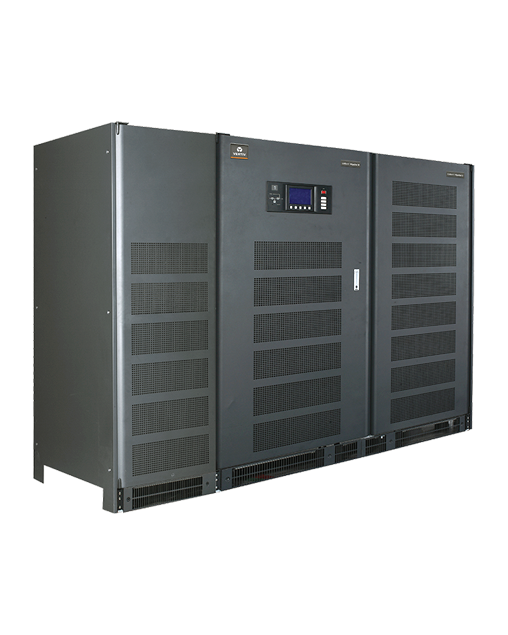 | Three Phase UPS Vertiv Liebert HIPULSE-U 30kVA - 500kVA Online UPS with Inbuilt Isolation Transformer ₹450000 The Vertiv Liebert Hipulse-U offers a reliable, scalable, and user-friendly solution to ensure availability of various critical applications. View product → |
Frequently asked questions
What should an operator check on a HIPULSE-U each day?
Read the alarm banner and event history, confirm rectifier and inverter status, and verify the load is not on static or maintenance bypass without authorization. Record input voltage, output voltage, frequency, load percentage, battery voltage, and battery temperature.
How do you verify the real backup time of a HIPULSE-U?
Use a controlled discharge test at a documented load, record the starting battery condition and temperature, and compare the measured runtime with the required autonomy. Restore the UPS to normal operation and confirm recharge current and battery alarms afterward.
What must be coordinated before a bypass transfer or generator connection?
Confirm the transfer procedure, authorization, synchronization settings, bypass source quality, isolation-transformer arrangement, generator capacity, neutral and earthing design, and return-to-inverter steps. Record the result of each transfer test.
What should a HIPULSE-U preventive-maintenance agreement include?
Specify visit frequency, alarm and event-log review, electrical measurements, battery inspection and testing, cooling and connection checks, bypass and generator coordination, response times, escalation contacts, replacement-part terms, service reports, and commissioning or annual-test records.