
Ahmedabad’s monsoon exposes UPS installations to condensation, water ingress, lightning transients, unstable utility power and generator disturbances. By the end, you will know how to inspect the site, verify an APM2 quotation, calculate capacity and autonomy, test bypass and redundancy, and judge whether a local dealer can support the installation after commissioning.
Key takeaways
- Keep the UPS room dry, ventilated and within non-condensing humidity limits.
- Demand a quotation listing topology, capacity, battery autonomy, bypass and redundancy.
- Size the UPS from measured load, starting current, growth and required runtime.
- Witness transfer, bypass and full-load tests after installation.
Make the UPS room monsoon-ready before the APM2 arrives
Condensation, not rain alone, is the main monsoon threat to an APM2 UPS. Before installation or servicing, confirm that the room remains within the UPS and battery manufacturers’ stated temperature, relative-humidity, ventilation, and non-condensing limits.
1. Inspect the roof, walls, floor drains, raised plinth, and nearby plumbing for leaks or standing water. Seal cable trenches and wall penetrations; keep water away from the cabinet and battery racks.
2. Check cable glands, doors, louvers, and exhaust paths. Outside humid air entering a cooled room can condense on cold terminals, busbars, and battery connections.
3. Test the air-conditioner, ventilation fan, temperature alarm, and humidity monitoring. Do not direct cold air at batteries or power electronics.
4. Examine battery cases, inter-cell links, rack insulation, and terminal torque for corrosion or moisture. Record battery voltage and temperature before service.
5. Verify the protective earth conductor, earth-pit readings, bonding, lightning protection, and surge protective devices. Monsoon utility faults and lightning transients expose weak earthing quickly.
6. Confirm the generator’s voltage, frequency stability, ramp-up behaviour, alternator impedance, and sizing against the rectifier’s input power factor and harmonic-current specification. Topology alone does not prove generator compatibility.
Ask double conversion online ups dealers in Ahmedabad for an IEC 62040-3 VFI classification and test report, plus bypass-transfer test records and calibrated instruments. Label the job record “APM2 UPS monsoon” inspection, including findings, corrective work, and emergency contacts.
Turn the APM2 quotation into a verifiable equipment specification
Reject any APM2 quotation that gives only “online” and a kVA figure. Ask double conversion online ups dealers in ahmedabad to identify the exact manufacturer, model code, revision or firmware, and the IEC 62040-3 performance classification. A test report should confirm VFI operation, not merely repeat marketing language.
Request these items in writing:
- Rated kVA and kW, overload duration, output power factor, input and output voltage, frequency range, and short-circuit rating.
- 3/3 or 3/1 phase arrangement, neutral requirements, cable sizes, and the static and maintenance bypass paths.
- Rectifier input power factor, input-current harmonic distortion, and generator compatibility data.
- Battery chemistry, quantity, voltage, Ah rating, rack or cabinet layout, design life, and autonomy at your measured kW load.
- Number of power modules, module rating, parallel or expansion limit, redundancy arrangement, and transfer limits.
- Commissioning scope, bypass-transfer testing, calibrated test instruments, battery replacement responsibility, emergency response time, and critical spare-parts stock.
| Quotation wording | What you must obtain | Risk if omitted |
|---|---|---|
| VFI online | IEC 62040-3 classification and test report | Input conditioning may not match the claim |
| Three-phase UPS | 3/3 or 3/1 identification | Downstream distribution and bypass design may be wrong |
| Generator compatible | PF, THDi, alternator and sizing conditions | Repeated outages can cause instability |
| Battery backup | Autonomy at actual kW and end-voltage assumptions | Runtime comparisons become meaningless |
Size capacity, batteries and redundancy from the real load
Start with a 24-hour load log, not the equipment nameplates. Record peak and sustained kW, power factor, crest factor, motor or rectifier startup current, generator operation, and the load that must remain online during a monsoon outage.
Compare that profile with the APM2’s continuous kW rating, not kVA alone; a unit can have enough apparent power but still lack real-power capacity.
Size the configuration in this order:
- Select an APM2 rating from 30 to 600 kW that exceeds the measured maximum by the stated growth allowance and the manufacturer’s permitted overload curve.
- Add capacity for known projects, seasonal demand and startup events; do not count short overload duration as permanent spare capacity.
- Choose parallel modules for N+1 redundancy when one module must fail or be isolated without dropping the protected load. Confirm that the remaining modules share the measured load within their continuous ratings.
- Specify 3/3 or 3/1 explicitly. Three-phase input and output has different distribution, bypass and cable requirements from three-phase input with single-phase output.
Calculate battery autonomy at the actual kW load using end-of-discharge voltage, battery temperature, discharge rate, ageing or end-of-life factor and required recharge time. A quoted “30-minute backup” proves nothing without those assumptions.
For Ahmedabad’s monsoon disturbances, verify autonomy during generator start and utility-transfer events, then confirm the bypass source stays within voltage, frequency, phase-sequence and synchronisation limits; an unsuitable bypass will not rescue an overloaded inverter.
Understand what stays protected when utility, bypass or UPS hardware fails
A lightning transient, wet cable entry or utility collapse does not automatically mean the load moves to batteries. In normal double-conversion operation, the rectifier changes AC to DC and the inverter creates the output AC continuously. Under IEC 62040-3, a verified VFI system keeps voltage and frequency independent within its specified limits.
| Mode | What the load receives | Monsoon or fault consequence |
|---|---|---|
| Double-conversion | Inverter output from rectified utility power | Utility disturbances are conditioned; an inverter or input failure triggers a transfer decision. |
| Battery operation | Inverter output from the battery DC bus | The load continues during an outage or unacceptable input until autonomy ends, then shutdown or bypass may follow. |
| Static bypass | Direct supply from the bypass source | Transfer works only when voltage, frequency, phase sequence and synchronisation are within the permitted window. A poor generator, overloaded source or failed synchronisation can block transfer. |
| Maintenance bypass | Direct utility or generator bypass around the UPS | Technicians can isolate the UPS while the load runs, but the load loses inverter protection and sees raw disturbances. |
Ask three phase ups dealers in ahmedabad to state whether the APM2 is 3/3 or 3/1; the choice changes bypass, cabling and downstream distribution. Confirm bypass-transfer testing, safe isolation, emergency response and spare-parts support. A maintenance bypass protects continuity, not power quality.
Choose the right local dealer and confirm the installation under load
A three-phase APM2 suits your site only after the dealer matches its input, output and bypass arrangement to the measured load. Confirm whether the quotation specifies 3/3, with three-phase input and output, or 3/1, with three-phase input and single-phase output. The choice changes downstream distribution, cabling, bypass equipment and maintenance procedures.
| Configuration | Suitable when | Check before approval |
|---|---|---|
| 3/3 | The critical distribution board is three-phase | Confirm phase loading, bypass rating and downstream protection |
| 3/1 | The protected loads are single-phase | Confirm output current, neutral sizing and future load growth |
Treat a “double conversion online ups distributor in ahmedabad” as a commissioning partner, not a cabinet-delivery company. Ask for IEC 62040-3 performance classification and test evidence confirming VFI operation, calibrated power-quality and load-bank equipment, a bypass-transfer test, and a written battery replacement responsibility.
Require the dealer to document these service commitments:
- Local commissioning engineers and emergency response time for your site
- Critical spare parts held in Ahmedabad or with a stated dispatch time
- Generator test results covering rectifier power factor, current harmonics, alternator impedance, ramp-up and frequency stability
- Safe maintenance-bypass isolation while the load remains energised, with the raw-utility exposure recorded
- Acceptance results at 25%, 50%, 75% and 100% load, including output voltage, frequency, phase balance, bypass transfer and battery discharge
Originate Power Solutions can be evaluated against the same evidence; a familiar brand name cannot replace witnessed, documented commissioning.
Related products
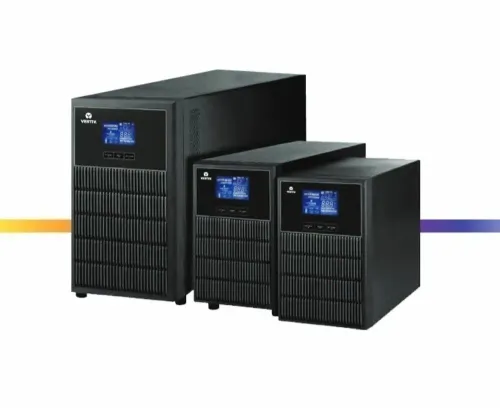
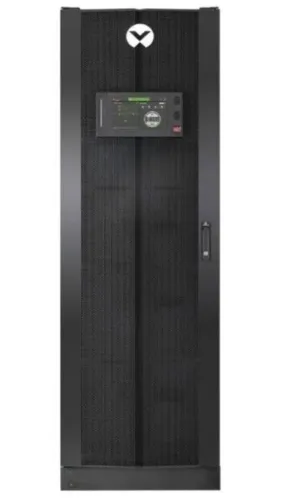
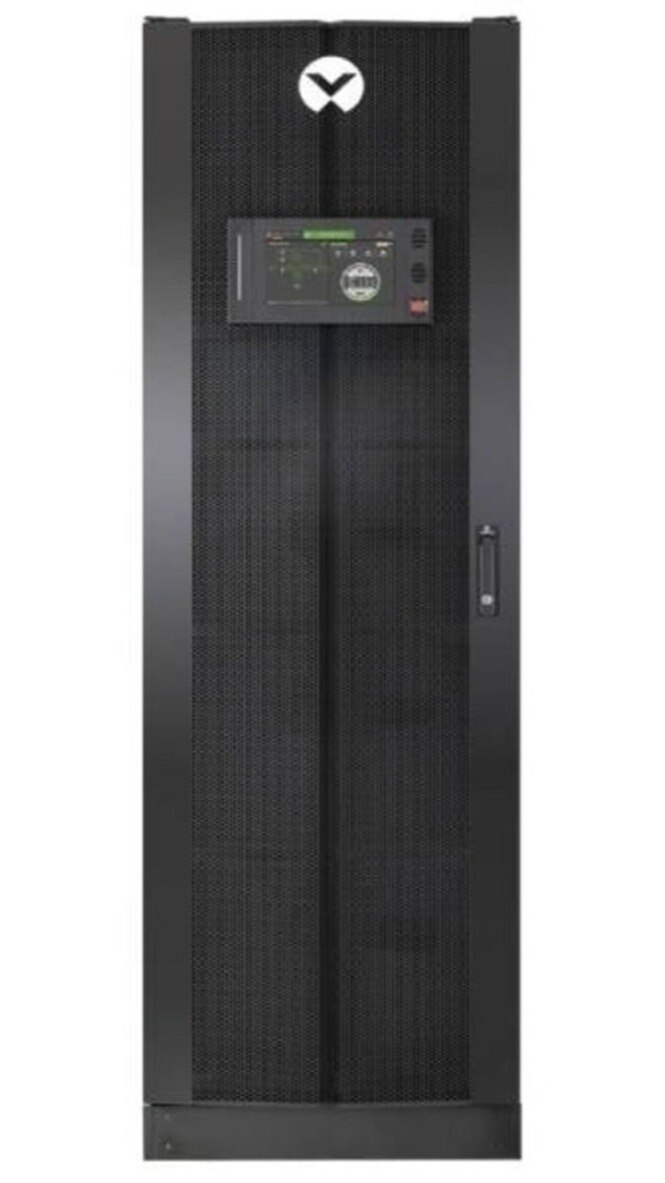
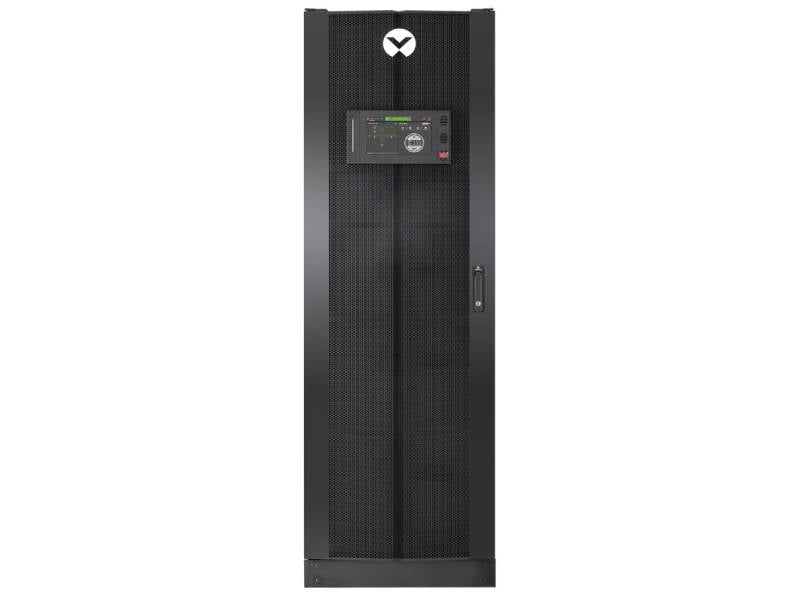 | Three Phase UPS Vertiv™ Liebert® APM2 UPS (30-600 kW) Introducing a next-generation modular and transformer-less UPS design, Vertiv™ Liebert® APM2, a feature-rich high-power density UPS that brings... View product → |
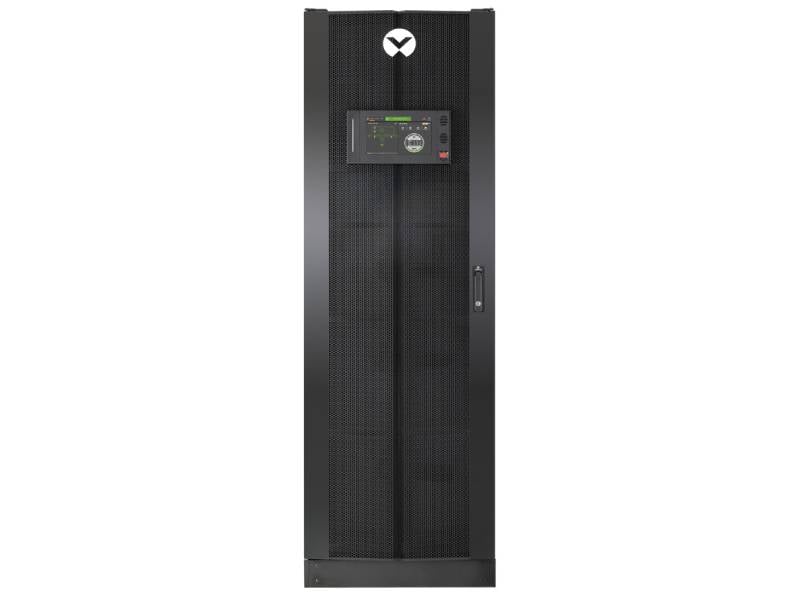 | Three Phase UPS Vertiv™ Liebert® APM2 Plus UPS (30-600 kW) Introducing the all-new Liebert® APM Plus, a scalable, high-density, transformer-free UPS that delivers double conversion efficiency up to 97%, as... View product → |
Frequently asked questions
How do I prepare a UPS room for monsoon installation?
Control condensation first. Confirm temperature, relative humidity, ventilation and non-condensing limits against the UPS and battery manufacturers’ documentation. Inspect for roof leaks, damp walls, water entry and blocked ventilation before the APM2 arrives.
What should an APM2 UPS quotation specify?
Ask for the exact UPS model, double-conversion online topology, rated kVA and kW, input and output phase, battery type and quantity, stated autonomy, bypass arrangement, redundancy, protection devices, installation scope and commissioning tests.
How should I size an APM2 UPS and its batteries?
Use measured real and apparent load, power factor, starting or inrush current, future growth and the required backup duration. Confirm battery autonomy at the actual load and design temperature rather than accepting a runtime estimate without conditions.
What should be tested after a three-phase UPS installation?
Witness operation on utility power, battery discharge, static bypass, maintenance bypass, return to inverter, alarms, load transfer and shutdown behaviour. Record test readings under load and obtain commissioning documents.
How do I compare double conversion online UPS dealers in Ahmedabad?
Compare the equipment specification, battery calculations, installation method, local service response, spare-parts support, warranty exclusions and commissioning evidence. Choose a dealer that will test the complete installed system under load.