
A GXT MT battery alarm does not automatically mean that every battery block has failed. By following a measured diagnostic sequence, checking the external battery path and sizing the UPS from the real load, you can separate battery ageing from charger, wiring, temperature and installation faults before authorising a replacement.
Key takeaways
- Check alarms, battery voltage, connections, temperature, and event logs before replacing blocks.
- Calculate runtime from load watts, battery voltage, amp-hours, and inverter efficiency.
- Confirm cabinet ratings, 16A circuit capacity, earthing, ventilation, and cable polarity.
- Demand test reports, battery details, warranty terms, and commissioning records from the distributor.
What a GXT MT battery problem actually indicates
A GXT MT battery alarm does not prove that every battery block is defective. In a double-conversion online UPS, the rectifier and inverter normally carry the load, so batteries support it only when input power is unavailable or outside transfer limits.
Short runtime, battery-not-detected messages, repeated low-battery shutdowns and uneven string performance identify a problem, not its location.
A double-conversion online UPS distributor in Ahmedabad should separate battery failure from installation and charger faults by checking:
- An open battery connector, reversed polarity, loose terminal, tripped battery breaker or blown fuse. These faults can make new batteries appear absent.
- The external cabinet’s DC voltage, connector, breaker rating and wiring against the GXT MT model. A wrong string voltage or capacity can damage the charger and trigger a persistent alarm.
- Battery age, swollen cases, excessive room temperature and the recorded load in watts. Runtime must be tested at the actual load, not inferred from the VA display or a no-load reading.
- The alarm code, charger voltage, self-test result and discharge history. A failed self-test with normal connections points toward a battery pack or UPS-charger fault.
- Generator frequency and voltage stability, input limits and start-up behaviour. An unstable generator can force repeated battery operation even when utility power works correctly.
Commissioning records should show voltage, frequency, watts, VA, bypass operation, battery-cabinet polarity and voltage, alarm history, test method and room temperature. Without them, GXT MT battery problems are difficult to assign accurately.
A safe diagnostic sequence before replacing the battery
Do not order batteries after a low-runtime alarm alone. A safe diagnosis separates a failed battery from a loose connection, external cabinet fault, overload, heat or a UPS charging problem.
1. Read and record the exact alarm code, alarm history, load percentage, output watts and VA. Save the recent runtime result and note whether the UPS shut down, transferred to bypass or repeatedly returned to battery.
2. Check the battery age, service date, room temperature, ventilation, dust on filters and fan operation. Stop and call a qualified technician if a battery is swollen, leaking, cracked or unusually hot; do not handle or disconnect it while energised.
3. With the UPS isolated under the manufacturer’s procedure, inspect battery terminals, interlinks, plugs, polarity and the external battery breaker. A tripped breaker, reversed connection or incorrect long-run cabinet can produce a battery-not-detected alarm without defective cells.
4. Have a technician measure the complete DC string and individual blocks, then verify the charger’s output against the GXT MT service specification. Uneven block voltage points to string imbalance; correct DC voltage with poor charging points to the UPS charger or wiring.
5. Correct overload and record the real load in watts before testing. Discharge the UPS at that load, not at zero load or from the VA display, and compare the result with the model-specific runtime curve.
Ask an online UPS distributor in Ahmedabad for commissioning records covering voltage, frequency, battery voltage, polarity, temperature and the autonomy-test method before approving replacement batteries.
How to size the UPS and predict usable runtime
Choose the UPS from measured load, not the nameplate total. Record watts and power factor with a true-RMS power analyser, then calculate apparent load as watts divided by power factor. A 1 kVA, 2 kVA or 3 kVA unit is suitable only when its continuous watt and VA ratings both exceed that result.
1. Measure every connected load while operating normally, including servers, storage, switches and displays. A power supply showing 600 W at 0.8 power factor demands 750 VA, not 600 VA.
2. Capture startup current separately. Motors, compressors and switched-mode power supplies can create short inrush or harmonic currents that overload an apparently adequate UPS. Check the GXT MT specification for crest-factor and overload capability, then leave capacity for additional equipment.
3. Calculate battery energy from the battery-string voltage and ampere-hour capacity, but treat that figure as an estimate. Inverter efficiency, discharge rate and battery temperature reduce usable watt-hours; a larger battery cabinet extends runtime only when its voltage, polarity, breaker and capacity match the UPS.
4. Request a model-specific runtime curve or witnessed discharge test at your required watts. Test at the real load, not the UPS VA rating or a no-load display, and repeat the calculation with aged capacity: runtime falls as batteries lose capacity, especially in a hot Ahmedabad room.
A single-phase UPS distributor in Ahmedabad should document input and output readings, load watts and VA, battery voltage, room temperature and the autonomy-test method. Use that evidence to select the smallest unit that passes continuous, inrush and ageing requirements.
External battery cabinets, 16A connections and installation checks
A long-run cabinet is safe to connect only when its DC string voltage, battery quantity, polarity, connector and protection arrangement match the GXT MT model exactly. Confirm the approved cabinet and maximum battery capacity in the installation manual; a higher-capacity or differently wired pack can damage the charger or keep the battery alarm active.
Check these installation points before energising the system:
- Measure cabinet open-circuit DC voltage and verify positive, negative and protective-earth identification.
- Confirm the battery breaker or fuse rating, cable cross-section, cable length, connector locking and terminal torque.
- Provide a dedicated, correctly rated AC circuit for a 16A version, with the specified voltage, frequency, upstream breaker, isolator and socket. Do not treat a 16A plug as permission to operate continuously at 16A.
- Keep the cabinet upright, ventilated and accessible, with the manufacturer’s clearance around vents; record room temperature, humidity and signs of water, dust or corrosive fumes.
- Check floor loading, cabinet anchoring and cable bend radius before delivery.
| Option | Confirm before connection | Failure if missed |
|---|---|---|
| Long-run battery cabinet | DC voltage, polarity, breaker, connector and allowable capacity | Charger fault, fire risk or battery-not-detected alarm |
| 16A GXT MT version | Input voltage, frequency, circuit protection and socket rating | Nuisance trips, overheating or bypass operation |
A double conversion online ups distributor in Ahmedabad should record cabinet voltage and polarity, load in watts and VA, alarm history, room temperature and the measured autonomy test. Keep those records with the commissioning sheet.
What to demand from a distributor before commissioning
Demand a topology comparison tied to IEC 62040-3, not a brochure label. VFI means the UPS output voltage and frequency remain independent of the input within the specified operating range; “online” alone does not prove this.
A UPS systems distributor in Ahmedabad should state the VFI classification, operating limits and expected transfer behaviour in the quotation.
| Option | What to compare | When it applies |
|---|---|---|
| VFI double-conversion | Continuous rectifier, inverter and charger operation; output independent of input within limits | Sensitive servers, medical equipment and unstable supplies |
| Line-interactive | Regulates voltage through an autotransformer; transfers to battery outside its correction range | Smaller loads with tolerable transfer events |
| Standby/offline | Load normally follows utility; inverter starts after a disturbance | Basic equipment where interruption during transfer is acceptable |
| Generator-backed VFI | Rectifier frequency window, input-current distortion and generator step response | Sites where the UPS shares supply with a generator |
Before commissioning, require a signed record showing:
- Input and output voltage, frequency, watts, VA, load percentage and measured room temperature.
- Bypass transfer and return tests, with the permitted load and maintenance-bypass procedure. Maintenance bypass can place the load directly on utility power.
- Battery-cabinet polarity, DC voltage, breaker status, alarm history and the autonomy-test method, including starting load and end-voltage limit.
- Generator start-up results, if applicable, plus UPS, battery and maintenance commitments.
Originate Power Solutions should provide these records before handover, not after a GXT MT battery complaint. Separate the UPS warranty from battery capacity coverage, response time, replacement availability and scheduled testing.
Related products
 | Single Phase UPS Vertiv Liebert GXT MT+ CX 16A (Long Run Model) Online UPS ₹31420 Vertiv Liebert GXT MT+ CX 16A is a true on-line UPS that delivers continuous, high-quality AC power to connected equipment with no interruption when... View product → |
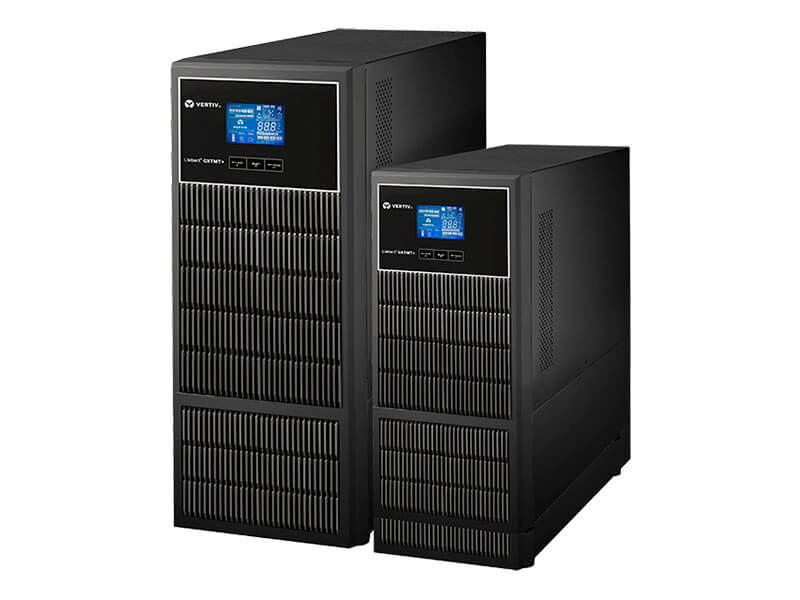 | Single Phase UPS Vertiv Liebert GXT MT+ CX 3 kVA LB 16A (Long Run Model) Online UPS ₹50848 Vertiv Liebert GXT MT+ CX 3 kVA LB 16A is a true on-line UPS that delivers continuous, high-quality AC power to connected equipment with no... View product → |
Frequently asked questions
Does a GXT MT battery alarm prove every battery block has failed?
No. Check event logs, battery connections, voltage, temperature, charger operation, and individual blocks before replacing the battery set.
How do you predict usable UPS battery runtime?
Use the connected load in watts, battery-bank voltage, amp-hour rating, inverter efficiency, and the battery manufacturer's discharge data.
What installation checks apply to external battery cabinets and 16A connections?
Verify cabinet compatibility, cable polarity, protective-device rating, earthing, ventilation, clearance, and whether the 16A circuit suits the UPS input or output.
What should you request from a UPS distributor before commissioning?
Request the UPS and battery datasheets, sizing calculation, wiring diagram, test report, warranty terms, installation checklist, and commissioning record.
Related products
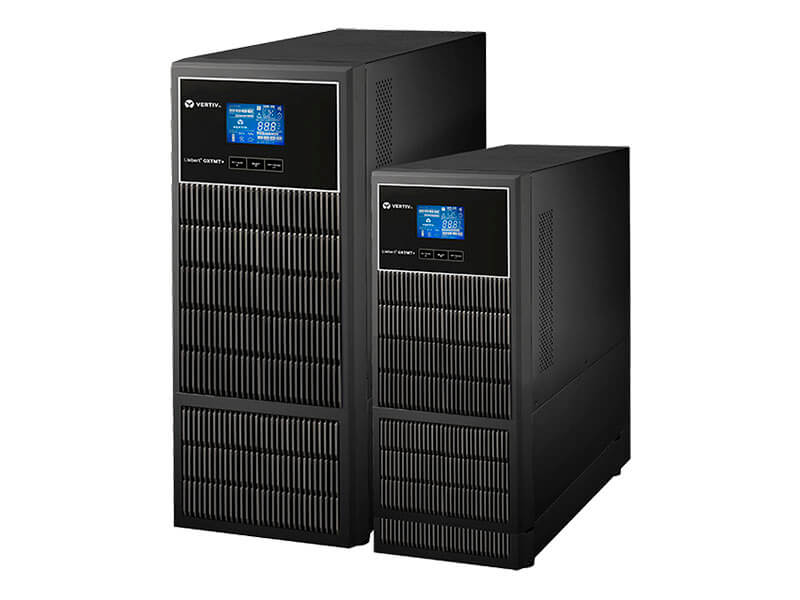 | Single Phase UPS Vertiv Liebert GXT MT+ CX 2 kVA LB 16A (Long Run Model) Online UPS ₹45470 Vertiv Liebert GXT MT+ CX 2 kVA LB 16A is a true on-line UPS that delivers continuous, high-quality AC power to connected equipment with no... View product → |
 | Single Phase UPS Vertiv Liebert GXT MT+ CX 2 kVA LB (Long Run Model) Online UPS ₹35600 Vertiv Liebert GXT MT+ Series system is true double conversion Online UPS systems designed to provide with a capacity of 2 kVA. View product → |
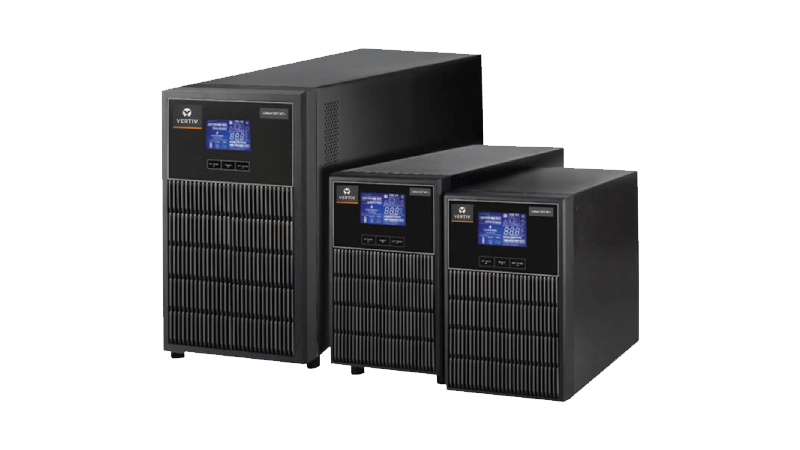 | Single Phase UPS Vertiv Liebert GXT MT+ CX 1 kVA SB (Standard Run Model / Inbuilt Battery) Online UPS ₹26810 Vertiv Liebert GXT MT+ Series systems is true double conversion online UPS systems designed to provide with a capacity of 1 kVA. View product → |
 | Single Phase UPS Vertiv Liebert GXT MT+ CX 3 kVA LB (Long Run Model) Online UPS ₹40830 Vertiv Liebert GXT MT+ Series system is true double conversion Online UPS systems designed to provide with a capacity of 3 kVA. View product → |