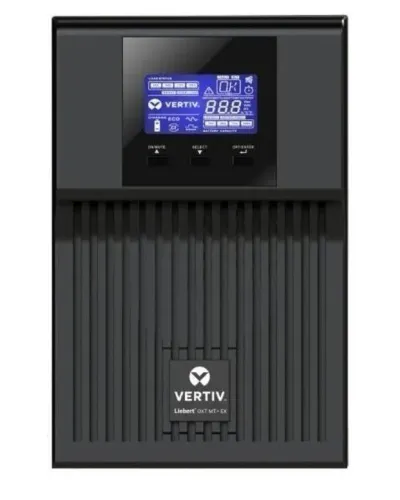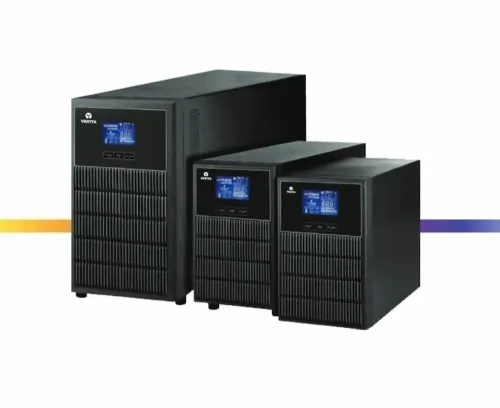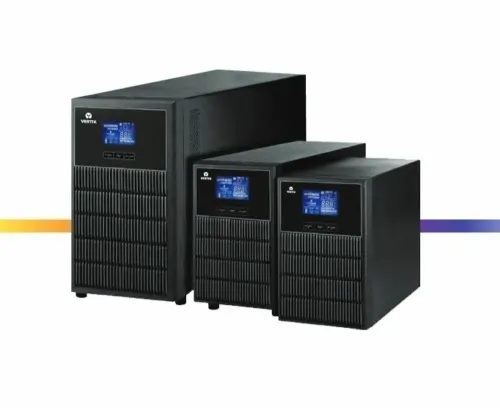

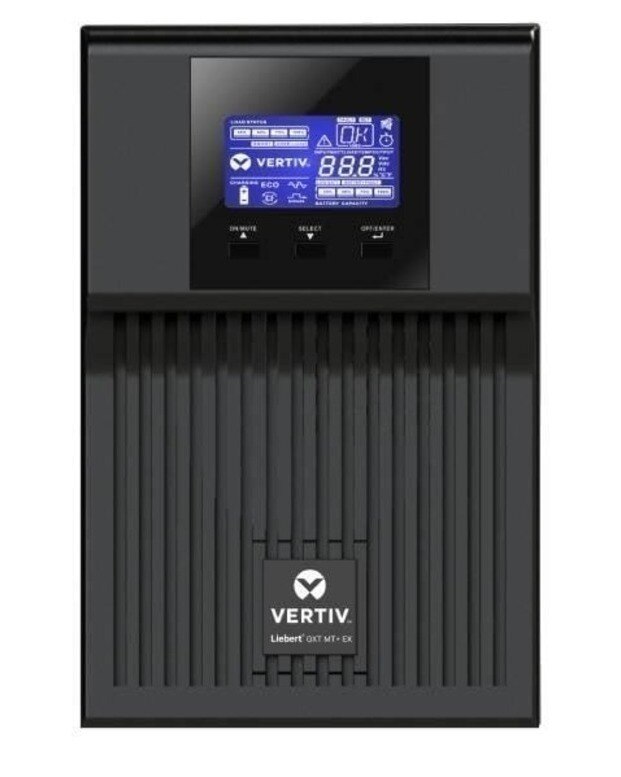
Choosing an EXM2 system requires more than matching a UPS rating to equipment nameplates. You will be able to calculate the required capacity, confirm the site’s phase and bypass arrangement, compare alternative technologies, plan batteries, and judge whether a dealer can safely commission the installation.
Key takeaways
- Measure real kW, kVA, crest factor, and growth before selecting 100–150 kW.
- Specify input, output, bypass, earthing, neutral, and phase arrangements in writing.
- Size batteries from required runtime, end voltage, temperature, ageing, and future load.
- Demand a site survey, load study, battery calculation, testing plan, and local service response.
Is the EXM2 the right size for your measured load?
A 100–150 kW EXM2 is suitable only after you measure the facility’s real kW and kVA demand. Connected nameplates exaggerate operating load, while a near-full selection leaves no expansion margin and a lightly loaded UPS can waste energy through fixed losses.
1. Record load logs, peak demand records, power-factor readings, motor data, and the proposed single-line diagram. Calculate actual power factor as kW divided by kVA, then size against both figures. Motors need starting-current review, and nonlinear loads such as variable-frequency drives, rectifiers, and switch-mode supplies can increase crest factor and harmonic current.
2. If measured demand is well below 100 kW, confirm that the EXM2’s operating efficiency and minimum loading justify its size. If demand sits near 100–150 kW, add the documented growth allowance before choosing the rating. Above 150 kW, specify a higher-rated UPS, parallel arrangement, or staged design rather than overloading the EXM2.
3. Separate installed capacity from usable protected capacity. A cabinet’s total module rating is not available N+1 capacity if every module must carry the present load; leave enough spare module capacity to support the load after one qualifying module fails.
4. N+1 does not protect common equipment. Check the static bypass, control electronics, battery breaker, output bus, cooling system, and common cabinet on the single-line diagram, because any shared failure can still interrupt the load.
For industrial online ups dealers in ahmedabad exm 2 systems, require these calculations rather than a catalogue match. Industrial online ups dealers in ahmedabad should show efficiency at your measured load and identify the growth and redundancy assumptions.
Which input, output, and site electrical arrangement must you specify?
Specify input and output separately: a three-phase UPS may use three-phase input with three-phase output, or three-phase input with separately configured single-phase outputs. “Three-phase” alone is insufficient.
| Arrangement | Confirm before ordering | Risk if missed |
|---|---|---|
| Three-phase input and output | Phase loading limits, load balancing, neutral, phase sequence, voltage and frequency | Unequal loading, nuisance trips, or incompatible equipment |
| Three-phase input and single-phase outputs | Output circuits, neutral capacity, phase allocation, and bypass arrangement | Overloaded neutral or unavailable bypass |
| Any arrangement | Earthing, neutral-to-earth voltage, fault level, cable termination space, and connection locations | Unsafe isolation or uncoordinated protection |
Mark the input, output, static-bypass, and maintenance-bypass terminals on the single-line diagram. Static bypass transfers the load to an alternate source during defined overloads or UPS faults; maintenance bypass lets technicians isolate the UPS safely. Verify bypass-source independence, voltage and frequency windows, interlocks, short-circuit withstand, and whether transfer is make-before-break or break-before-make.
For an Ahmedabad survey, record measured voltage variation, frequency, harmonic current, ambient temperature, ventilation, generator characteristics, earthing arrangement, neutral-to-earth voltage, and available fault level. Do not accept generic 415 V, 50 Hz assumptions.
Generator compatibility depends on UPS input power factor, input-current distortion, rectifier control, and generator subtransient impedance—not a fixed sizing multiplier. Require the quotation to state the generator rating and acceptance-test conditions. Buyers comparing three-phase UPS dealers in Ahmedabad should demand these measurements and the exact EXM 2 phase configuration.
How does the EXM2 compare with other power-protection choices?
An EXM2 is preferable when measured plant demand, required redundancy, and three-phase distribution justify a 100–150 kW modular platform. Assess usable protected capacity, not the cabinet’s installed total: N+1 fails if the load needs every module, and it does not protect common-mode parts such as the bypass, controls, battery breaker, output bus, cooling, or cabinet.
| Option | What changes | When it applies |
|---|---|---|
| Modular UPS | Compare hot-swap practice, cabinet limits, parallel controls, N+1 expansion, usable capacity, and common-mode design | Choose it when staged growth or module-level redundancy matters |
| Transformer-based UPS | Adds weight, footprint, losses, installation access requirements, galvanic isolation, and a separately derived neutral where required | Choose it for isolation or a separately derived neutral; verify neutral treatment, harmonics, bypass coordination, earthing, and load arrangement |
| 1–3 kVA single-phase UPS | Protects a rack, instrument, or control load | Not a substitute for a 100–150 kW plant bus |
| Diesel generator | Extends outage duration but does not provide zero-break protection or clean transfer | Use it with, not instead of, stored-energy UPS protection |
| Voltage conditioner | Corrects selected voltage problems without stored-energy ride-through | Use it only when interruption protection is unnecessary |
Transformer-free construction can reduce footprint, weight, losses, and access demands, but it does not remove harmonic, fault, or neutral checks. Confirm compatibility with the site earthing and load arrangement.
Require the quotation from an industrial online ups distributor in ahmedabad to name these EXM2 modes and limits:
- Continuous double conversion: maximum conditioning.
- High-efficiency operation: lower losses, with different transfer and conditioning characteristics.
- Bypass operation: alternate source or service condition.
Ask for exact mode names, transfer limits, bypass coordination, and efficiency at your actual load.
How should you design the EXM2 battery system and runtime?
Specify autonomy at the intended kW load, not from an unexplained runtime or kVA figure. Require the calculation to show end-of-discharge voltage, battery temperature, discharge rate, battery-aging allowance, recharge time, and the effect of future load growth. A kVA-only estimate misstates autonomy when the load power factor differs from the UPS rating.
Ask the quotation to state:
- Battery voltage, series and parallel configuration, DC protection, battery-breaker isolation, and autonomy at several load points.
- Minimum recharge time, recharge current, generator operating limits, and the site’s available electrical capacity.
- Whether batteries occupy a dedicated room, rack, or cabinet, with ventilation, access, clearances, temperature control, spill or fire provisions where applicable.
- The planned replacement interval as a maintenance assumption, not a guaranteed calendar promise, plus documented removal, transport, and recycling of spent batteries.
| Chemistry | Footprint and monitoring | Temperature, service, and end-of-life |
|---|---|---|
| Valve-regulated lead-acid | Larger; voltage and impedance checks | Sensitive to heat; block replacement and approved recycling |
| Lithium-ion | Smaller; battery-management-system data | Requires thermal/fire strategy; module service and controlled recycling |
When comparing industrial online UPS dealers in Ahmedabad for EXM 2 systems, require evidence for those design choices. Connect sizing to generator recharge current, charging duration, and available capacity; a generator that carries the UPS load may still trip when charging begins. Provide battery-room drawings, fire controls, access clearances, and the isolation procedure before approval.
What should you demand from an Ahmedabad EXM2 dealer before purchase?
Reject any quotation that describes only an “online” UPS and a price. Demand the exact EXM 2 nameplate: input and output phase arrangement, rated kVA and kW, battery voltage, bypass rating, enclosure, module count, parallel capability, IEC 62040-3 VFI classification for continuous double conversion, and efficiency at your measured operating load.
| Quotation evidence | What to require | What it exposes |
|---|---|---|
| Equipment | Signed datasheet with the exact configuration | A three-phase label hiding a mismatched output or bypass |
| Design | Single-line diagram showing common-mode failure points, generator assumptions, cable routes, termination space, protection coordination, earthing, and maintenance-bypass interlocks | N+1 that does not protect bypass, controls, battery breaker, output bus, cooling, or the common cabinet |
| Service | Authorized support, trained commissioning staff, local spares, battery replacement, and a written response-time SLA | A supplier able to deliver equipment but not sustain it |
| Contract | Named responsibility for installation, UPS warranty, battery warranty, preventive maintenance, firmware, and escalation to the original manufacturer | Warranty gaps after handover |
Ask industrial online ups dealers in ahmedabad to include those documents, not merely a commercial offer. An industrial online ups distributor in ahmedabad should also state every exclusion; Originate Power Solutions is one bidder to evaluate against this checklist. Three phase ups dealers in ahmedabad are not interchangeable technical categories.
Make site acceptance a payment milestone. Test utility loss and restoration, bypass transfers, overload response, battery discharge and recharge, generator operation, phase loading, alarms, communications, thermal performance, and the real downstream load. A factory certificate cannot verify site cabling, earthing, selectivity, or termination quality.
Related product
 | Three Phase UPS C. Vertiv™ Liebert® EXM 2 UPS (100-150 kW) -Transformer-Free Design Vertiv™ Liebert® EXM2 is a monolithic UPS designed to address the rising need of highly reliable and efficient UPS for next-gen mid-size critical... View product → |
Frequently asked questions
How do you know whether a 100–150 kW EXM2 is the right size?
Measure operating kW and kVA at the facility, record peak demand and crest factor, then add a realistic expansion margin. Do not size from connected nameplates alone or run a lightly loaded UPS without checking fixed losses.
Which electrical details must you specify for an EXM2 installation?
Specify input and output voltage, frequency, phase configuration, neutral arrangement, bypass source, earthing system, short-circuit level, cable routes, and generator compatibility before ordering.
How does an EXM2 compare with other power-protection options?
Compare it with line-interactive UPS systems, standby generators, modular online UPS systems, and separate power-conditioning equipment by transfer performance, ride-through time, efficiency, redundancy, maintenance, and runtime.
How should you plan the EXM2 battery system and runtime?
Start with protected kW, required minutes, battery end voltage, discharge rate, operating temperature, ageing allowance, autonomy expansion, ventilation, and maintenance access. Require a documented battery calculation rather than a battery count alone.
What should you ask an Ahmedabad EXM2 dealer before purchase?
Ask for a site survey, measured load report, single-line diagram, battery calculation, warranty scope, commissioning and load-test procedure, spare-parts plan, service response terms, and references for comparable three-phase installations.