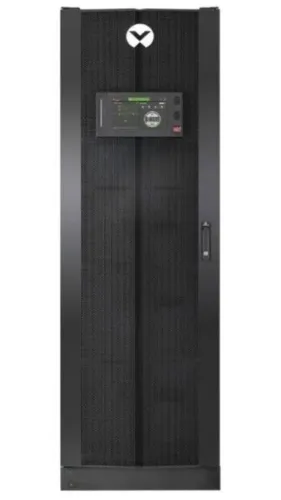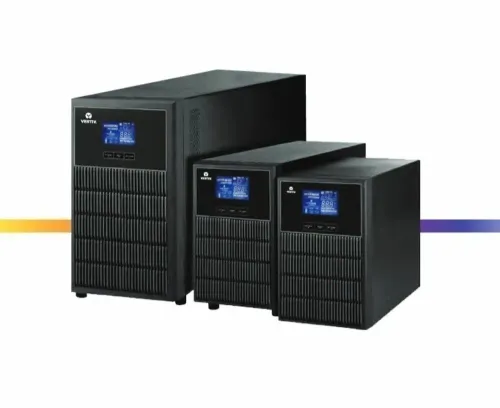

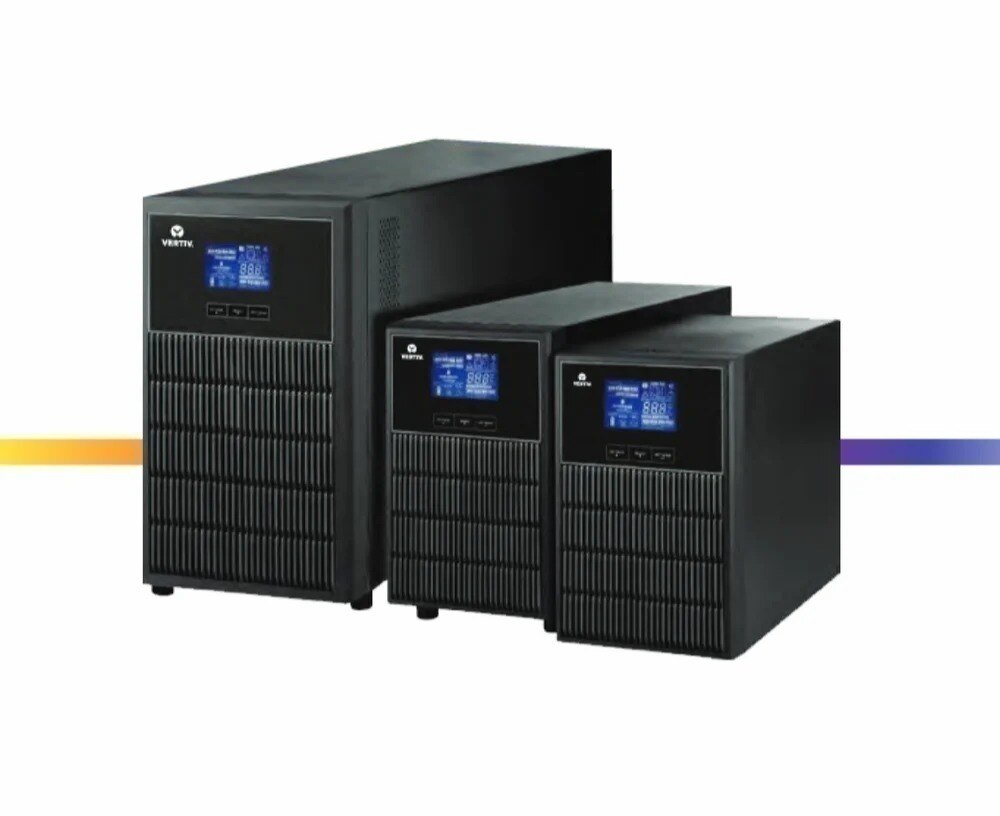
The right UPS choice depends less on the product label than on what your plant must keep running, how that load behaves, and what happens when power fails. You will be able to test the HIPULSE-U against your loads, choose a workable architecture, and specify the site checks needed before purchase.
Key takeaways
- Use a HIPULSE-U for critical controls, not heaters, lighting or large motor starting.
- Size the UPS from kW, kVA, motor starts, growth and required backup runtime.
- Separate sensitive PLCs and CNC controls from loads that create inrush or harmonics.
- Demand site measurements, battery calculations, commissioning tests and documented support.
Does your industrial load need a HIPULSE-U at all?
A HIPULSE-U suits the plant when a shutdown threatens PLC logic, CNC controls, robotics, servers, instrumentation, or an orderly process stop, and the load needs continuous three-phase, double-conversion protection. It is the wrong first choice if the only burden is noncritical heating, lighting, or large motors that a UPS cannot start or run economically.
Screen the installation against these facts:
- Record 30-minute kW, kVA, power factor, phase imbalance, crest factor, and peak inrush for every proposed load; connected nameplate totals alone are unreliable.
- Confirm the site supply, normally 415 V and 50 Hz where applicable, plus voltage and frequency limits, phase-loss behaviour, earthing, neutral arrangement, and generator stability.
- Treat a “30 kVA” unit as 27 kW at 0.9 output power factor, not 30 kW. At 415 V, its nominal full-load current is about 41.7 A, before overload and protection allowances.
- Choose a 500 kVA unit, parallel UPS arrangement, or several smaller units when measured demand, redundancy, segregation, maintenance access, or planned expansion exceeds one unit’s practical headroom.
- Define battery autonomy from the safe shutdown time and generator-start sequence; a longer runtime does not fix an overloaded or unstable supply.
For an industrial three phase UPS in Pune, require a site survey, single-line review, harmonic measurements, generator test, bypass-transfer test, battery-autonomy test, alarm checks, and documented commissioning. Take the quoted HIPULSE-U input/output configuration, overload curve, efficiency, and power factor from its specific datasheet.
How should you size a 30 kVA, 500 kVA or parallel UPS system?
Size from measured maximum kW and kVA, not connected nameplates. Include PLCs, CNC controls, robotics, servers and control panels, then add motor-starting current, rectifier inrush and planned expansion.
At 0.9 output power factor, a Vertiv Liebert HiPulse U 30 kVA provides 27 kW. It suits a small, stable critical load only when the calculated demand leaves starting and growth headroom. Confirm the quotation’s output power factor, overload curve and input configuration; do not infer them from the model name.
| Option | Capacity decision | When it applies |
|---|---|---|
| 30 kVA unit | Up to 30 kVA and 27 kW at 0.9 power factor, with reserve | One contained control or automation load |
| 500 kVA unit | Up to 500 kVA at the specified power factor | A consolidated critical load justifies high-current distribution |
| Parallel UPS system | Units share load or provide N+1 redundancy | A shutdown is unacceptable or expansion will exceed one frame |
| Multiple smaller UPS units | Separate capacity by production cell or load type | Fault isolation and staged growth matter more than centralisation |
A Vertiv Liebert HiPulse U 500 kVA at 415 V draws about 696 A at full load. That demands engineered bypass equipment, busbars or cables, short-circuit withstand, ventilation and maintenance isolation—not simply a larger battery.
Specify autonomy as minutes at a defined kW load, at end-of-life battery capacity and the stated temperature. Generator sizing also requires the rectifier’s input power factor, current distortion, ramp rate and recharge-current limit. Reserve capacity for forecast growth rather than filling the UPS on day one.
Which machines belong on the UPS and how will they behave?
Put the control layer on the UPS, not automatically the machine that it controls. PLCs, CNC controls, robot controllers, instrumentation, industrial PCs and servers need clean power and zero-interruption transfer; a brief outage can create a program loss, axis fault or unsafe restart.
| Load type | UPS treatment | Expected behaviour |
|---|---|---|
| PLCs, CNC controls and robotics | Protect directly | Electronics ride through, but motion stops if drives or contactors lose power. |
| Servers and control panels | Protect directly | High sensitivity to voltage dips; verify inrush from power supplies. |
| Welders, furnaces and large motors | Usually exclude from the UPS | Starting current and rapid switching can overload the inverter and force bypass operation. |
| Compressors and pumps | Protect controls; feed motors separately | The motor may draw several times its running current during starting. |
| Variable-frequency drives | Protect the control supply; assess the drive separately | Input harmonics, rectifier inrush and braking energy affect UPS compatibility. |
| Rectifiers and nonlinear loads | Measure kVA, kW, power factor and harmonics | Pulsed current can reduce usable capacity and distort the input waveform. |
| Regenerative equipment | Use approved energy absorption or regeneration equipment | Returned energy can raise the DC-link voltage and trip the UPS. |
For industrial operations, define the protected load by consequence: what must remain energised, what may stop safely, and what must never feed the inverter. A Vertiv Liebert HiPulse design should be checked against measured transients, harmonic current, crest factor and bypass performance—not connected nameplate totals.
Keep welders, motors and compressors off the UPS unless the selected system is engineered for their starting and regenerative behaviour.
What site conditions in Pune can change the design?
At the plant, measured conditions—not the UPS label—set the safe design. For an industrial three phase UPS in Pune, record phase-to-phase and phase-to-neutral voltage, frequency, imbalance, phase sequence and fault level; 415 V/50 Hz is an assumption until tested.
| Check | Verify on site | Design consequence |
|---|---|---|
| Incoming supply | Log voltage and frequency during production and starts; check phase loss and the UPS input window. | A wide window reduces transfers, not sustained undervoltage or instability. |
| Earthing | Test earth impedance, neutral-earth arrangement, bonding, surge protection and breaker coordination. | Errors create shock, nuisance trips or bypass hazards. |
| Generator | Test the UPS on the generator; measure power factor, distortion, ramp response and recharge current. | Set generator size and recharge limits from interaction, not quotation wording. |
| Transformer | Confirm rating, impedance, vector group, neutral, inrush and fault level. | Prevent rectifier transients and failed fault clearing. |
| Bypass | Prove phase sequence, voltage, interlocks, transfer time and selectivity. | Maintenance transfer must not expose the load to an unsafe source. |
| Battery | Test autonomy at measured kW; check temperature, DC protection, cable length and access. | Cold batteries lose capacity; poor protection spreads faults. |
| Ventilation | Calculate UPS heat and battery-charging airflow; control hydrogen where applicable. | Heat shortens battery life and can trip equipment. |
Require signed records for supply, generator, bypass, autonomy, alarm and remote-monitoring tests. Size feeders, breakers and the maintenance bypass for full-load current, overload and coordination, not nominal kVA alone.
What should you demand from a Pune UPS systems distributor before approving it?
A local office and a competitive quotation do not prove that a UPS systems distributor in Pune can deliver an industrial installation. Make approval conditional on named documents, measured results and a service plan tied to your plant.
1. Demand a configuration schedule for the quoted Vertiv Liebert HIPULSE-U: rating in kVA and kW, output power factor, 415 V/50 Hz settings, input window, isolation transformer, battery type and quantity, autonomy at the specified load, static bypass, maintenance bypass, overload limits and parallel arrangement.
Check that the compliance certificate identifies this tested configuration, not only the HIPULSE-U family, against IEC 62040 or the applicable Indian-adopted standard.
2. Require a signed site-survey report containing the single-line diagram review, feeder and breaker coordination, earthing readings, harmonic and load measurements, generator compatibility, ventilation clearance and battery-room conditions. Reject a design based only on connected nameplate load.
3. Ask for service evidence: Pune-based response arrangements, trained service personnel, spare-parts availability, preventive-maintenance intervals and escalation contacts. Sales presence is not service capability. Whether you appoint Originate Power Solutions or another supplier, put response times and exclusions in the contract.
4. Make commissioning a witnessed acceptance test. Obtain recorded results for load-bank operation, generator transfer, battery autonomy, bypass transfer, alarms, remote monitoring, phase balance, output voltage and frequency. Keep the signed commissioning report, calibration details, as-built drawings and operator training record before releasing final payment.
Related product
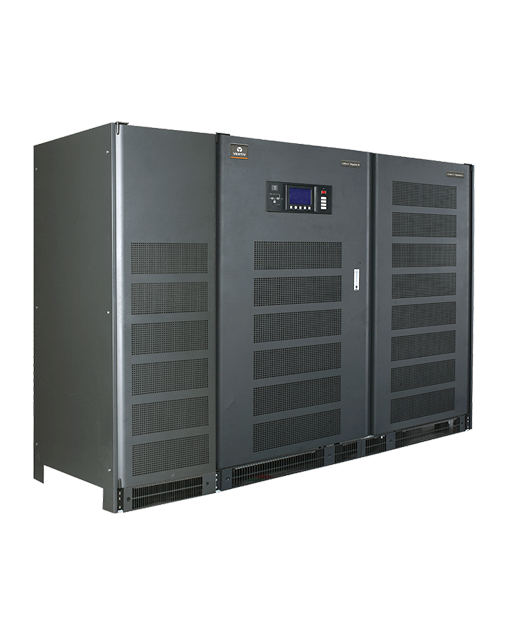 | Three Phase UPS Vertiv Liebert HIPULSE-U 30kVA - 500kVA Online UPS with Inbuilt Isolation Transformer ₹450000 The Vertiv Liebert Hipulse-U offers a reliable, scalable, and user-friendly solution to ensure availability of various critical applications. View product → |
Frequently asked questions
Does every industrial load need a Vertiv Liebert HIPULSE-U?
No. Use it when PLCs, CNC controls, robotics, servers or instrumentation need continuous double-conversion protection. Heating, lighting and large motors usually need a different power strategy.
How do you size a Vertiv Liebert HIPULSE-U 30 kVA or 500 kVA system?
Measure both kW and kVA, check power factor, motor-starting currents, nonlinear loads, future growth and required battery runtime. A 500 kVA installation may also require parallel UPS modules for capacity or redundancy.
Which industrial machines should connect to the UPS?
Prioritise controls, automation networks, instrumentation, servers and orderly shutdown circuits. Keep large heaters, compressors, pumps and motors off the UPS unless the design specifically supports their starting and running demands.
Which Pune site conditions can change the UPS design?
Check ambient temperature, dust, humidity, ventilation, elevation, earthing, generator compatibility, cable routes and battery-room conditions. These factors affect derating, cooling, protection and maintenance access.
What should you ask a UPS systems distributor in Pune to provide?
Request a load study, single-line diagram, battery autonomy calculation, harmonic and generator assessment, installation scope, commissioning procedure, warranty terms, spares plan and local response details.