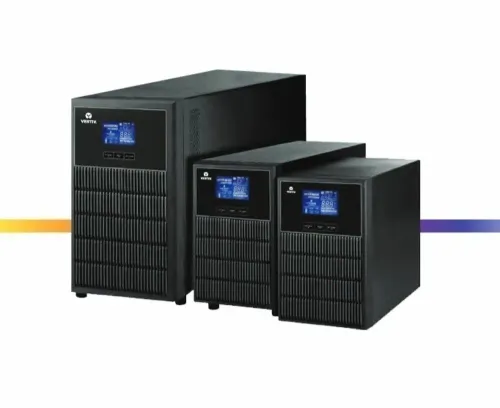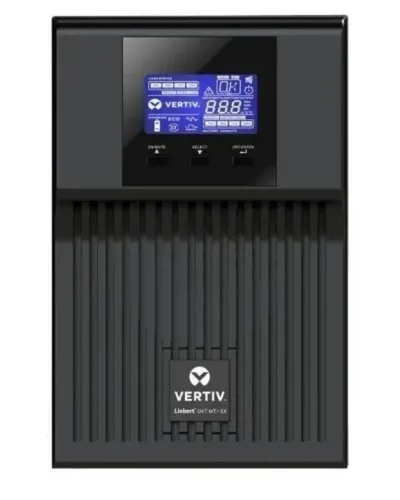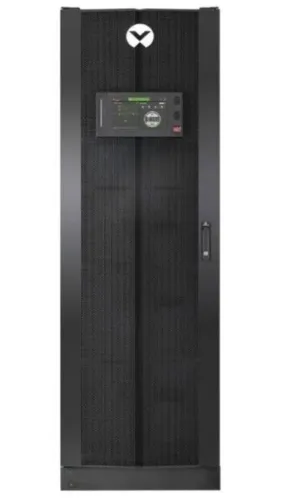

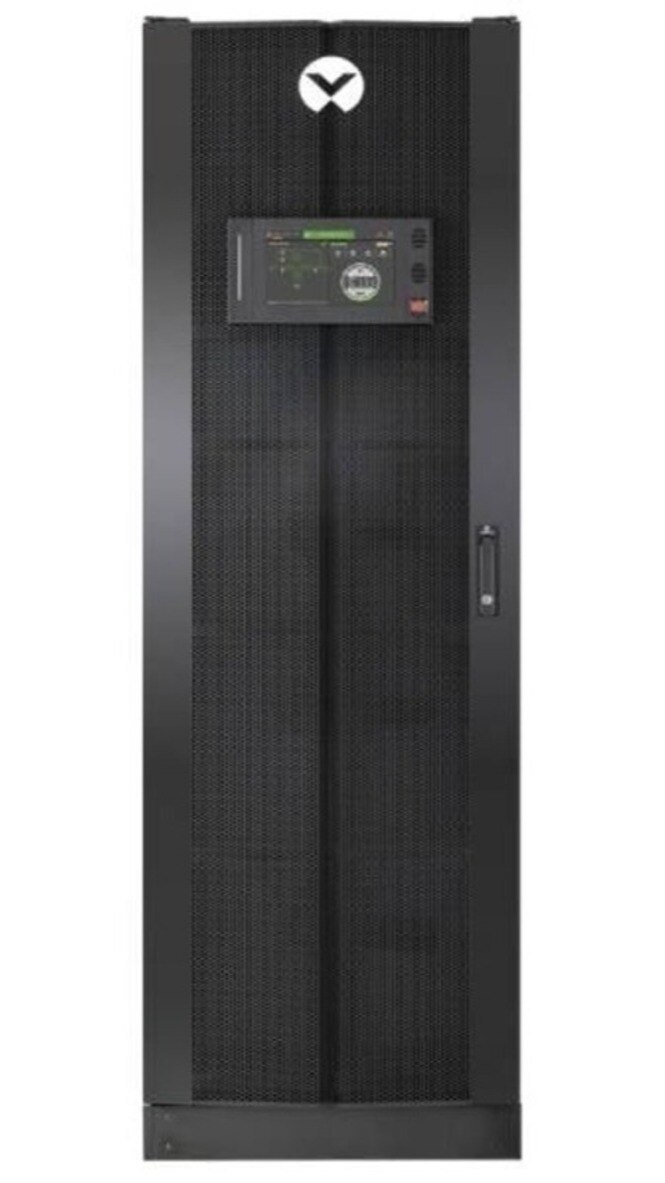
A rectifier fault, inverter fault, bypass fault and battery alarm do not carry the same operational consequence: one may remove redundancy while another can interrupt the load. You will be able to classify the EXL S1 alarm, take the safe first step, compare three-phase alternatives and demand useful evidence from a dealer rather than accepting a generic fault list.
Key takeaways
- Record the exact alarm code, timestamp, load, and UPS operating mode.
- Do not reset repeatedly; follow the site’s approved electrical safety procedure.
- Ask dealers for fault-response times, escalation contacts, and service exclusions.
- Compare bypass behaviour, battery support, and service access—not just UPS capacity.
How an EXL S1 fault changes the power path
With normal operation, the EXL S1 converts AC input to DC through the rectifier, then recreates clean AC through the inverter.
A fault in either conversion stage does not automatically mean an immediate loss of load: if bypass voltage, frequency, phase sequence and synchronisation are acceptable, the static bypass transfers the load to the raw bypass supply.
| Fault location | Power path after the fault | Consequence for the load |
|---|---|---|
| Rectifier | Inverter operation may continue from the DC link; otherwise the load transfers to static bypass or battery | Battery runtime becomes the fallback if bypass is unsuitable |
| Inverter | Static bypass carries the load when synchronised and available | The load remains powered but loses inverter conditioning and normal isolation |
| Static bypass | The load stays on the inverter if that stage is healthy | A later inverter fault may cause shutdown because automatic bypass is unavailable |
| Battery or DC system | Utility-fed inverter operation continues while input power is present | During an input failure, the UPS may provide little or no ride-through |
A bypass transfer exposes equipment to input voltage variation, frequency changes, waveform distortion and phase disturbances that the inverter normally suppresses. “Load still running” therefore does not mean full UPS protection remains.
Maintenance bypass is different: it isolates the UPS for service and makes the load dependent on the upstream maintenance source, without inverter conditioning or battery ride-through.
Ask double conversion online UPS dealers in Pune to map each of these EXL S1 faults to warning, transfer, shutdown or loss of redundancy—not merely label every event “UPS fault.”
EXL S1 fault groups and the safe first response
A warning records an abnormal condition without changing the power path; a transfer sends the load to static bypass or battery; a shutdown removes output; and a redundancy alarm leaves the load powered but reduces resilience.
The exact result depends on firmware, rating and operating state, so request the event log and fault-response matrix rather than relying on a generic list.
| Alarm group | What it indicates | Safe first response |
|---|---|---|
| Input phase loss or rotation | Missing phase, wrong sequence or severe imbalance | Stop switching; verify upstream supply and per-phase readings |
| Rectifier or DC-link fault | Charging or DC-bus conversion is outside limits | Keep the load running; do not open covers or reset repeatedly |
| Inverter overcurrent, overtemperature or overload | The inverter is protecting itself from excess current or heat | Reduce nonessential load; check ventilation and room airflow |
| Static bypass unavailable | Bypass voltage, frequency, phase or synchronisation is unacceptable | Do not force bypass; prepare for reduced ride-through |
| Battery breaker open or undervoltage | Stored-energy support is disconnected or depleted | Check the breaker position and recent discharge history |
| Fan, EPO or communication alarm | Cooling, emergency-stop or reporting circuit has operated | Check EPO status and fans externally; do not bypass a safety circuit |
Use this procedure for a double conversion online UPS dealers in Pune EXL S1 fault comparison:
- Photograph the display, note the timestamp, load percentage, input/output voltage, battery voltage and bypass status.
- Check for smoke, heat, burning smell or unstable output. If present, isolate the load only under your site procedure and call emergency service.
- Record whether the alarm clears after one controlled restart authorised by the service manual. Never restart through an active overload or EPO condition.
The information to record before requesting service
Record the EXL S1 model and kVA rating, serial number, exact alarm text or code, and the time shown on the display. Photograph the screen before acknowledging or resetting anything. Preserve the event log, including the first occurrence, repeat occurrences, clear time, and the event immediately before the alarm.
| Status | Evidence to record | What it tells the service team |
|---|---|---|
| Active fault | Alarm remains on screen; current timestamp; present input, output and bypass status | The condition still exists and may be affecting the power path |
| Warning | Warning text; load percentage; per-phase kW, kVA and current; no transfer or shutdown event | The UPS is operating, but a limit or developing condition needs attention |
| Latched fault | Fault remains after the initiating condition appears gone; reset attempt and result | Protection has stored the trip; clearing it does not prove the cause is fixed |
| Historical event | Clear time; later return to normal; subsequent events showing no repeat | The condition ended, but its sequence and effect still require review |
Also capture input and output voltage, frequency, battery voltage, battery-string indication, temperature or fan alarm, inverter/bypass state, and whether the load transferred, shut down, or merely lost redundancy. Ask for the manufacturer’s fault-response matrix, not just an alarm list.
For readers comparing ups systems traders in Pune exl s1 problems, insist on the available event-log retention, SNMP or dry-contact notification, remote monitoring, bypass-transfer indication, spare-parts availability, and response-time commitment. Do not repeatedly reset DC-bus, overload, battery, bypass, or overtemperature alarms; save the log and request root-cause testing first.
Comparing EXL S1 faults with smaller and competing UPS systems
Compare the consequence, not the alarm count. A rectifier or inverter fault can send an EXL S1 to static bypass, while an unacceptable bypass supply can force battery operation or load disconnection. A bypass transfer preserves power but removes inverter conditioning and ride-through, so “load still on” does not mean “normal operation.”
| Comparison point | EXL S1 three-phase UPS | Single-phase GXT MT+ | Other three-phase UPS |
|---|---|---|---|
| Fault impact | Check whether the event causes warning, bypass transfer, battery operation, shutdown, or lost redundancy | Check the unit’s defined transfer and shutdown response at its smaller load rating | Demand the same fault-response matrix, not a generic “online” claim |
| Load evidence | Record per-phase kW, kVA and current; total load percentage can hide one overloaded phase | Record output current and total kW against the unit rating | Compare phase-balance limits and overload timing |
| Recovery evidence | Review event code, bypass status, synchronisation and battery state | Check event history, restart behaviour and battery autonomy | Verify log retention and controlled-restart instructions |
For a three phase ups traders in pune exl s1 comparison, request the manufacturer’s event log and fault-response matrix. Compare tests under IEC 62040-3 conditions rather than unspecified “zero transfer” or “fault tolerant” claims.
Use the same evidence in a double conversion online ups dealers in pune exl s1 fault comparison: alarm display, dry contacts or SNMP notification, bypass-transfer indication, battery-string alarms, remote monitoring, spare-parts access and response time. A UPS systems traders in Pune EXL S1 problems review is incomplete without those recovery paths.
What to demand from a Pune UPS dealer before purchase or repair
Demand a written fault-response matrix before you buy or authorise repair. It must state whether each EXL S1 condition produces a warning, bypass transfer, battery operation, load shutdown or loss of redundancy, with the exact alarm text or event code.
The phrase ups systems traders in pune exl s1 problems should lead you to evidence, not an alarm-count brochure. Ask for these commitments:
- Per-phase kW, kVA, current, voltage and phase-balance readings at handover; a low total load percentage can hide one overloaded phase.
- Rectifier walk-in, battery-recharge current limit, generator-mode settings and bypass synchronisation behaviour.
- Local display, dry contacts or SNMP alerts, remote monitoring, event-log retention and a named escalation contact.
- A response-time SLA and a list of stocked critical parts, including fans, control boards, bypass components and battery breakers.
- A controlled restart procedure that identifies when operators must not reset the UPS.
| Commitment | Evidence to demand | Failure it exposes |
|---|---|---|
| Technical | Manufacturer fault-response matrix and single-line diagram | “UPS fault” masking different power paths |
| Service | Sample event report, escalation SLA and spare-parts list | No practical recovery route |
| Site acceptance | Signed test sheet for phase loss, bypass unavailable, overload, battery status and EPO | Installation passing without proving protection |
For any three phase ups traders in pune exl s1 comparison, require recorded readings before and after each test, plus confirmation that the load remained supported. Originate Power Solutions should document those results if it is accepting responsibility for the installation or repair.
Frequently asked questions
How does an EXL S1 fault change the power path?
A fault can interrupt normal rectifier-inverter operation and transfer the load to static bypass, maintenance bypass, or another protected source. Confirm the displayed operating mode before taking action.
What information should you record before requesting EXL S1 service?
Record the exact alarm text or code, timestamp, input and output readings, load percentage, battery condition, bypass status, recent events, and any preceding outage or maintenance.
How do EXL S1 faults compare with faults in smaller UPS systems?
A three-phase EXL S1 installation has more power-path equipment, bypass arrangements, battery strings, and site interlocks to assess than a smaller single-phase UPS.
What should you ask a Pune UPS dealer before purchase or repair?
Ask for commissioning scope, response and escalation times, spare-parts coverage, bypass-transfer procedures, battery testing, service exclusions, and a written fault-reporting process.