
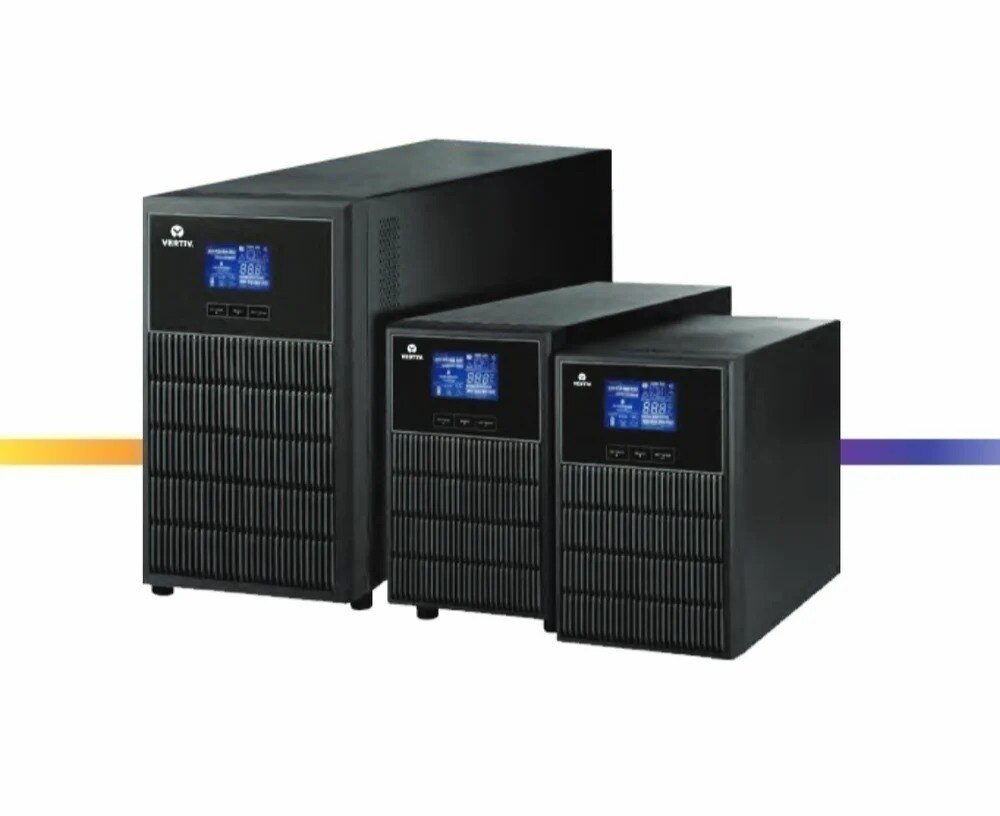
An APM2 Plus alarm does not always identify the failed component, and repeatedly resetting it can turn a manageable condition into a load interruption. You will learn how to classify the event, perform safe first checks, separate UPS faults from facility design problems, and judge whether a 30 kW or 600 kW installation still has the required capacity and redundancy.
Key takeaways
- Record the alarm, event time, load, bypass state and battery readings before resetting.
- Check rectifier, inverter, battery and bypass evidence in the event log.
- Test facility power quality, neutral bonding, cabling and generator transfer—not only the UPS.
- Prove usable capacity, N+1 performance and generator compatibility under controlled load.
How to read an APM2 Plus alarm before touching the controls
Treat an APM2 Plus display as evidence, not a component-level diagnosis. A warning flags a condition needing attention; an alarm indicates an active abnormal state; a latched fault remains recorded after the condition clears; a critical shutdown has stopped conversion or removed normal protection. APM2 Plus UPS faults can originate upstream.
1. Before resetting anything, record the event timestamp, alarm code and text, severity, affected power module, operating mode, input and bypass voltage and frequency, output voltage, load percentage, load kW and kVA per phase, phase imbalance, battery voltage and current, battery-breaker status, bypass availability, and whether the load transferred to static bypass.
2. Confirm whether the UPS is on inverter, static bypass, battery, maintenance bypass, or shutdown. A transfer to bypass can protect the load while indicating overload, overtemperature, abnormal output, or inverter unavailability.
3. Check input and bypass phase sequence, source stability, load level, battery isolation, cooling alarms, and module status. Compare readings with the installed system limits and event history.
4. Do not open an energized cabinet, defeat an interlock, remove a power module under load outside the manufacturer’s procedure, or repeatedly power-cycle a recurring fault.
5. Escalate when the event returns, the load is on bypass, a critical shutdown is active, or DC and temperature readings are abnormal. Preserve the log for the service engineer instead of clearing it.
Fault-by-fault checks for rectifier, inverter, battery and bypass events
Start with the event log, not the named component. APM2 Plus UPS faults often report the consequence of an upstream condition, so record the timestamp, code, operating mode, input and output readings, module status, battery voltage and current, bypass availability, and any transfer before resetting.
1. Rectifier failure: check input phase loss, phase rotation, upstream protection, input voltage, loose terminations, and module status. Escalate if the source is healthy but the fault returns, because the rectifier or its control circuit may be defective.
2. Inverter shutdown: record the shutdown cause, then check overload, output short-circuit indications, DC-bus voltage, temperature, fan status, and whether static bypass accepted the load. Escalate immediately for repeated shutdowns, abnormal DC readings, or an unstable output.
3. Static-bypass transfer: verify bypass voltage, frequency, phase sequence, source capacity, overload, inverter availability, and synchronisation. Do not force a return to inverter mode until you know why the transfer occurred; an unknown inverter fault can interrupt the load.
4. Battery-breaker trip: check breaker position, fuse condition, polarity, string voltage, charger output, monitoring connections, ripple, temperature sensors, and block impedance. A battery alarm alone does not justify replacing every block; use a controlled discharge and block-level impedance or conductance testing.
5. DC overvoltage or undervoltage: separate charger, battery-string, sensing, and discharge conditions before replacing parts. Escalate abnormal DC values or repeated trips.
6. Fan, overtemperature, overload, input-phase-loss, communication, and module-level alarms require the same event-log-first check. Inspect airflow, connections, configuration, and load, then escalate recurring alarms; never open an energized cabinet or bypass an interlock.
When the facility—not the UPS—creates the failure
An upstream breaker can create an APM2 Plus fault without any UPS hardware failure. Compare its rating and trip curve with rectifier input current, available short-circuit current, and the manufacturer’s protection requirements: an undersized breaker nuisance-trips, while oversized or poorly coordinated protection clears faults too slowly.
Check these site conditions before replacing a module:
- Selective coordination among utility, generator, UPS input, bypass, and downstream breakers
- Generator voltage, frequency, waveform, synchronisation, and recovery during transfer
- Neutral-to-earth voltage, grounding conductors, neutral sizing, phase rotation, phase imbalance, and harmonic current
- Cable terminations, input filters, ventilation, dust, room temperature, humidity, and battery-cabinet airflow
A UPS self-test cannot prove that the feeder, bypass switchgear, generator, or cooling system will support the protected load. A 600 kW UPS service in Pune therefore needs complete power-train testing, not a cabinet-only inspection.
Scale changes the failure pattern:
| Capacity | Investigate first | Infrastructure focus |
|---|---|---|
| 30 kW UPS problems | Single-module failure, load growth, battery autonomy, light-load efficiency, bypass sizing | One feeder, termination quality, and local cooling |
| 600 kW system | Parallel-module redundancy, multiple feeders, battery-string isolation | Maintenance-bypass architecture, heat rejection, staged load transfer, selective coordination, generator interaction |
Trend fan status, temperatures, capacitor condition, battery readings, load percentage, and event history. Seasonal dust or humidity can expose a weakness, but logged measurements—not assumptions—identify the cause.
How to prove usable capacity, N+1 resilience and generator compatibility
Usable capacity is the load that remains supported after the planned failure, not the sum of APM2 Plus nameplate ratings. Measure operating and connected kW and kVA by phase, power factor, crest factor, inrush, starting current, nonlinear-load behaviour, phase imbalance, and expected growth.
Use this calculation procedure:
- Record the highest measured load, including motor starts, rectifier charging, and transfer events. A load below the kW limit can approach the kVA limit when power factor is poor or current distortion is high.
- Remove one power module from the calculation. The remaining modules must carry the actual load, required reserve, and any stated future growth.
- Check battery capacity at end of life against the required autonomy, discharge current, recharge time, and low-load operating behaviour.
- Test generator voltage, frequency, waveform, synchronisation, recovery, step-load response, and staged transfer. Confirm that rectifier ramp-up and battery recharge do not destabilise the generator.
- Record maintenance-bypass limits and the load-transfer sequence. Bypass equipment, cables, and upstream protection must carry the required current without creating a single-point failure.
Call the design N+1 only when one failed module leaves enough capacity for the real load plus reserve. Two modules in one cabinet are not 2N; 2N requires independent UPS systems, sources, power paths, bypass arrangements, and distribution paths.
Acceptance testing should cover input failure, static-bypass transfer and return, overload, controlled battery discharge, generator operation, module failure, alarms, remote monitoring, and restoration. Use IEC 62040-3 as the performance framework, then write a site-specific procedure. That discipline prevents 30 kW UPS problems from becoming facility-wide failures.
What a Pune service and procurement plan must verify
A measured survey is the entry condition for Vertiv Liebert APM2 Plus UPS troubleshooting in Pune. Record room temperature and humidity, dust, airflow, neutral-to-earth voltage, input power quality, generator waveform, battery ventilation, bypass switchgear, downstream feeders, and protective settings; assumptions hide installation faults.
For a 600 kW UPS service in Pune, require a work package covering:
- The complete power train, DC isolation points, battery-string segmentation, arc-flash boundaries, PPE, specified discharge or wait times, temporary cooling, temporary power, staged load testing, and rollback.
- Generator interaction, bypass operation, feeder protection, load-bank results, remote alarms, and restoration after a module failure.
For a double conversion online UPS for traders in Pune, compare procurement evidence rather than nameplate kVA:
| Measure | Request | Why it matters |
|---|---|---|
| Efficiency | Expected-load range | Part-load losses affect operating cost |
| Power quality | Input power factor and harmonic current | Distortion affects generators and upstream equipment |
| Continuity | Overload, bypass, and end-of-life battery autonomy ratings | Nameplate capacity can overstate usable protection |
| Serviceability | Recharge time, module replacement conditions, event logging, spares, and response time | Recovery depends on more than hardware |
| Maintenance | Written maintenance-bypass procedure | An unsafe bypass can interrupt the trading load |
Conditioning does not replace network resilience, exchange connectivity, generator fuel autonomy, or sound distribution. Originate Power Solutions can support the decision by combining measured conditions, fault history, capacity calculations, and a service plan instead of treating every alarm as a cabinet failure.
Related products
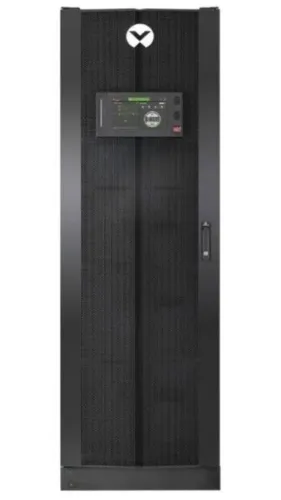
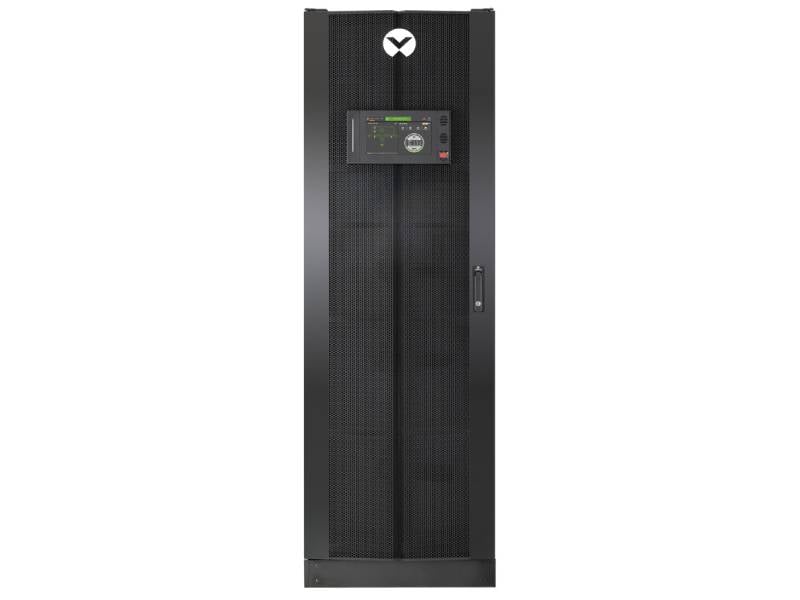 | Three Phase UPS Vertiv™ Liebert® APM2 Plus UPS (30-600 kW) Introducing the all-new Liebert® APM Plus, a scalable, high-density, transformer-free UPS that delivers double conversion efficiency up to 97%, as... View product → |
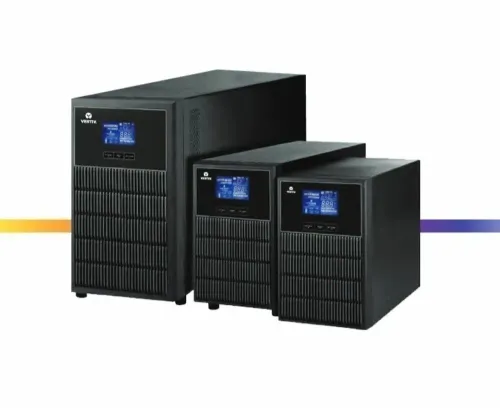
 | Three Phase UPS Vertiv™ Liebert® APM2 UPS (30-600 kW) Introducing a next-generation modular and transformer-less UPS design, Vertiv™ Liebert® APM2, a feature-rich high-power density UPS that brings... View product → |
Frequently asked questions
How should you read an APM2 Plus UPS alarm before touching the controls?
Treat the display as evidence: record the alarm text, severity, timestamp, load, operating mode, battery readings and event history before resetting or changing controls.
What checks identify rectifier, inverter, battery and bypass faults?
Use the event log and measured values to separate rectifier input issues, inverter conversion faults, battery or DC-bus problems, and bypass-source or transfer conditions.
How can a facility create an APM2 Plus UPS failure?
Check upstream voltage and frequency, phase sequence, neutral and earthing, cable terminations, harmonic distortion, generator transfers, cooling and load distribution.
How do you prove usable capacity, N+1 resilience and generator compatibility?
Run a controlled load test, confirm the remaining module capacity after one module is unavailable, and test generator voltage, frequency, ramping and transfer behaviour.
What should a Pune UPS service and procurement plan verify?
Verify site survey records, single-line diagrams, battery test methods, spares, response times, technician competence, commissioning tests and documented acceptance results.