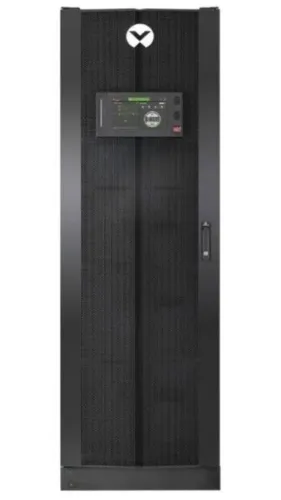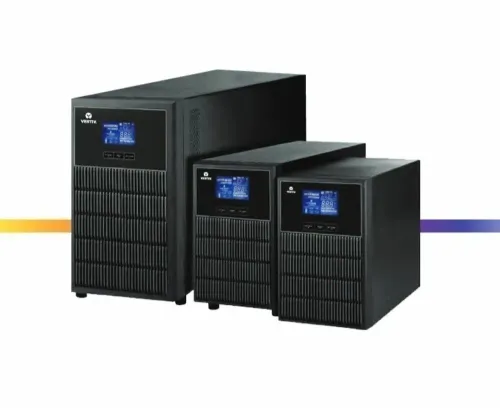

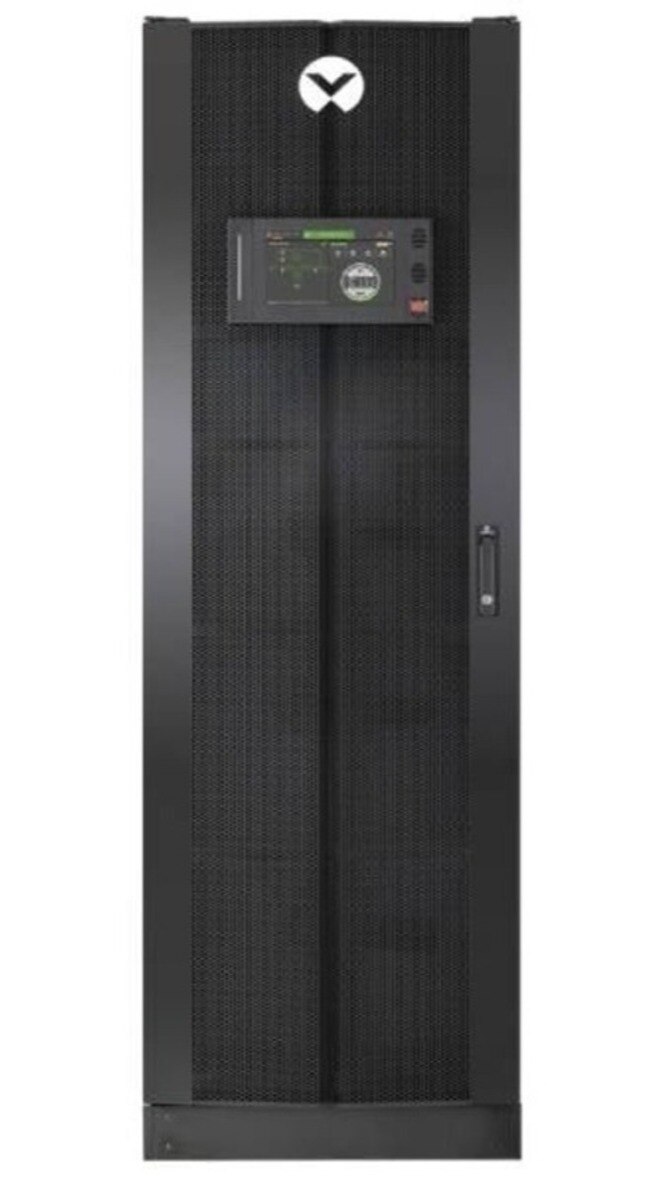
A 30 kW module and a 600 kW system do not represent the same UPS configuration, redundancy level, battery arrangement or installation requirement. By the end, you will be able to read the APM2 Plus specification sheet, size the system for an industrial load and request a Pune quotation that identifies the actual equipment being offered.
Key takeaways
- Confirm the exact APM2 Plus model code and current manufacturer datasheet.
- Treat 30 kW as a module rating, not automatically the complete UPS system.
- Specify battery autonomy, cabinet layout, bypass arrangement and room conditions.
- Request load, redundancy, installation and commissioning details in the quotation.
Which Vertiv Liebert APM2 Plus specifications belong in the quotation?
The quotation must identify the exact APM2 or APM2 Plus model code, because regional catalogues and older datasheets can use the names differently. Treat “30 kW” as a module rating, not a complete system specification, and verify every figure against the current manufacturer datasheet.
| Parameter | Figure to verify |
|---|---|
| Rated module | 30 kW; confirm the corresponding kVA, normally about 30 kVA at unity output power factor |
| Input and output | Three-phase, 380/400/415 V class; state the exact nominal and permissible voltage ranges |
| Frequency | 50/60 Hz; state nominal and permissible input, output and bypass frequency ranges |
| Input performance | Approximately 0.99 power factor and below 3% current distortion under stated test conditions |
| Efficiency | About 97% online double-conversion; up to about 99% economy mode |
| Overload and crest factor | Exact overload time/current curve and crest-factor rating |
| Bypass | Voltage, continuous current, overload current and short-circuit withstand ratings |
| Configuration | Installed modules, cabinet arrangement, usable capacity and redundancy |
Ask the trader to attach the datasheet revision, offered model code, firmware or configuration identifier, and test conditions. Load level, upstream impedance, operating mode and temperature can change the quoted 97% efficiency, 99% economy-mode efficiency, 0.99 input power factor and below-3% distortion. Economy mode also permits more input variation than online operation.
Request confirmation of:
- Whether “APM2 Plus” is the current regional name for the quoted APM2 family
- Exact voltage, neutral, earthing and bypass arrangements
- Overload duration, crest factor, bypass current and short-circuit test basis
- Whether each figure applies to one 30 kW module or the proposed complete system
How does the APM2 Plus scale from 30 kW to 600 kW?
30 kW is the modular increment, not automatically the capacity of one frame, cabinet or parallel system. A Vertiv Liebert APM2 Plus 600 kW label normally represents multiple 30 kW power modules arranged in one or more cabinets; confirm the architecture in the bill of materials.
| Configuration | Installed capacity | Capacity with N+1 redundancy |
|---|---|---|
| Vertiv Liebert APM2 Plus 30 kW | One 30 kW module or smallest offered system | Less than 30 kW if one module must remain spare |
| Vertiv Liebert APM2 Plus 600 kW | Twenty 30 kW modules, subject to frame and cabinet limits | 570 kW after reserving one 30 kW module |
Installed capacity is the total module rating. Protected load capacity is what the inverter can continuously supply, while redundant capacity is the module reserved for a failure. Do not assume every frame or cabinet accepts the same maximum quantity.
1. Request the module quantity, maximum modules per frame, cabinet quantity, maximum single-unit rating and permitted parallel-system rating.
2. Confirm the hot-swappable replacement procedure, internal static-bypass arrangement, maintenance-bypass requirement and continuous load supported after one module fails.
3. Check bypass capacity separately from inverter capacity. The static bypass must suit upstream fault current, breaker coordination and downstream protection; an adequately rated inverter can still have an unsuitable bypass installation.
What battery, cabinet and room details must accompany the UPS rating?
A 30 kW or 600 kW rating does not define the battery or room. Vertiv Liebert APM2 Plus specifications in a quotation must connect the load rating to stored energy, installation space and site conditions.
1. Request the battery schedule: supported valve-regulated lead-acid and lithium-ion options, nominal DC voltage, block voltage, blocks per string, string count, ampere-hour capacity, recharge-current limit, autonomy at the specified load, end-cell voltage, ageing allowance and temperature-compensation method. Separate minimum ride-through time from maximum practical autonomy.
Ask whether battery modules are modular or separately housed, and state the external battery-cabinet requirements.
2. Request the cabinet data: dimensions, operating weight, floor loading, front and rear service clearance, top-entry or bottom-entry cabling, recommended cable sizes, input and bypass breaker ratings, heat dissipation, acoustic output and ingress rating. Confirm the maintenance-bypass arrangement before fixing the room layout.
3. Record room limits: operating temperature, humidity, altitude derating, neutral arrangement and earthing method. Verify cable routes, ventilation or heat rejection, battery-room conditions and access for battery replacement. A Pune electrical room can impose very different conditions from a conditioned test room.
The quotation must state how battery life, efficiency and overload figures change with heat, dust, altitude and load. Do not transfer published test-room results directly to an unconditioned industrial room; a higher ambient temperature can reduce battery life and available autonomy even when the UPS kW rating remains unchanged.
How should you size an APM2 Plus for an industrial site in Pune?
A 30 kW UPS is not automatically suitable for a 30 kW nameplate load. Continuous operation at the rating leaves no allowance for growth, inrush, temperature derating or a failed module.
1. List every load in both kW and kVA. Mark motors, welders, variable-frequency drives, rectifiers and laser equipment, then record starting or inrush demand separately.
2. Separate continuous and intermittent loads. Illustrative values—not Vertiv performance figures—could be 22 kW of continuous process equipment, 4 kW of controls and 3 kW of rectifier load: 29 kW continuous before growth. A 20% allowance raises the planning load to 34.8 kW.
3. Check each starting event against the proposed UPS, bypass source and generator. Do not assume a 30 kW module will start a motor or absorb a rectifier’s charging surge simply because the steady load totals 30 kW.
4. Apply the redundancy plan. A 30 kW module with N+1 protection needs at least two modules, but one surviving 30 kW module cannot support the illustrative 34.8 kW planning load. Three modules provide 90 kW installed and 60 kW after one failure, subject to the offered system’s verified limits.
For industrial three phase UPS in Pune, record these survey points before selecting the configuration:
- Incoming voltage balance, generator kVA and step-load response, transformer arrangement, neutral, earthing and harmonic limits.
- Cable routes, ventilation, ambient heat, dust, floor strength, battery-room conditions, service access and bypass-source availability.
Verify the offered kW, kVA, inrush response and post-failure capacity in writing.
What should an industrial online UPS trader in Pune include in the offer?
A quotation for industrial online UPS for traders in Pune must identify the equipment behind the label, not merely say “Vertiv Liebert APM2 Plus 30 kW” or “600 kW.” Ask for the current model name and code, datasheet revision, module and cabinet count, N or N+1 arrangement, usable load rating, input and output voltage, frequency, neutral and earthing scheme, battery chemistry and strings, ampere-hour capacity, autonomy, end-of-life assumptions, bypass rating, maintenance bypass, communications, monitoring, warranty scope, delivery exclusions, commissioning tests and acceptance criteria.
- Request a single-line diagram, room layout, heat-load calculation, cable and breaker schedule, generator-compatibility statement, battery test record and failure-mode procedure.
- Require the offer to state whether the quoted rating is installed, usable or redundant capacity, and the continuous load remaining after one module fails.
- Check that the stated industrial three phase UPS in Pune configuration identifies 380/400/415 V-class connections, 50 or 60 Hz operation, bypass source and earthing method.
| Label | Evidence required | Procurement risk |
|---|---|---|
| 30 kW | Module count, cabinet, usable load and redundancy | A 30 kW nameplate may leave no growth or N+1 margin |
| 600 kW | Total modules, frames, bypass and failure load | 600 kW installed does not guarantee 600 kW usable with N+1 |
| Battery autonomy | Strings, Ah, end-cell voltage, temperature and ageing allowance | Runtime can collapse as batteries age |
Originate Power Solutions can validate the site survey, translate your load list into a modular configuration and document the difference between installed, usable and redundant capacity. Compare those records, not the capacity label alone.
Related product
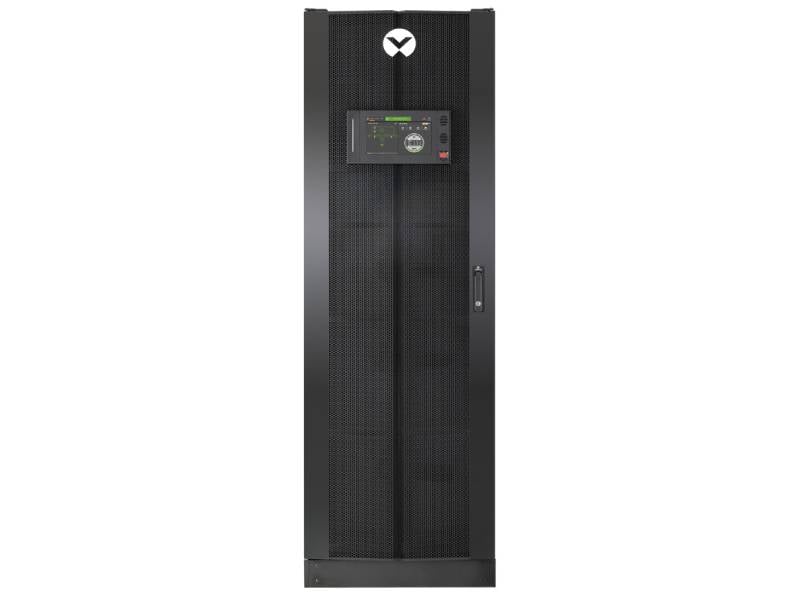 | Three Phase UPS Vertiv™ Liebert® APM2 UPS (30-600 kW) Introducing a next-generation modular and transformer-less UPS design, Vertiv™ Liebert® APM2, a feature-rich high-power density UPS that brings... View product → |
Frequently asked questions
Which Vertiv Liebert APM2 Plus specifications belong in the quotation?
Request the exact model code, UPS rating, input and output details, bypass arrangement, efficiency data, redundancy configuration, battery requirements, dimensions, weights, warranty and commissioning scope. Verify each figure against the current manufacturer datasheet.
How does the APM2 Plus scale from 30 kW to 600 kW?
A 30 kW figure identifies a module rating, not necessarily the complete system capacity. Ask the trader to state the number of modules, total rated output, usable capacity, redundancy level and expansion method for any system up to 600 kW.
What battery, cabinet and room details must accompany the UPS rating?
The offer must state battery chemistry, DC voltage, autonomy at the stated load, battery quantity, cabinet count, dimensions, weights, ventilation, clearances, cable routes and maintenance-bypass space.
How should you size an APM2 Plus for an industrial site in Pune?
Measure actual and starting loads, separate critical from noncritical equipment, allow for future growth, define the required autonomy and choose an N or N+1 arrangement. Check ambient temperature, humidity, dust, earthing, generator compatibility and available floor space.
What should an industrial online UPS trader in Pune include in the offer?
Ask for a single-line diagram, compliance schedule, datasheets, battery calculations, heat-loss figures, installation exclusions, delivery scope, testing plan, commissioning procedure, training, warranty and post-installation service contacts.