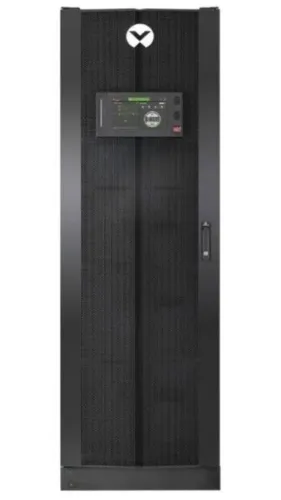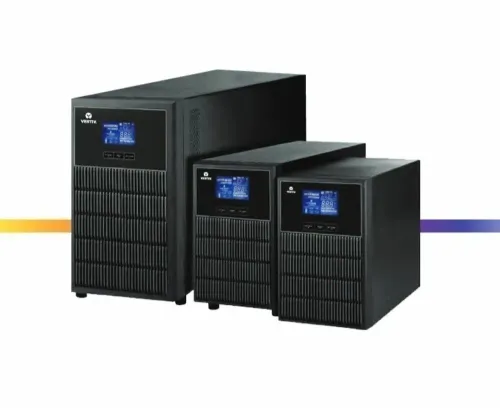

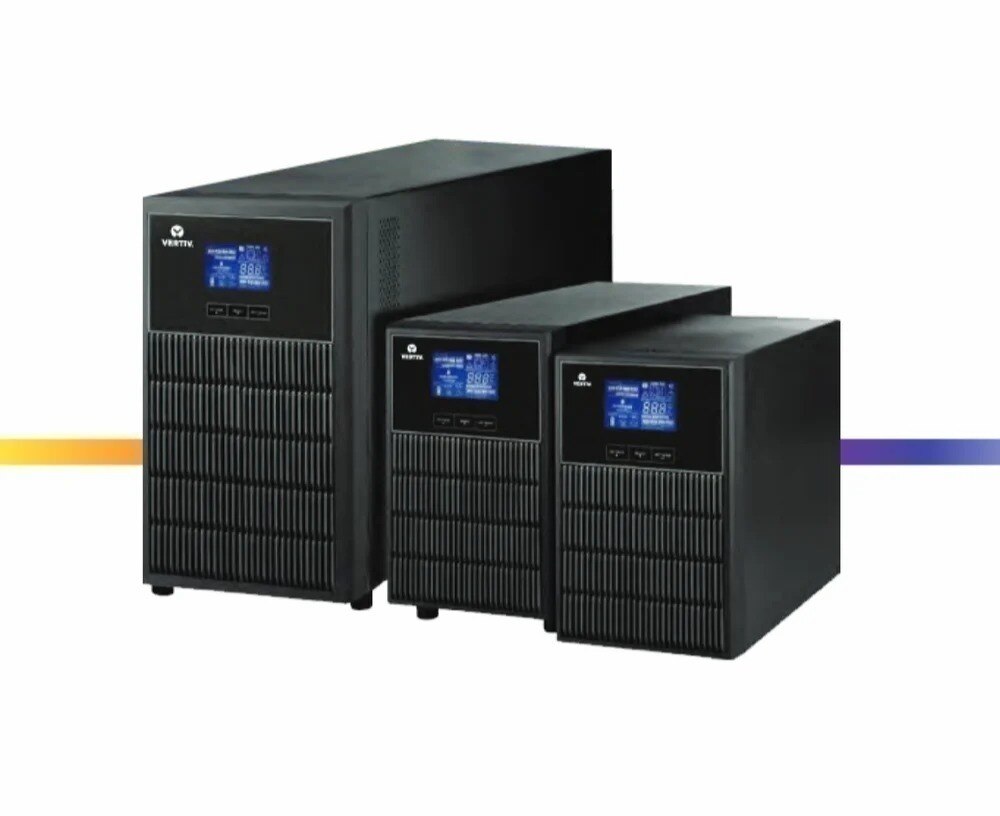
The key choice is not simply between two 1 kVA UPS boxes: it is between a compact internal battery and an externally engineered energy system. You will be able to compare runtime, usable watt capacity, installation effort and total responsibility, then identify the loads and outage patterns that justify the long-run version.
Key takeaways
- Compare battery capacity, not just the 1 kVA UPS rating.
- Request runtime figures at 25%, 50% and 80% load.
- Count actual equipment watts before sizing a 1 kVA UPS.
- Ask dealers to include batteries, autonomy, installation and maintenance terms.
What changes between a long-run ITA2 and a standard UPS?
The main change is stored energy, not protection topology. A standard and long-run ITA2 in the same rating family use online double conversion: the rectifier and inverter continuously supply the load, so a mains failure does not create a transfer gap.
| Comparison | Standard ITA2 | Long-run ITA2 |
|---|---|---|
| Battery | Internal battery pack | External cabinet or battery bank |
| Autonomy | Short ride-through | Extended runtime, subject to battery sizing |
| Installation | Compact and simpler | Requires DC protection, cabling and isolation |
| Protection mode | Online double conversion | Online double conversion |
For a long run versus standard online UPS decision, compare stored-energy capacity separately from voltage conditioning. A line-interactive or offline UPS can have a specified transfer interval when utility power fails; runtime alone is not a complete protection comparison.
A long-run quotation is incomplete unless it names:
- Exact UPS SKU, battery-string voltage, battery quantity and ampere-hour capacity
- Battery cabinet or rack, DC cable lengths and sizes, and connectors
- Battery fuses or breakers, upstream protection and the isolation method
- Commissioning scope, including polarity, string-voltage and runtime checks
External batteries consume floor space and require ventilation, controlled access, short-circuit protection, cable voltage-drop checks and safe maintenance isolation. Incorrect polarity can damage equipment; inadequate DC protection can turn a battery fault into a severe arc or fire.
Choose the internal-battery model for short ride-through or orderly shutdown. Choose long-run equipment when the load must remain online through extended or repeated outages.
How much runtime will you actually get at 25%, 50% and 80% load?
Do not accept “four hours” as a runtime promise. Build the vertiv ita2 1 kva long run comparison around these three load points, each based on the UPS’s usable watt rating:
| Load point | Test basis |
|---|---|
| 25% | 25% of usable watts |
| 50% | 50% of usable watts |
| 80% | 80% of usable watts |
Beside every runtime figure, require the seller to state load in watts, power factor, battery age, battery temperature, discharge cut-off, battery string voltage and recharge condition. A 25% result is not a valid promise for a server rack operating at 70% or 80% load.
A long-run battery bank can provide substantially more autonomy than an internal pack, but delivered runtime depends on battery capacity, discharge rate, series-string balance, ambient temperature and end-of-life condition. Nameplate ampere-hours do not equal usable runtime.
Use this sizing calculation:
- Required battery energy in watt-hours = load watts × desired hours ÷ UPS efficiency.
- Convert watt-hours into ampere-hours by dividing by the DC string voltage.
- Add design allowance for temperature, ageing, discharge limits and conversion losses.
Ask for a battery-sizing worksheet showing the required end-of-life autonomy, not only nominal battery capacity. Also check Pune’s warm-room conditions, permitted battery temperature, ventilation and clearances; heat accelerates battery degradation. A comparison is incomplete unless it states the exact battery bank, string arrangement and cut-off assumptions.
How should you size a 1 kVA ITA2 for real equipment?
Size a 1 kVA ITA2 from measured running watts, not equipment VA. Before comparing quotations, check the exact UPS nameplate: a unity-power-factor model supports approximately 1,000 W within its limits, while the common 0.9 power-factor variant supports about 900 W.
| Model rating | Approximate real-power limit | Quotation check |
|---|---|---|
| Unity-power-factor 1 kVA ITA2 | 1,000 W | Keep measured load below 1,000 W |
| 0.9-power-factor 1 kVA ITA2 | 900 W | Keep measured load below 900 W |
| Unknown variant | Cannot confirm | Obtain the exact SKU and nameplate |
For a Vertiv ITA2 1 kVA long run comparison, total the measured watts of every connected device and leave capacity for startup demand.
A network switch and router, small server, one or two workstations, CCTV/NVR equipment, access-control hardware or a compact security system can fit when their combined running and startup demand stays below the applicable limit.
Do not use this size casually for laser printers, pumps, compressors, larger motors, high-end workstations or laser-cutting equipment. Check these points before choosing the chassis or battery size:
- Measure startup surge, including laser-printer inrush and motor starting current.
- Confirm compatibility with active power-factor-correction loads.
- Verify that the UPS charger supports the proposed external battery bank.
- Compare the measured watts with the end-of-life runtime requirement, not only the battery’s ampere-hour label.
When does long-run autonomy justify the extra installation?
Choose a standard internal-battery UPS when you need orderly shutdown, generator-start ride-through, or protection from brief interruptions and voltage events. Choose external long-run autonomy when outages routinely exceed that period, repeated interruptions prevent shutdown, or network, security, and control loads must remain online for a defined duration.
| Option | What it provides | When it fits |
|---|---|---|
| Standard internal-battery UPS | Short ride-through from the built-in battery | Brief outages, generator start, orderly shutdown |
| External long-run arrangement | Extended runtime from a battery cabinet or bank | Repeated or prolonged outages and loads that cannot go offline |
The long run versus standard online UPS decision is not simply a chassis-price comparison. External batteries add an enclosure, DC protection, cabling, ventilation, service clearances, commissioning work, and future matched-set replacement. They also consume floor space and require polarity checks, safe isolation, and short-circuit protection.
For a Pune installation, confirm these points before approving the design:
- 230 V, 50 Hz input and output compatibility
- Earthing, neutral treatment, and bypass arrangements
- Permitted ambient range, battery derating, and warm-room ventilation
- Dedicated upstream protection, cable sizing, access, and service clearances
- Battery cabinet placement and maintenance isolation
Economy or bypass mode can improve efficiency, but it changes protection behaviour. Do not treat it as equivalent to continuous double conversion until the specification confirms transfer time, voltage regulation, and the conditions that trigger bypass.
What should you ask single-phase UPS dealers in Pune to include?
Ask single phase UPS dealers in Pune for Vertiv ITA2 long run UPS to quote a complete installation, not a chassis followed by “external battery.” Require the exact long-run SKU and a battery-sizing worksheet using measured watts, required runtime, and end-of-life battery capacity.
- Manufacturer-approved battery arrangement, including string voltage, quantity, capacity, cabinet or rack dimensions, service clearances, and permitted ambient range
- DC cable sizes and lengths, connectors, battery fuses or breakers, upstream protection, maintenance isolation, earthing, neutral treatment, and ventilation requirements
- Startup commissioning by named personnel, including polarity checks, string-voltage checks, load-bank or runtime verification, and handover documents
- Pune service response times, preventive-maintenance coverage, escalation contacts, and the replacement process for a matched battery set
A supplier such as Originate Power Solutions is useful when one scope covers the UPS, external battery system, and commissioning. Compare the written bill of materials and runtime assumptions before accepting the label “long run.”
| Quotation item | Require in writing | What it prevents |
|---|---|---|
| Exact UPS and battery SKU | Model codes, string voltage, battery type and approved arrangement | Substitution that changes runtime or charger compatibility |
| Runtime basis | Measured watts, power factor, temperature, cutoff and end-of-life hours | A generic “four-hour” claim that fails after ageing |
| Installation scope | Cabinet, cables, protection, isolation, earthing and ventilation | Unpriced site work and unsafe maintenance |
| Handover and support | Test results, drawings, warranty, Pune response and matched-set replacement terms | Unclear responsibility after commissioning |
Related product
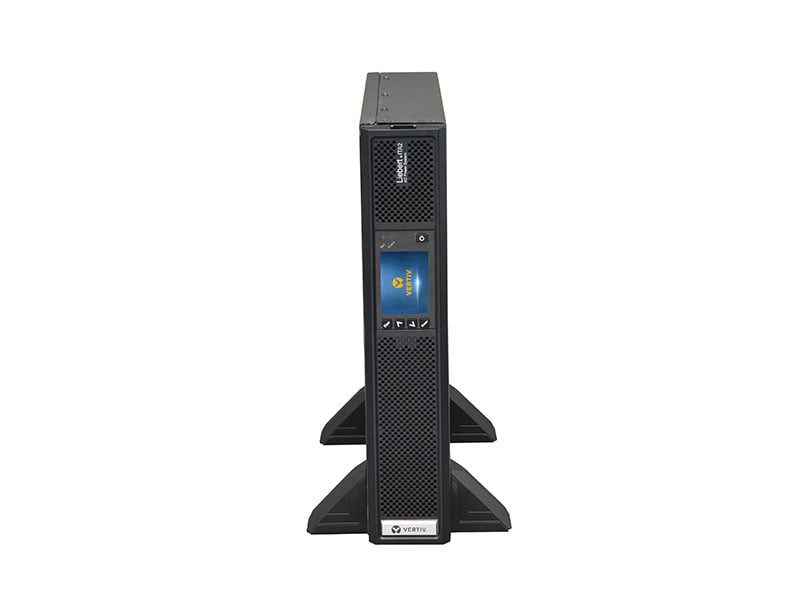 | Single Phase UPS Vertiv Liebert ITA2 1kVA LB (Long Run Model) Online UPS with Unity Output Power Factor ₹35146 The Vertiv Liebert ITA2 series 1 kVA is a full-featured transformer-free UPS designed to offer compact, efficient, and reliable power to modern... View product → |
Frequently asked questions
What changes between a long-run ITA2 and a standard UPS?
The main difference is stored energy. A long-run ITA2 uses external battery capacity for extended autonomy, while a standard model usually has a smaller internal battery. Both models in the same online double-conversion family maintain continuous inverter output.
How much runtime will a Vertiv Liebert ITA2 provide at 25%, 50% and 80% load?
Runtime depends on the battery cabinet, battery count, load watts, battery age and operating conditions. Ask for a manufacturer runtime chart covering your exact battery configuration at 25%, 50% and 80% load instead of relying on the 1 kVA label.
How should you size a 1 kVA ITA2 for real equipment?
Add the nameplate or measured watts of every protected device, then check the UPS watt rating and required headroom. Include startup current, future equipment and the runtime target; a 1 kVA rating alone does not establish usable capacity.
When does long-run autonomy justify the extra installation?
Choose long-run autonomy when generators start slowly, shutdowns risk data or processes, or the load must operate through extended outages. Compare battery cabinets, floor space, ventilation, cabling, maintenance and replacement costs against the required runtime.
What should you ask single-phase UPS dealers in Pune to include?
Request the exact ITA2 model, UPS watt rating, battery quantity and model, runtime at 25%, 50% and 80% load, cabinet dimensions, installation scope, warranty, battery replacement terms and commissioning test.