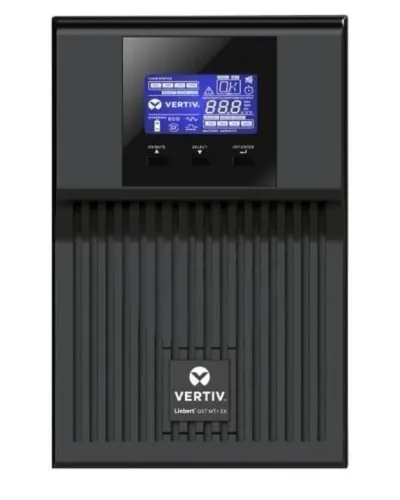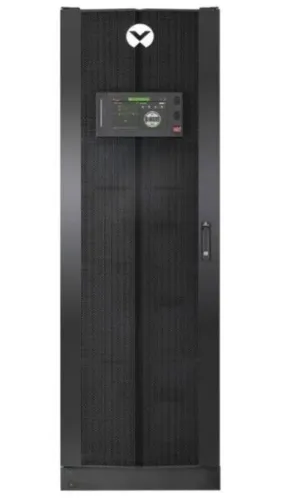

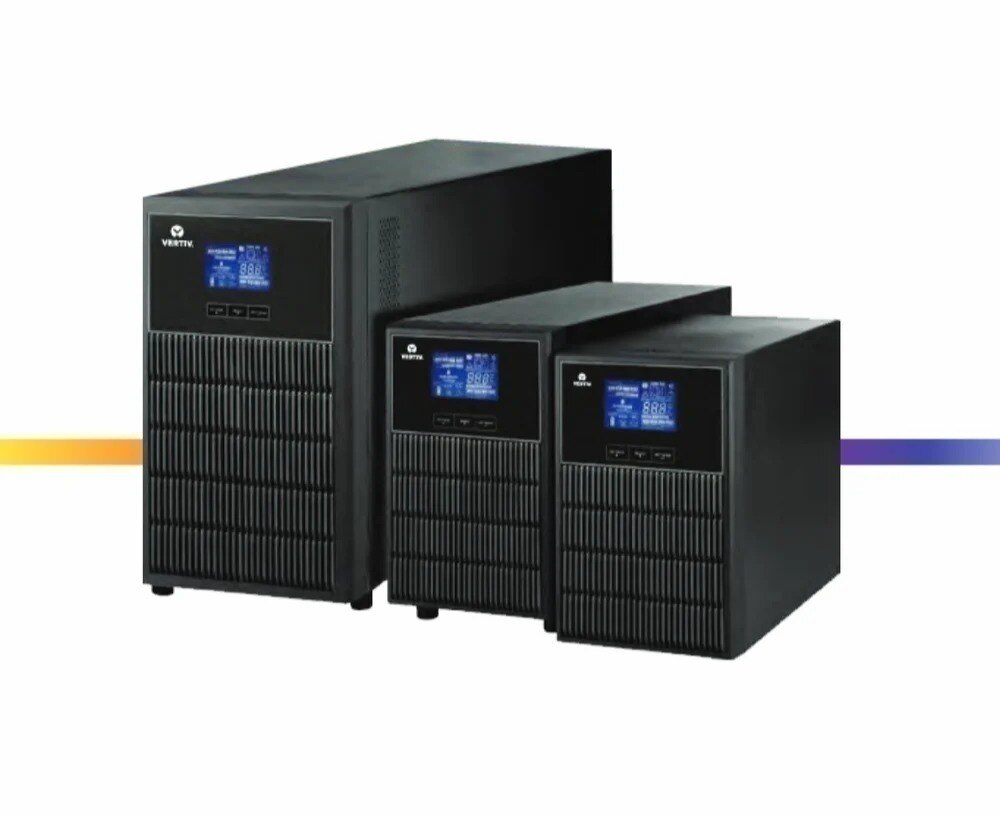
Retail sites combine sensitive electronics with uneven, changing loads: a point-of-sale terminal needs clean continuity, while refrigeration controls and security systems must remain available during disturbances. By the end, you will be able to estimate the required UPS capacity, judge where an APM2 configuration fits, and specify the battery, bypass, electrical and service details that must appear in a quotation.
Key takeaways
- Separate critical electronic loads from compressor motor starting loads.
- Size capacity from kW, kVA, growth and battery runtime—not connected equipment count alone.
- Match modular redundancy, bypass ratings and generator compatibility to the site’s failure plan.
- Require load studies, battery calculations, commissioning tests and service commitments before installation.
How the APM2 protects the different loads inside a retail site
Online double-conversion protection belongs on equipment whose interruption immediately stops sales, loses transactions or weakens security. Put point-of-sale terminals, billing servers, network switches, store-management servers, CCTV recorders and access-control panels on the protected output. Keep refrigeration controllers online when a reset could spoil stock; the compressor motor itself usually requires separate starting-current analysis.
| Load | Online UPS treatment | What a disturbance causes |
|---|---|---|
| Point-of-sale and billing | Protect continuously | A voltage dip can interrupt payment or duplicate a transaction |
| Network and security | Protect continuously | Switches, cameras and access control can reboot or lose recording |
| Refrigeration controls | Protect continuously; assess motors separately | Controller resets can trigger alarms or unsafe restart sequences |
| Digital signage | Protect only if required for revenue or safety | Screens go dark without affecting core operations |
In normal mode, the APM2 rectifier and inverter continuously rebuild the output, correcting sags, surges, frequency variation and electrical noise before they reach the load. During an outage, the battery carries the inverter without a transfer break; during overload or an internal fault, static bypass preserves supply but removes normal online conditioning.
Economy mode approaches 99% efficiency, yet passes more of the incoming supply through, so use it only after assessing the risk to payment, refrigeration-control and security equipment. Ask three phase ups traders in mumbai to document which loads use each mode.
How to size the UPS for a store, mall or retail data room
Start with a measured load schedule, not the sum of every nameplate. Record each circuit’s real power in kW and apparent power in kVA while the store operates at normal peak; where only kW is available, calculate kVA as kW ÷ power factor. Use the larger measured result, then add the largest credible step load.
- Add the steady-state kW and kVA of equipment that must remain online.
- Apply a documented growth allowance for planned tills, network devices, refrigeration controls or server expansion.
- Check the largest starting event, such as a compressor or HVAC drive, against inverter overload, crest-factor and bypass limits.
- Select a frame whose remaining capacity still provides N+1 after growth; a full frame is not redundant.
| Load class | Sizing treatment | Typical examples |
|---|---|---|
| Critical | Include at full operating load and protect continuously | POS, billing servers, network switches, security, access control |
| Conditional | Include only if its control system must not reset | Refrigeration controls, selected HVAC controls, digital signage |
| Noncritical | Leave outside the UPS or shed during an outage | General lighting, plug loads, compressors, large HVAC motors |
Do not put every refrigerator or air-conditioning motor on the UPS merely because its controller is critical. Keep the controller online and coordinate the motor supply separately when the motor’s starting current would dominate the design.
For a Mumbai tender, require industrial online UPS traders in Mumbai to show the calculation sheet, measured power factors, step-load assumptions, growth percentage and resulting usable kW and kVA. Confirm that the quoted Vertiv Liebert APM2 variant matches the site’s 415 V, 50 Hz, three-phase distribution.
How modular capacity and redundancy work in practice
Installed module capacity is the total output of every power module fitted in the APM2 frame; usable capacity is the output available for the retail load after applying the required reserve. N+1 means the load can continue with one module unavailable, not that the cabinet has an empty slot.
- Installed capacity: four 50 kW modules provide 200 kW fitted capacity.
- Usable capacity without redundancy: the full 200 kW, if the design accepts no module reserve.
- Usable capacity with N+1: only 150 kW, because the remaining three modules must carry the load after one is lost.
Calculate N+1 against the actual UPS load in kW, not the cabinet’s nameplate. Adding refrigeration controls, checkout equipment or network racks can consume the spare module and leave a nominally redundant system operating without redundancy. Confirm both kW and kVA for the selected APM2 variant, because the exact frame and module rating determine the result.
If one module fails, the other modules assume its share and the UPS raises an alarm. The load stays protected when their combined capacity covers it; otherwise overload protection, load shedding or bypass transfer can follow the configured design.
Removing a module produces the same capacity loss, but live replacement is permitted only when the frame supports it and the approved procedure allows it.
Ask an industrial online ups distributor in mumbai to show the module count, rated kW, N+1 design load and replacement method on the proposal.
How voltage, bypass, batteries and generators determine real backup performance
A 415 V, 50 Hz, three-phase retail supply does not by itself identify the correct APM2 configuration. Confirm the exact cabinet and module rating, input and output phase arrangement, neutral requirement, bypass voltage, and permitted input-voltage and frequency windows.
State both kVA and kW: APM2 variants are commonly unity-power-factor systems, unlike older 0.8 or 0.9 PF UPS ratings.
| Path | Confirm | Failure if missed |
|---|---|---|
| Normal input | Three-phase, 415 V compatibility; input PF above 0.99 and current THD below 3% at rated load | Light-load, feeder or generator conditions can produce different results |
| Static bypass | Matching voltage, frequency, phase sequence and synchronism with the load | Transfer can interrupt sensitive equipment or expose it to poor supply quality |
| Maintenance bypass | Rated current, isolation points, interlocks and upstream protection | Service work can become unsafe, or the bypass can overload |
| Generator supply | Generator kVA, step-load response, frequency stability, short-circuit capacity and neutral-earthing arrangement | Rectifier starts, battery charging or load steps can trip the generator |
Treat an internal static bypass as a continuity path, not conditioned UPS output. During bypass, the load receives the upstream source’s voltage disturbances and availability.
Specify battery chemistry, number of strings, Ah rating, autonomy at the actual kW load, end-of-discharge voltage, recharge time, temperature, ageing allowance and test method. Require records for each string; a runtime estimate without these variables is not a guarantee.
A quotation from three phase ups traders in mumbai is incomplete unless it identifies these limits and the exact APM2 model.
What to require from an industrial UPS supplier before installation
A quotation is incomplete if it says only “three-phase UPS.” Require the exact Vertiv Liebert APM2 cabinet, module rating, usable kW and kVA, phase arrangement, neutral requirement, bypass voltage and permitted input-voltage window for the site’s 415 V, 50 Hz distribution.
| Evidence to require | What to compare | Reject if |
|---|---|---|
| Model and configuration schedule | Cabinet size, installed and spare modules, N+1 capacity, battery strings, autonomy and end-of-life capacity | It names “APM2” without a precise rating or single-line diagram |
| Factory and test documents | Product datasheet, factory warranty route, factory acceptance test results, and commissioning or SAT procedure | The seller offers only a quotation or an unverified warranty |
| Battery evidence | Chemistry, manufacturer, string count, discharge end voltage, load profile, test current and temperature correction | “Ten minutes” is quoted only at commissioning; VRLA ageing is ignored |
| Service commitment | Mumbai response time, escalation contact, preventive-maintenance schedule, spare-module stock and battery replacement responsibility | No written SLA or local coverage is provided |
Ask industrial online UPS traders in Mumbai for Vertiv Liebert APM2 to state ambient temperature, humidity, ventilation, clearances and battery-room conditions. Blocked airflow can derate the UPS; heat shortens VRLA life. Require installation drawings, cable and breaker schedules, bypass interlock details, generator compatibility checks and operator training.
Compare industrial online UPS traders in Mumbai on these documents, not on the label “industrial online UPS distributor in Mumbai” or “three phase UPS traders in Mumbai.” Originate Power Solutions should be asked for the same evidence when its offer is evaluated.
Related product
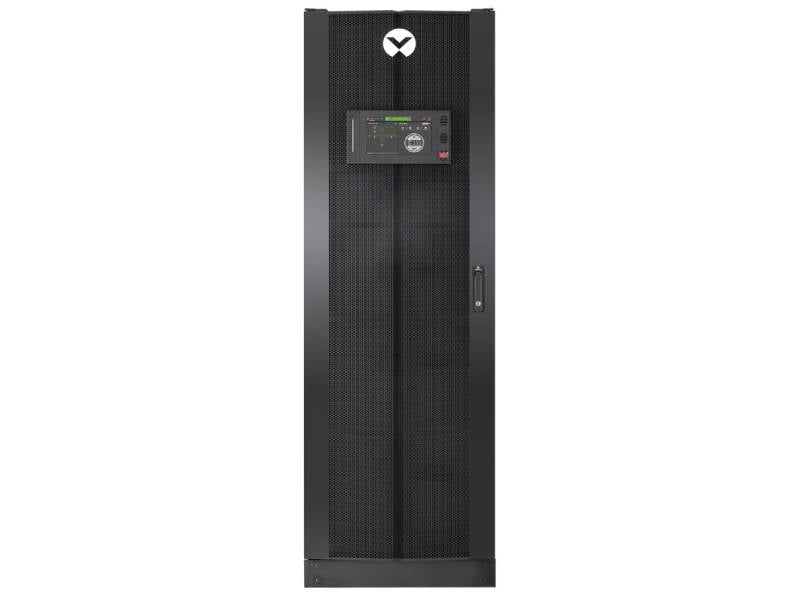 | Three Phase UPS Vertiv™ Liebert® APM2 UPS (30-600 kW) Introducing a next-generation modular and transformer-less UPS design, Vertiv™ Liebert® APM2, a feature-rich high-power density UPS that brings... View product → |
Frequently asked questions
Which retail loads should connect to the Vertiv Liebert APM2 UPS?
Protect point-of-sale terminals, billing servers, network switches, store-management servers, CCTV recorders and access-control panels. Keep refrigeration controllers online when a reset could spoil stock, but assess compressor motors separately for starting current.
How do you size a UPS for a store, mall or retail data room?
Measure the connected load in kW and kVA, record inrush currents, allow for planned growth, and choose battery capacity from the required runtime and shutdown sequence. Do not size from equipment quantity alone.
How do modular capacity and redundancy work in practice?
Modular systems use multiple power modules so capacity can expand with demand and a failed module does not necessarily remove the protected load. Define the required N, N+1 or higher redundancy level and confirm the bypass path.
What should you verify before installing an industrial UPS?
Request the electrical single-line diagram, load and battery calculations, input and output voltage details, bypass arrangement, generator compatibility data, installation clearances, commissioning procedure, test records and service response terms.