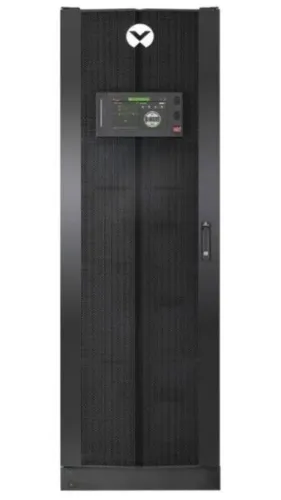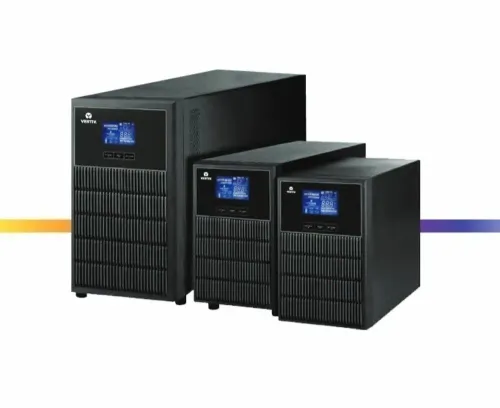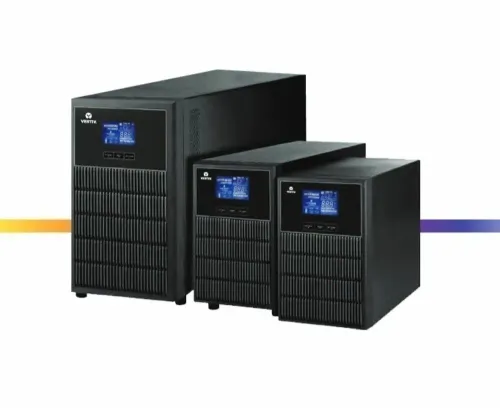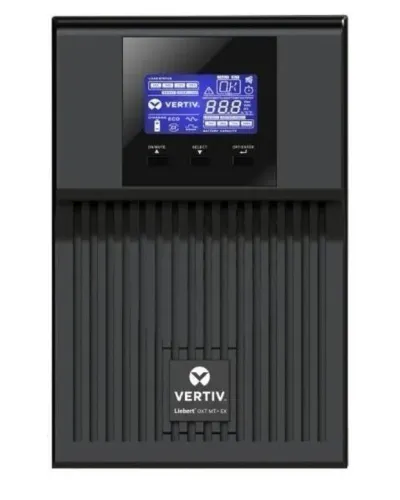

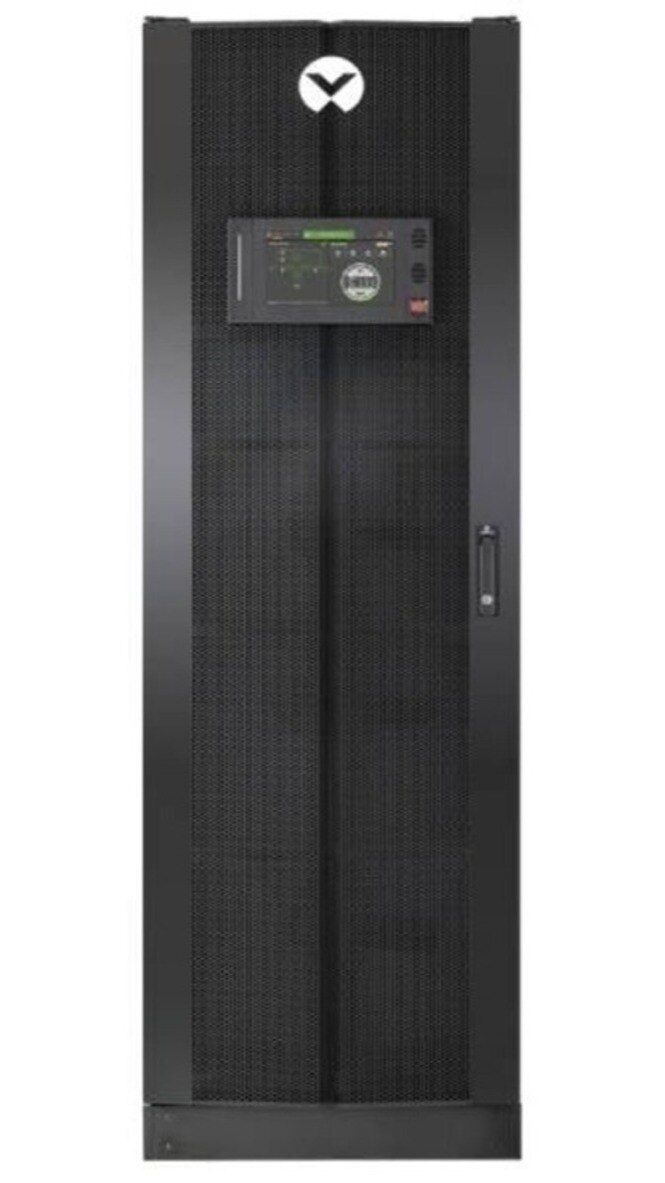
A 6 kVA label does not tell you whether a UPS can safely carry your clinic’s imaging system, server rack, printer fleet or life-support equipment. You will be able to calculate the real load, compare the 3x1 and 1x1 arrangements, verify missing electrical specifications and define the installation questions a Mumbai supplier must answer.
Key takeaways
- Treat 6 kVA as 5.4 kW at 0.9 power factor, not 6 kW.
- Compare 3x1 and 1x1 UPS designs against your wiring and failure plan.
- Request Powerbank 600 RT runtime tables at your actual load and battery age.
- Confirm bypass, isolation, earthing and commissioning support before purchase.
How to calculate whether a 6 kVA UPS fits your equipment
A 6 kVA UPS does not automatically provide 6 kW. At a 0.9 output power factor, its real-power limit is 5.4 kW; at 0.8, it is 4.8 kW. Size the load in both kVA and kW, then leave capacity for startup surges.
1. Record each device’s nameplate watts, VA, power factor and voltage: imaging equipment, monitors, workstations, servers, network switches and routers. Convert watts to apparent power with kVA = watts ÷ (1,000 × power factor). Use the VA rating directly when the manufacturer provides it.
2. Add the converted kVA values and separately add the watts. For example, 1,200 W of computers at 0.8 power factor uses 1.5 kVA, not 1.2 kVA. Keep normal operation near 70–80% of the UPS rating, so a 6 kVA unit has roughly 4.2–4.8 kVA of practical working capacity.
3. Add the manufacturer’s inrush or crest-factor requirement. Laser printers, copiers, pumps, compressors and some medical devices can trip overload or transfer to bypass even when their running watts fit. Put those loads on another circuit or UPS; do not combine them with critical electronics by default.
4. Confirm whether “single phase” describes the input, output or both. Check the dedicated breaker, cable, neutral, earthing, upstream RCD behaviour and manufacturer-specified input protection; a 6 kVA unit may draw more current than an ordinary socket circuit.
A 6 kVA UPS for medical equipment is not proof of IEC 60601-1 or IEC 60601-1-2 compliance. Obtain the device maker’s compatibility and installation requirements before approval.
3x1 versus 1x1: redundancy, failure response and site wiring
The notation describes phases, not the number of UPS modules. A 3x1 Powerbank 600 RT UPS takes a three-phase input and supplies a single-phase output; a 1x1 unit takes and supplies single-phase power. Neither arrangement provides redundancy by itself.
| Arrangement | Input wiring | Output wiring | Failure response |
|---|---|---|---|
| 3x1 | Three-phase, neutral and protective earth, with correctly rated upstream protection | Single-phase, neutral and protective earth to the protected distribution board | Loss of one input phase can trigger an alarm, derating or bypass; confirm the manufacturer’s limit |
| 1x1 | Single-phase, neutral and protective earth, with its own breaker and cable sized for the input current | Single-phase, neutral and protective earth | A mains failure moves the load to battery inverter; an overload or internal fault can transfer it to bypass |
Choose 3x1 when the site has a suitable three-phase feeder and you want to reduce input current on each phase. Choose 1x1 when the available supply is single-phase and the facility can support the higher current on that feeder. Do not connect a single-phase output to a three-phase load without separate equipment.
A three-unit parallel bank is a different claim from “3x1.” It needs a parallel kit, shared bypass and distribution design; only a specified N+1 configuration keeps the load running after one module fails.
For a powerbank 600 rt ups in mumbai, require the terminal diagram, breaker and cable schedule, bypass arrangement, and a witnessed load-bank test after commissioning.
Which Powerbank 600 RT specifications and runtime figures must be verified
“Powerbank 600 RT” does not prove a 6 kVA or 6 kW rating. Obtain the exact datasheet revision and written confirmation of these values before comparing it with your calculated load:
- Rated apparent power in kVA and active power in kW; output power factor at the stated rating.
- Input and output voltage, frequency, and phase configuration, including permissible voltage and frequency ranges.
- Bypass rating, bypass transfer conditions, short-circuit capability, and whether maintenance bypass equipment is included.
- Battery chemistry, quantity, Ah rating, battery-string voltage, series-parallel arrangement, cabinet dimensions, and whether batteries are supplied.
- Charger output, recharge time, battery warranty, replacement access, and the battery self-test or conductance-test method.
| Evidence to obtain | What it must show | Why it matters |
|---|---|---|
| Manufacturer discharge curves | Runtime at your actual kW load, end-of-discharge voltage, temperature, battery age, and reserve | A label runtime can overstate usable autonomy |
| Commissioning load-bank test | Measured runtime at the planned medical or office load | Confirms the installed battery system, not just the UPS model |
| Battery and alarm records | Individual battery results, self-test alarms, and replacement thresholds | “Battery healthy” alone can miss lost capacity |
| Site installation data | Rack height, depth, weight, clearances, ventilation, and noise | RT describes packaging, not room suitability |
| Service commitment | Response time, fan and battery replacement, control-board spares, and post-test support | Delivery does not guarantee restoration |
Use the manufacturer’s curves at the Mumbai room temperature. VRLA capacity falls as temperature rises, so an air-conditioned battery room and a defined reserve are part of the runtime calculation.
Matching medical loads, office circuits and isolation requirements
Workstations, network switches, routers, servers and low-inrush patient-monitoring equipment can share a UPS output when their combined kVA and kW remain within the tested limits. Keep printers, photocopiers, laser equipment, pumps, compressors and imaging systems off that circuit: their inrush or crest-factor demand can trip overload or bypass despite modest running wattage.
| Load group | Share one UPS output? | Circuit decision |
|---|---|---|
| PCs, monitors and network switches | Yes, after diversity and headroom checks | Group on a critical IT circuit |
| Servers and monitoring equipment | Yes, if output quality and leakage limits suit them | Use dedicated critical circuits |
| Laser printers, copiers and large displays | No with critical IT loads | Separate circuit or separate UPS |
| Pumps, compressors and imaging equipment | No without a specific inrush study | Dedicated feeder and protection |
A single-phase online UPS for offices still needs a dedicated feeder when its input current exceeds ordinary socket-circuit ratings. Confirm whether “single phase” describes the input, output or both, then coordinate the breaker, cable, neutral, earthing, RCD behaviour and manufacturer-specified input protection.
An isolation transformer provides galvanic separation and can reduce common-mode electrical noise; it does not automatically create a compliant medical supply. It changes neutral-to-earth treatment, fault current and disconnection behaviour, so protective devices and equipotential bonding must be redesigned. A medical IT system also requires insulation monitoring where the medical location demands it.
Check IEC 60601-1 and IEC 60601-1-2 compatibility with the equipment manufacturer; a commercial UPS certificate is not medical-device approval.
How to assess a Mumbai distributor, bypass plan and commissioning support
Require a written acceptance pack before approving installation. A credible double conversion online UPS distributor in Mumbai for medical equipment will document not just the rating, but the conditions under which the UPS transfers to bypass, rejects a generator, or trips on overload.
1. Ask for measured output-voltage and frequency regulation, total harmonic distortion at your expected load, crest-factor rating, overload curve, short-circuit behaviour, and leakage current. Request the test method and load percentage beside every figure.
2. Give the supplier your generator model, rating, and minimum operating load. Require input power factor, input-current THD, accepted frequency range, generator-sizing assumptions, and the stated generator mode. A larger generator alone does not prove compatibility.
3. Demand a bypass drawing showing normal, static, and maintenance-bypass paths. Confirm who operates each breaker, whether bypass transfer interrupts the load, how isolation is maintained, and how the team returns to inverter operation without an unsafe switching sequence.
4. Put service terms in writing: response time, Mumbai on-site attendance, battery and fan replacement, firmware and control-board spares, escalation contacts, and restoration targets for a clinic or diagnostic centre.
5. Make commissioning a witnessed test. Record input and output voltage, frequency, load current, alarms, bypass operation, generator operation, and battery autonomy with a load bank. Obtain signed results and as-built wiring before energising patient-care equipment.
Originate Power Solutions should answer these questions with documents and site-specific drawings, not a catalogue rating. For medical devices, also obtain the equipment manufacturer’s installation approval; IEC 60601-1 and IEC 60601-1-2 requirements are not replaced by a commercial UPS certificate.
Related products
 | Single Phase UPS Vertiv Liebert Powerbank 600 RT 6 kVA (3x1) Online UPS with Inbuilt Isolation Transformer ₹121500 In today's dynamic world, it is not enough for enterprises to have basic power protection. View product → |
 | Single Phase UPS Vertiv Liebert Powerbank 600 RT 6 kVA (1x1) Online UPS with Inbuilt Isolation Transformer ₹106700 In today's dynamic world, it is not enough for enterprises to have basic power protection. View product → |
Frequently asked questions
How do you calculate whether a 6 kVA UPS fits your equipment?
Add the connected load in VA and watts, check the UPS output power factor, and allow capacity for startup surges. A 6 kVA UPS rated at 0.9 power factor supports 5.4 kW; at 0.8, it supports 4.8 kW.
What is the difference between a 3x1 and 1x1 UPS configuration?
A 3x1 system uses three-phase input with single-phase output and requires suitable site wiring. A 1x1 system uses single-phase input and output. Compare phase availability, redundancy, bypass operation and how a failed module affects your equipment.
Which Powerbank 600 RT specifications and runtime figures should you verify?
Request the output power factor, overload curve, battery voltage, battery type, recharge time, efficiency, transfer or bypass details, dimensions, operating temperature and runtime table. Match runtime data to your measured load rather than the UPS nameplate.
What should you check when using a UPS for medical equipment?
Separate medical loads from noncritical office circuits, check inrush current and leakage requirements, confirm isolation needs, and verify earthing, neutral and bypass arrangements with the facility’s electrical engineer.
How should you assess a Mumbai UPS distributor and commissioning plan?
Ask for a written bypass plan, single-line diagram, delivery scope, battery testing method, load-bank or functional test procedure, warranty contacts and response times. Require commissioning records showing alarms, autonomy and transfer performance.