
A dealer’s claim that an APM2 Plus is “available” can mean local stock, an allocated unit at another warehouse, or a factory order with an unconfirmed delivery date. You will be able to distinguish those options, check the proposed rating and electrical configuration, and demand a quotation that defines supply, installation, commissioning, warranty, and service responsibility.
Key takeaways
- Request dated stock evidence for your required APM2 Plus rating and quantity.
- Require the quotation to state batteries, bypass, warranty, delivery, and commissioning scope.
- Size capacity from measured load, starting current, runtime, and future expansion.
- Confirm room, cabling, earthing, access, and service response before dispatch.
How to confirm whether an APM2 Plus is actually available in Pune
A dealer listing is not proof that an APM2 Plus is in Pune. It may describe a unit available only through a supply channel. Treat apm2 plus availability as confirmed only when the dealer provides dated, equipment-specific evidence tied to your required rating, quantity, and installation date.
1. Request a written quotation naming the exact APM2 Plus rating, such as 30, 60, 90, 120, 150, 200, or 300 kW, plus the number of units and battery configuration.
2. Ask the dealer to state whether each unit is physically stocked in Pune, held at another location, or available only against a factory order. “Available to order” is not local inventory.
3. Require the stock location, allocated serial number or serial-number range, installed power-module count, dispatch date, and factory lead time. If serial numbers are not yet allocated, ask when allocation will occur.
4. Obtain a firm delivery and installation commitment that fits your project schedule. It must show dispatch, site delivery, installation, commissioning, and handover dates rather than one vague lead-time statement.
5. Check the quotation’s issue date and validity period. Ask double conversion online UPS dealers in Pune to reconfirm stock and dates immediately before issuing the purchase order.
The strongest evidence is a dated quotation backed by a stock confirmation and named delivery milestones. Ask for written notice if the proposed rating, battery arrangement, or factory lead time changes; otherwise, “available” can shift after you commit.
What the quotation must identify beyond the APM2 Plus name
An APM2 Plus name alone does not identify the equipment you are buying. Ask for the manufacturer’s exact model code, power-module rating, total frame rating, input and output arrangement, and firmware or revision number. Similar APM products can differ in usable kW, bypass performance, and expansion limits.
| Item | What the quotation must state | What to compare |
|---|---|---|
| Model and capacity | Exact model code, usable kW, output power factor, input/output voltage, and 30–600 kW frame rating | Usable kW, efficiency at your expected load, overload capability, and short-circuit or bypass fault rating |
| Modules and frame | Installed module count, each module’s kW rating, vacant bays, N+1 requirement, and maximum future module count | Whether expansion fits the supplied cabinet and switchgear |
| Battery system | Tested autonomy at a stated kW load, end-of-discharge voltage, chemistry, blocks per string, parallel strings, and design-life or warranty basis | Runtime, replacement responsibility, and battery configuration |
| Included equipment | UPS frame, power modules, static bypass, maintenance bypass, battery cabinets, strings, cables, input/output breakers, startup, and commissioning | Included price versus separately priced items |
For an apm2 plus online ups in pune proposal, require the quotation to state quantity, dispatch location, factory lead time, installation date, validity period, and whether the quoted rating and battery arrangement are physically available or supplied against order. A low headline price can conceal missing battery strings, bypass hardware, or commissioning.
How to choose the rating and build the required redundancy
Choose the APM2 Plus configuration from usable kW at your measured power factor, not from connected kVA alone. Add running load, account for inrush from motors, transformers and rectifiers, then reserve capacity for planned growth without exceeding the manufacturer’s allowable continuous loading.
| Design input | Configuration effect | What the quotation must show |
|---|---|---|
| Connected load and power factor | Convert the load to real kW and verify output kW at that power factor | Total kW, kVA, output power factor and efficiency at expected loading |
| Inrush current | Prevents nuisance overload or bypass transfer during starting | Overload duration, short-circuit or bypass fault rating, and starting-load assumptions |
| Growth and allowable loading | Sets spare capacity; vacant bays are not installed capacity | Current load, forecast load, target operating percentage and populated versus vacant module bays |
| Autonomy | Determines batteries, not UPS kVA alone | Tested minutes at specified kW, end-of-discharge voltage, chemistry, blocks per string and parallel strings |
| N+1 redundancy | One module can fail while the remaining modules carry the design load | Installed module count, module rating, protected load after one failure and frame capacity |
For example, a 180 kW design load requiring N+1 with 60 kW modules needs four modules, because three carry 180 kW and one remains available. Confirm that bypass protection, short-circuit withstand and battery protection support this arrangement.
Ask UPS systems dealers in Pune to identify the exact Vertiv model code, firmware revision and module rating; “APM2 Plus” alone is not enough.
How to verify site compatibility before dispatch and commissioning
Before dispatch, make the Pune site pass a documented design review for the proposed 30–600 kW system. Ask double conversion online ups dealers in pune to match the quotation against your single-line diagram, load schedule, room drawing, and installation date—not merely confirm that an APM2 Plus listing exists.
Obtain written confirmation of:
- Three-phase input and output voltage, frequency, neutral arrangement, usable kW, overload rating, efficiency at expected loading, and short-circuit or bypass fault rating.
- Upstream breaker coordination, battery fuse or DC isolator, earthing conductor, cable-entry space, termination clearances, and selective protection.
- Room temperature and humidity limits, floor loading, access route, working clearances, ventilation or heat rejection, and battery-room requirements.
- Static bypass and maintenance-bypass ratings, bypass-source compatibility, interlocks, and the effect of bypass transfer on the protected load.
| Check | Site requirement | Acceptance evidence |
|---|---|---|
| Electrical | Nameplate values match the measured supply and load; neutral and earthing are approved | Recorded input/output voltage, frequency, current, phase balance, and earth continuity |
| Environment | Room conditions, clearance, floor loading, cable route, and heat removal meet the manufacturer’s installation drawing | Signed installation inspection with photographs and temperature reading |
| Protection and bypass | Breakers, DC isolation, fault rating, bypass interlocks, and battery protection are coordinated | Protection-setting sheet and successful bypass-transfer test |
| Commissioning | No-load and load-bank tests cover the specified operating range | Load-bank report, battery discharge or simulation, alarms, communications, and controlled mains-failure results |
“Powered on” is not acceptance. Require signed results before handover, including autonomy, recharge, alarm, monitoring, and return-to-mains checks. Insist that the dated quotation states the exact rating, quantity, dispatch location, factory lead time, installation date, and validity period.
How to assess the Pune dealer’s installation and service commitment
Do not accept “authorised dealer” as a verbal assurance. Ask for a current Vertiv authorisation letter covering supply, installation, commissioning, warranty coordination and post-sales service for the quoted APM2 Plus rating. Obtain the name, phone number and email of the service manager who will own your site.
Use the purchase order and service-level agreement to confirm:
- Installation scope: unloading, positioning, cable termination, upstream and battery protection checks, earthing, startup and commissioning tests, load transfer, alarm verification and operator training.
- Warranty handling: who logs the claim, who supplies labour and parts, exclusions for batteries and site conditions, preventive-maintenance frequency, and the maximum time before an engineer attends.
- Response commitments: remote acknowledgement, telephone support, on-site arrival in Pune, fault diagnosis and restoration targets, stated separately for critical and non-critical failures.
- Spares: local stock of compatible power modules, fans, control boards and fuses; replacement lead times; and whether a loaner module is available during repair.
- Batteries and monitoring: responsibility for battery testing, replacement and disposal; battery warranty basis; remote monitoring setup, alert ownership and monthly reports.
- Escalation: dealer contact, Vertiv India escalation contact, senior management contact and the process for unresolved repeat failures.
Originate Power Solutions belongs in your comparison only after it documents these commitments against the exact rating, module count and battery arrangement; a low equipment price does not compensate for an undefined recovery process. Require every promise in the signed quotation or SLA.
Related product
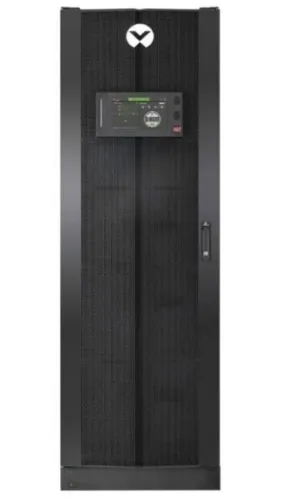
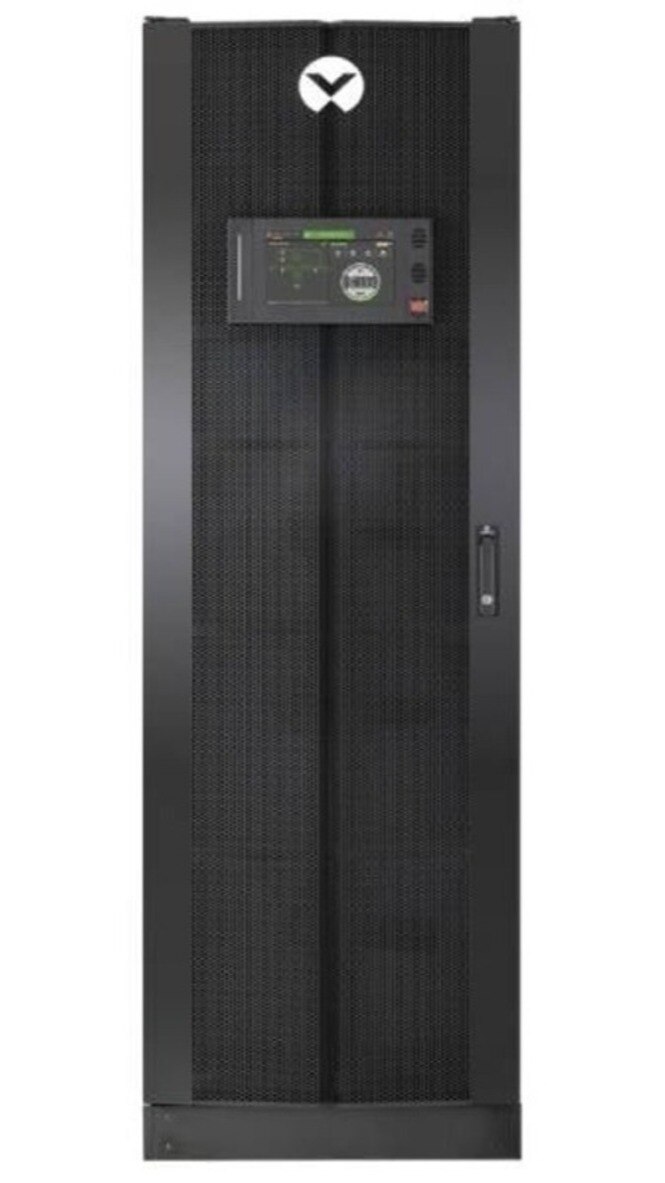
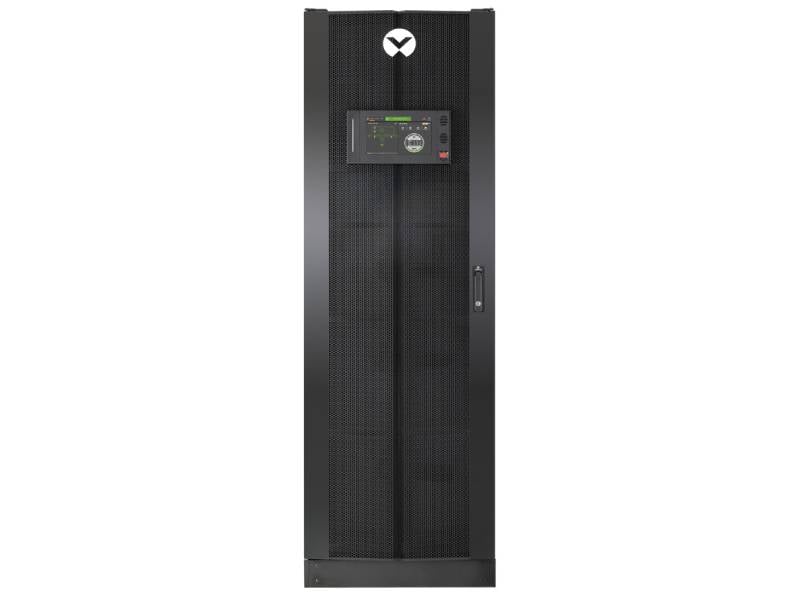 | Three Phase UPS Vertiv™ Liebert® APM2 Plus UPS (30-600 kW) Introducing the all-new Liebert® APM Plus, a scalable, high-density, transformer-free UPS that delivers double conversion efficiency up to 97%, as... View product → |
Frequently asked questions
How can you confirm APM2 Plus availability in Pune?
Ask the dealer for dated, equipment-specific evidence showing the required rating, quantity, and installation date. A listing alone does not confirm local stock.
What must an APM2 Plus quotation identify?
Require the exact rating, battery configuration and runtime, input and output details, static bypass, accessories, delivery date, warranty, installation, commissioning, and exclusions.
How do you choose the APM2 Plus rating and redundancy?
Use measured connected load, starting current, power factor, required runtime, and expansion plans. Select parallel or modular redundancy when the load must continue after one UPS module fails.
What site checks must be completed before UPS dispatch?
Verify room dimensions, floor loading, ventilation, cable routes, upstream protection, earthing, battery location, access route, and commissioning readiness.
How should you assess a Pune UPS dealer’s service commitment?
Get installation responsibilities, commissioning tests, preventive maintenance visits, response times, spare-parts arrangements, escalation contacts, and warranty exclusions in writing.