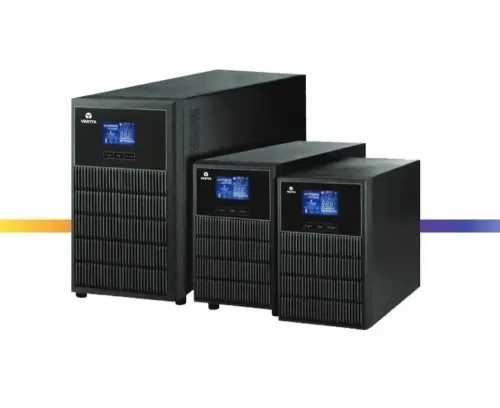

A 1 kVA, 2 kVA, or 3 kVA label does not tell you how many servers, switches, monitors, or workstations the UPS can safely carry. By calculating watts, power factor, startup demand, runtime, electrical conditions, and future growth, you can test whether an ITA2 unit fits the load and whether a supplier’s quotation covers the installation properly.
Key takeaways
- Convert kVA to usable kW using the UPS output power factor.
- List every device’s watts, startup demand, and required runtime before selecting capacity.
- Compare batteries, bypass arrangements, installation work, warranty, and testing in each quotation.
- Choose a larger UPS when load growth or runtime exceeds the 1–3 kVA scale.
Turn the 1–3 kVA rating into a usable load
Do not treat 3 kVA as 3 kW. Calculate usable capacity from the UPS output power factor: usable kW = rated kVA × output power factor. A 2 kVA unit rated at 0.9 power factor therefore supports 1.8 kW, not 2 kW. Confirm the ITA2 datasheet value before sizing.
Use this calculation:
- List each device’s actual watts, not only its nameplate VA.
- Add the watts of equipment that runs simultaneously.
- Check startup or inrush demand from devices with power supplies, drives, or compressors.
- Keep normal sustained load near 60–80% of usable UPS capacity for growth and transient demand.
| ITA2 rating | Usable capacity at 0.9 power factor | Practical target at 60–80% |
|---|---|---|
| 1 kVA | 0.9 kW | 0.54–0.72 kW |
| 2 kVA | 1.8 kW | 1.08–1.44 kW |
| 3 kVA | 2.7 kW | 1.62–2.16 kW |
For double conversion online UPS traders in Pune, ITA2 one to three kVA applications include concentrated network, server, security, laboratory, and point-of-sale loads. A quotation from double conversion online UPS traders in Pune must identify the output power factor, because two units with the same kVA rating can support different watt loads.
Check ventilation as carefully as capacity. Keep the UPS out of a sealed rack, away from heat-producing equipment, and below the manufacturer’s temperature limit; continuous rectifier and inverter losses raise temperature, shorten battery life, and reduce runtime.
Size the UPS with a device-by-device load schedule
Build the schedule from measured watts, not device count. Record each device’s running wattage, add its startup or inrush demand, then keep at least 20% spare capacity. A 1 kVA UPS does not automatically provide 1,000 W: usable kW depends on the ITA2 model’s output power factor and the connected equipment’s power factor.
The combinations below are conservative examples, not a substitute for the unit’s datasheet limit.
| Option | Example protected load | Approx. running load |
|---|---|---|
| 1 kVA | Two network switches, router, NAS, monitor and one workstation | 485 W |
| 2 kVA | Two small servers, storage appliance, switch, router and monitor | 1,015 W |
| 3 kVA | Three small servers, storage appliance, two switches, router, two monitors and workstation | 1,885 W |
Check every nameplate before accepting the match. Laser printers, pumps, compressors and devices with large power supplies can create a brief surge that exceeds their running wattage; place them on a separate circuit unless the UPS manufacturer approves the starting demand.
Ask double conversion UPS traders in Pune for a device-by-device load sheet showing watts, power factor, startup current and the proposed headroom.
Ask single phase UPS dealers in Pune to confirm the ITA2 input and output arrangement, battery configuration and bypass rating rather than quoting only “1, 2 or 3 kVA.” A suitable combination still fails if its feeder, battery or bypass cannot carry the actual load.
Match runtime and electrical conditions to the site
A 3 kVA label does not tell you how long the load will run. Ask for the battery voltage, ampere-hour rating, internal or external battery arrangement, runtime at your measured watt load, recharge time, and replacement-battery specification. Two identical UPS ratings can deliver very different autonomy.
Check these site conditions before selecting the unit:
- Battery: Require a runtime table at 25%, 50%, 75%, and 100% load. Confirm whether adding an external battery cabinet changes the charger, protection, warranty, or floor space.
- Input: Verify single-phase voltage and frequency limits, input power factor, total harmonic distortion, and generator-compatibility settings. A small genset can become unstable if the rectifier draws distorted current.
- Output: Match single-phase output voltage, frequency, socket type, earthing, bypass arrangement, and permissible crest factor to the connected equipment. Confirm that the UPS is genuinely double-conversion online, not line-interactive.
- Environment: Provide ventilation and clearance around the UPS. A sealed rack, dusty room, or electrical room beside heat-producing equipment raises temperature, shortens battery life, and reduces runtime.
For ITA2 one to three kva applications, measure the actual room temperature and identify motors, compressors, heaters, photocopiers, and laser printers before approval; their starting current can exceed the electronic load calculation. Ask online UPS dealers in Pune and double conversion online UPS traders in Pune for commissioning, warranty, and replacement-battery support in writing.
This is more useful than comparing the dealer label alone.
Compare the online UPS specification, quotation, and installation scope
Before accepting an ITA2 quotation, require three separate documents: the manufacturer’s technical datasheet, an itemised commercial quotation, and a site-specific installation scope. A low price can hide an undersized battery bank, excluded cabling, or no commissioning test.
| Document | Require in writing | Why it matters |
|---|---|---|
| Specification | 1–3 kVA model, 230 V/50 Hz input and output, permitted input range, output power factor, crest-factor limit, overload curve, battery voltage and battery quantity | Confirms the unit suits your measured supply and nonlinear server or communications loads |
| Quotation | UPS price, battery and autonomy basis, taxes, delivery, warranty duration, replacement-battery terms, exclusions, and payment milestones | Prevents “runtime” claims based on new batteries at an unstated load |
| Installation scope | Site survey, earthing and neutral checks, input/output MCBs, bypass arrangement, cables, rack or wall mounting, ventilation clearance, startup, load test, and handover report | Shows who makes the system safe and proves it works after installation |
Specify autonomy at your actual load with batteries at end-of-life capacity, not “up to” runtime. Require the supplier to record measured input voltage, frequency, earth resistance and feeder capacity during commissioning.
Ask double-conversion online UPS traders in Pune, online UPS dealers in Pune, or single phase UPS dealers in Pune to identify every exclusion. Originate Power Solutions can be assessed on the same checklist: compare its battery replacement process, response commitment and commissioning records with competing quotations.
Reject any offer that cannot state the exact model, battery configuration, overload rating and acceptance-test procedure.
Related product
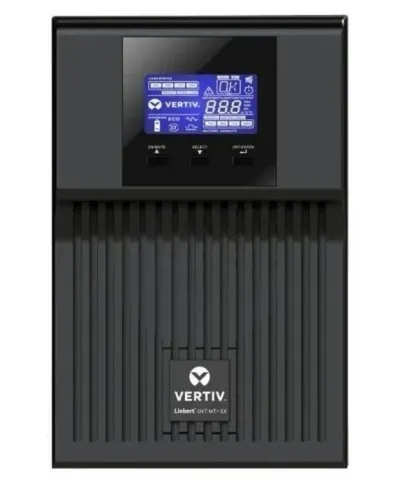
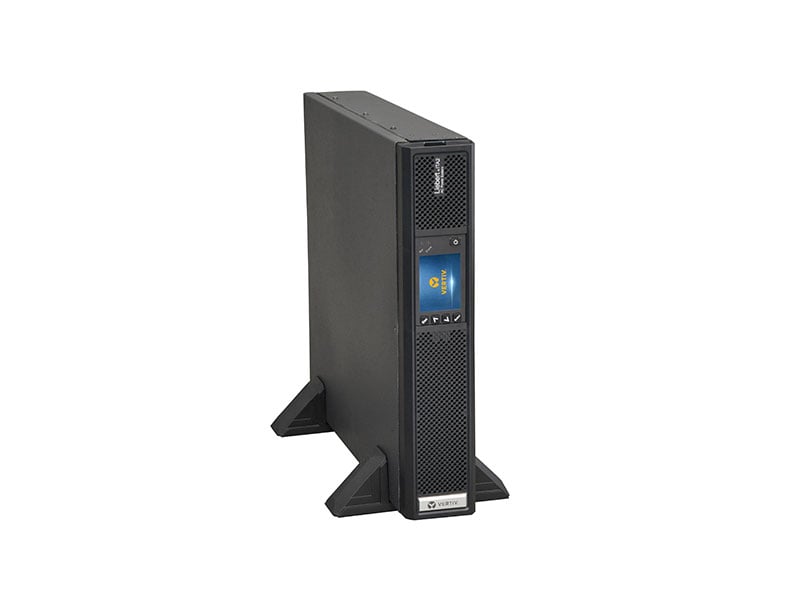 | Single Phase UPS Vertiv Liebert ITA2 UPS 1-3 kVA ₹35144 The Vertiv Liebert ITA2 (1-3 kVA) series is a full-featured transformer-free UPS designed to offer compact, efficient, and reliable power to modern... View product → |
Know when 1–3 kVA is the wrong scale
Move beyond 1–3 kVA when the measured load, growth requirement, runtime, or site supply exceeds what one small single-phase unit can safely deliver. A 3 kVA ceiling is not solved by connecting several units: separate UPSs do not automatically provide a shared bypass, common battery bank, or N+1 redundancy.
| Option | Choose it when | What it changes |
|---|---|---|
| Larger single UPS | Several racks, air-conditioning units, pumps, or a complete office floor need protection | Provides higher output capacity and a more suitable distribution arrangement |
| Modular UPS | Load growth, maintainability, or fault tolerance matters | Adds power modules in stages and supports planned redundancy |
| Generator-backed UPS system | Outages can outlast the required battery runtime | Combines battery ride-through with sustained generator supply; confirm rectifier power factor, harmonic distortion, generator sizing margin, and compatibility settings |
| Three-phase or differently configured UPS | The measured feeder is three-phase, loads are distributed across phases, or single-phase output cannot serve the equipment | Matches the site’s voltage, phase arrangement, neutral, earthing, and feeder capacity |
Ask double conversion UPS traders in Pune and single phase UPS dealers in Pune to state the exact input and output phase configuration rather than relying on “online UPS” in the quotation.
Do not upsize to hide a poor installation. A sealed rack or hot electrical room can shorten battery life; improve ventilation when heat is the problem. Choose a larger or modular system when capacity, expansion, or redundancy is the problem.
Frequently asked questions
How do you convert an ITA2 UPS rating into usable load?
Multiply the rated kVA by the UPS output power factor. A 2 kVA unit with a 0.9 power factor supports 1.8 kW.
What belongs in a device-by-device UPS load schedule?
Record each device, quantity, rated watts or VA, startup demand, power factor, and whether it must remain powered during an outage.
Which site conditions must you match before choosing a 1–3 kVA UPS?
Check required runtime, input and output voltage, phase arrangement, battery configuration, earthing, ambient temperature, ventilation, and available bypass facilities.
When is a 1–3 kVA UPS the wrong scale?
Choose a larger system when the calculated load approaches usable capacity, the battery runtime is excessive, the site needs three-phase power, or expansion will exceed the rating.