
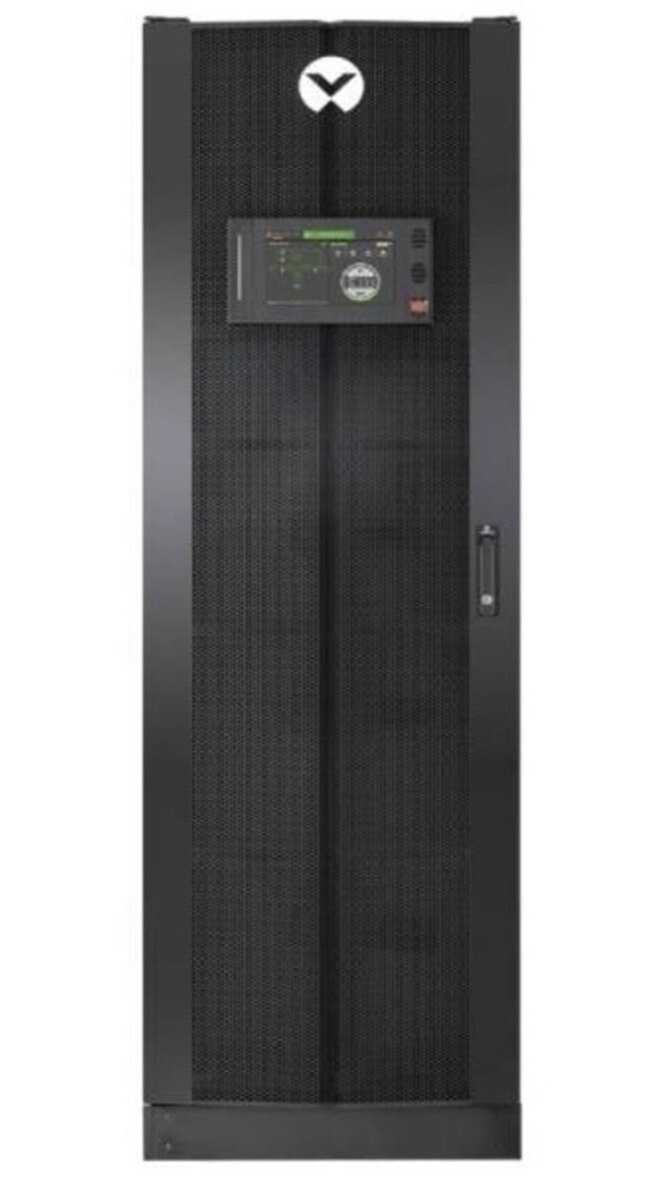
A 1 kVA, 2 kVA, or 3 kVA UPS can protect selected healthcare loads, but the rating alone does not establish clinical suitability. By the end, you will be able to match the UPS to real equipment demand, check the facility’s electrical arrangement, and identify when a medical-location review or redundant power design is required.
Key takeaways
- Use 1–3 kVA UPS units for verified non-life-support loads.
- Calculate watts, VA, inrush current, and required battery runtime.
- Check earthing, leakage current, bypass, and medical-location requirements first.
- Request test reports, battery data, warranty terms, and installation scope.
Which healthcare equipment can a 1–3 kVA UPS support?
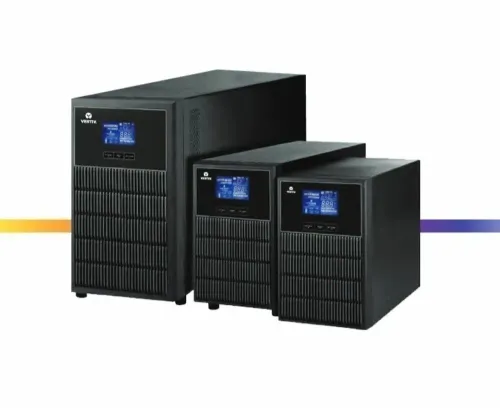
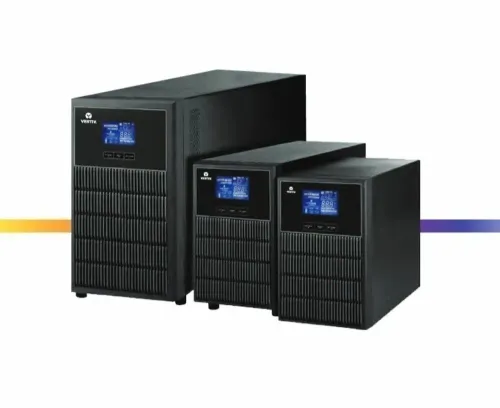
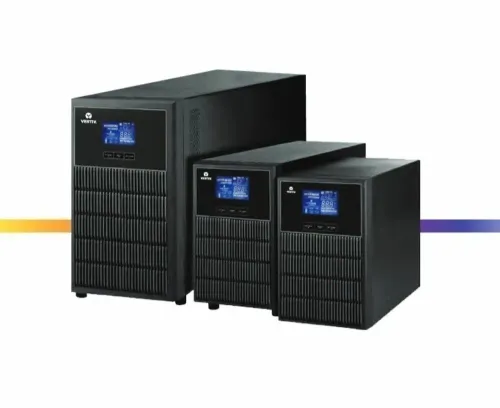
A 1–3 kVA UPS suits non-life-support healthcare loads when the measured demand, inrush current, earthing arrangement, and required runtime have been verified. An online Vertiv Liebert ITA2 UPS 1 kVA continuously supplies sensitive electronic equipment through its inverter, but online operation does not make the UPS medical equipment.
| Equipment | Decision | Required boundary |
|---|---|---|
| Patient monitors and infusion pumps | Suitable for non-life-support use | Confirm the manufacturer permits UPS operation and assess patient-connected risk |
| Nurse-call components, network switches, and laboratory analysers | Usually suitable | Verify total watts, VA, startup demand, and alarm continuity |
| Imaging-control computers and workstation PCs | Suitable | Protect the control computer, not automatically the scanner or other high-power equipment |
| Life-support or clinically critical equipment | Do not connect as a routine load | Obtain healthcare electrical-engineer and equipment-manufacturer approval |
The ITA2 does not prove compliance with IEC 60601-1, IEC 60364-7-710, NFPA 99, or Indian healthcare electrical requirements. Those standards address medical equipment safety and healthcare installations; a UPS may instead fall under the IEC 62040 UPS standard.
Before connection, confirm:
- The load is ordinary IT, communications, monitoring, diagnostic-control, or administrative equipment.
- The equipment manufacturer approves the UPS output and bypass arrangement.
- The facility’s healthcare electrical engineer verifies the installation.
One UPS is one failure point. A 3 kVA unit provides more capacity, not redundancy; clinically critical loads may require dual supplies, separate UPS systems, or another approved source.
How do you size the UPS from watts, VA, and startup demand?
Choose by usable watts after the load test, not by kVA alone. A 0.9 output power factor gives about 0.9 kW at 1 kVA, 1.8 kW at 2 kVA, and 2.7 kW at 3 kVA; confirm the exact nameplate and derating table.
Use this sizing record:
- Collect each device’s nameplate watts and volt-amperes.
- Measure the running load with all equipment operating simultaneously; do not simply add every connected device.
- Record startup or inrush current and the worst startup sequence.
- Confirm the UPS crest-factor requirement against the load.
- Add a documented growth margin based on planned equipment, not an arbitrary percentage.
Motor-driven equipment, pumps, printers, refrigeration units, and even power-factor-corrected supplies can create a short demand that overloads a lightly loaded UPS or sends it to bypass. Test the sequence that produces the highest combined demand.
| Option | Usable power at 0.9 PF | Practical comparison |
|---|---|---|
| Vertiv Liebert ITA2 1 kVA | About 0.9 kW | Lowest heat, noise, space, transient capacity, and expansion |
| Vertiv Liebert ITA2 2 kVA | About 1.8 kW | Middle capacity and installation burden |
| Vertiv Liebert ITA2 UPS 3 kVA | About 2.7 kW | More usable watts and expansion, with greater heat, noise, space, and possible bypass fault energy |
Compare overload limits, transient capacity, runtime at the measured load, and bypass behaviour—not nominal kVA alone. A larger UPS does not automatically provide longer battery autonomy.
What electrical and medical-location checks must come before installation?
Do not connect the UPS until the facility electrician verifies that its electrical characteristics match the distribution board and the intended room. A matching kVA rating does not prove safe connection.
1. Confirm the UPS input and output voltage, single-phase configuration, and 50 Hz frequency against the supply and each connected load.
2. Confirm the plug and socket type, pin arrangement, current rating, and whether the installation requires fixed wiring rather than a plug connection.
3. Select cable size from the manufacturer’s current, temperature, installation-method, and voltage-drop requirements. Do not size conductors from kVA alone.
4. Identify the site earthing system and test earth continuity from the distribution board to the UPS and every downstream socket.
5. Test neutral continuity and identify the existing neutral-to-earth bonding point. Record whether the UPS switches the neutral, references it continuously, or requires a specific neutral arrangement.
6. Coordinate the upstream breaker, fuse, RCD or RCBO, and downstream protective devices with the UPS input current, prospective fault current, leakage current, and bypass path.
7. Check the UPS input, output, bypass, cable entry, and protection requirements against the distribution board’s terminals, busbars, enclosure space, and fault rating.
8. Obtain the installation diagram before work begins. Transformer-free construction does not provide galvanic isolation, remove leakage-current concerns, or correct unsuitable earthing.
Never add a second neutral-to-earth bond at the UPS unless the approved design specifically requires it. An incorrect bond can create circulating current, nuisance RCD operation, or unsafe fault behaviour.
For a patient location, the healthcare electrical engineer must classify the room as Group 1 or Group 2 where applicable, then review equipotential bonding, earth-fault protection, isolation requirements, and medical electrical equipment connections. Hospital use alone does not approve the UPS for either group.
What happen during bypass, overload, battery failure, and an outage?
A battery failure does not always interrupt the load immediately. An online UPS normally feeds the inverter continuously, but overload, overheating, inverter failure, battery fault, or manual bypass can transfer the load to static bypass. The bypass source must have acceptable voltage, frequency, phase, neutral continuity, earthing, short-circuit protection, and fault-clearing performance.
Require the supplier to document:
- Transfer time and conditions for static-bypass operation
- Continuous and short-duration overload limits at 25°C and higher operating temperatures
- Bypass voltage and frequency windows, including generator compatibility
- Inverter-fault response, available short-circuit current, and protective-device clearing time
- A lockable maintenance-bypass arrangement that prevents accidental interruption during servicing
Runtime is determined by actual watts, battery capacity, battery age, temperature, and the required end-of-backup voltage—not by the 1–3 kVA label. Specify runtime at 50% or 100% load, such as 30 minutes at 1.8 kW until the stated cutoff voltage. Demand a witnessed autonomy test.
A 3 kVA UPS does not automatically run longer than a 1 kVA unit. Additional battery strings increase autonomy but also add charging demand, fault energy, floor loading, ventilation, and maintenance.
Coordinate the UPS with the generator’s voltage, frequency, ramp-up, and recharge limits. A single UPS remains a single point of failure; loads with unacceptable clinical interruption need dual supplies, separate UPS systems, or an approved higher-reliability architecture.
What should you request from a Pune UPS supplier before approving the purchase?
Approve the purchase only after the supplier turns the selected UPS into an installable project. A quotation from an industrial online ups dealer in pune is not enough; the facility needs drawings, test criteria, service terms, and proof that the proposed installation suits a healthcare environment.
- Request the exact Liebert ITA2 model, output power factor, battery configuration, battery quantity, and rated autonomy.
- Require an autonomy test at the actual connected load, with the test load, end-of-backup voltage, and measured runtime recorded.
- Obtain the input and output wiring diagram, single-line diagram, plug and socket schedule, cable requirements, and derating curve.
- Ask for overload limits, transfer and static-bypass data, fault-clearing information, noise figures, and heat output at defined loads.
- Require a maintenance-bypass design that permits safe UPS servicing without interrupting the healthcare load.
- Specify a commissioning test record covering battery charging, bypass operation, alarms, load transfer, runtime, and protective-device operation.
- Confirm replacement-battery terms, battery warranty, delivery time, disposal responsibility, and the supplier’s service-response commitment.
- Request evidence of completed hospital work involving earthing, equipotential bonding, and medical locations.
Have the authorised electrician or healthcare electrical engineer review protective-device coordination, earth-fault protection, neutral arrangement, and the bypass path. When comparing industrial online ups dealers in pune vertiv liebert ita2 1 3 kva healthcare options, Originate Power Solutions belongs on the shortlist only if it supports this documentation, installation review, commissioning, and after-sales service.
The facility’s technical authority—not the kVA label—makes the final approval.
Related products
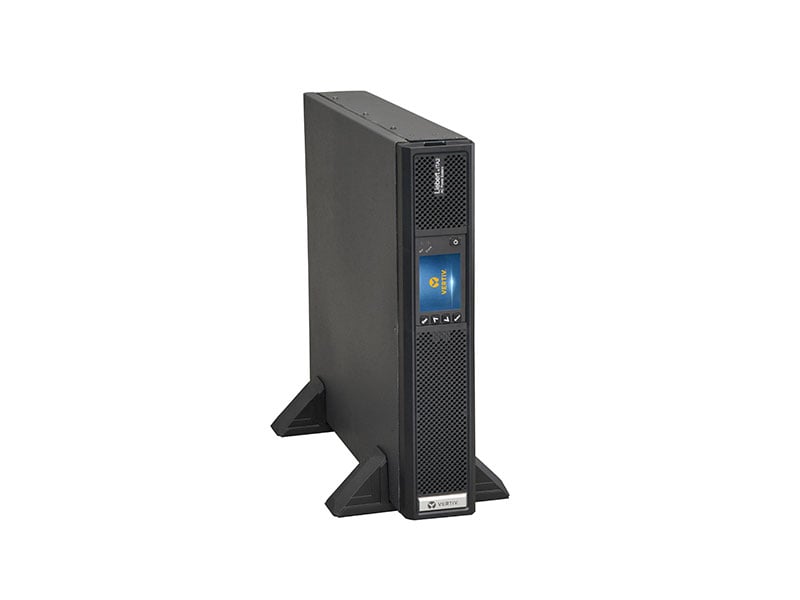 | Single Phase UPS Vertiv Liebert ITA2 UPS 1-3 kVA ₹35144 The Vertiv Liebert ITA2 (1-3 kVA) series is a full-featured transformer-free UPS designed to offer compact, efficient, and reliable power to modern... View product → |
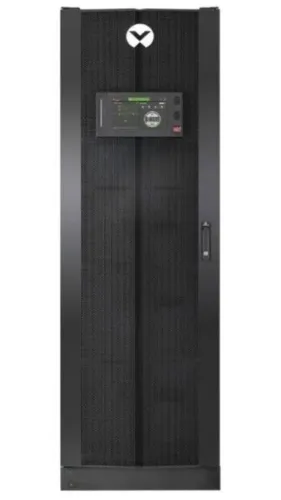
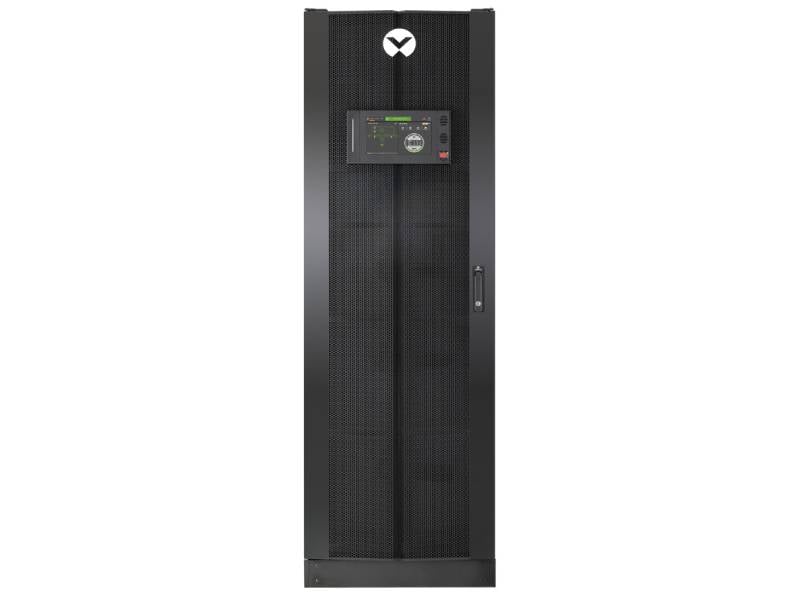 | Three Phase UPS Vertiv™ Liebert® APM2 UPS (30-600 kW) Introducing a next-generation modular and transformer-less UPS design, Vertiv™ Liebert® APM2, a feature-rich high-power density UPS that brings... View product → |
Frequently asked questions
Which healthcare equipment can a 1–3 kVA UPS support?
A 1–3 kVA UPS can support verified non-life-support electronic loads such as monitors, networking equipment, workstations, small imaging accessories, and laboratory instruments when their running watts, VA, inrush current, and runtime fit the UPS rating. Do not connect ventilators, infusion pumps, anaesthesia systems, operating-room equipment, or other life-support loads without written approval from the equipment manufacturer and a qualified healthcare electrical engineer.
How do you size a UPS from watts, VA, and startup demand?
Record each device’s running watts and VA from its nameplate or power analyser, then add the loads that will operate simultaneously. Check the UPS power factor rating, leave capacity for growth, and measure startup or inrush current from motors, compressors, pumps, and power supplies. Select battery capacity from the required runtime at the actual load rather than from the kVA label alone.
What electrical and medical-location checks must come before installation?
Verify the supply voltage and frequency, short-circuit protection, cable size, socket and plug ratings, protective earthing, neutral arrangement, leakage-current limits, ventilation, ambient temperature, and available floor or rack space. Confirm whether the room is a medical location under IEC 60364-7-710 or the applicable Indian electrical design requirements, and obtain approval from the facility’s electrical and clinical engineering teams.
What happens during bypass, overload, battery failure, and an outage?
During an outage, an online UPS transfers the load to its inverter while the battery supplies DC power. An overload can trigger an alarm, reduce runtime, or transfer the load to bypass; a battery fault can remove backup runtime while mains power remains available. Bypass operation supplies utility power without normal inverter conditioning, so document automatic and maintenance-bypass conditions and test alarms before commissioning.
What should you request from a Pune UPS supplier before approving the purchase?
Request the exact Vertiv Liebert ITA2 1 kVA or 3 kVA datasheet, output power factor, overload curve, bypass limits, battery configuration, runtime table, recharge time, noise and heat data, installation drawings, earthing requirements, factory test records, warranty terms, response time, preventive-maintenance scope, and exclusions. Ask an industrial online UPS dealer in Pune to state commissioning tests and the responsible party for cabling, batteries, and load verification in the quotation.